
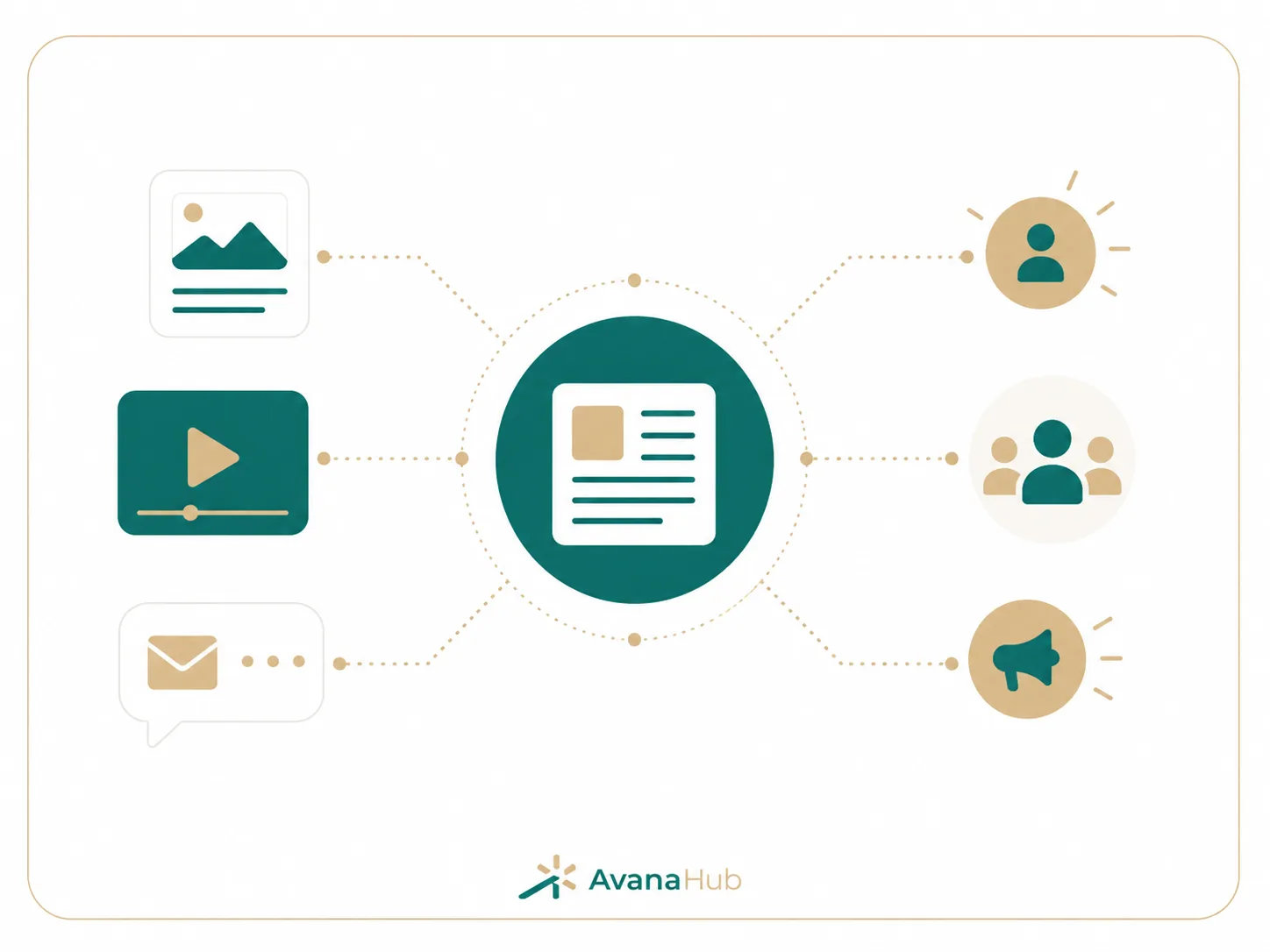
Content marketing is a strategic process for creating and distributing useful information that attracts a defined audience and supports measurable business goals. Instead of interrupting people with direct promotions, it answers their questions, helps them evaluate options, and reduces uncertainty before a purchase. It can support organic search, sales conversations, email acquisition, customer retention, and brand authority, but only when each asset has a clear audience, purpose, and conversion path. Avana developed this guide as part of its educational resources on content marketing and SEO, drawing on practical experience with businesses that need content to support both visibility and measurable growth. In 2026, effective content must also remain visible in AI Overviews, conversational search, and zero-click environments without becoming generic or written only for algorithms.
What Is Content Marketing?
Content marketing is the planned creation, publication, and distribution of valuable content designed to attract, educate, convert, or retain a specific audience.
A practical content marketing program connects three elements:
Audience demand + useful expertise + a measurable business outcome
For example, an accounting software company could publish an invoice-management guide for small businesses. The guide answers an operational question, ranks for relevant searches, introduces the company’s expertise, and leads readers to a product comparison or trial page. The article is content marketing because it serves the reader before requesting a commercial action.
Content marketing may use different formats, but each format should perform a defined job. A blog article can capture an informational search such as “how to prepare a technical SEO audit.” A case study can show how a process produced a 42% improvement in qualified leads. A calculator can help a buyer estimate costs while giving the business a natural opportunity to collect an email address.
Publishing content without a defined user problem or next step is content production, not content marketing.
Why Content Marketing Matters
Content marketing matters because customers rarely move from first contact to purchase in one step. They research terminology, compare methods, assess risk, check evidence, and often share information with other decision-makers.
The Content Marketing Institute’s 2025 B2B benchmark report found that 87% of surveyed marketers said content helped create brand awareness, 74% said it generated demand or leads, and 49% connected it with sales or revenue. These figures show that content can influence both discovery and commercial outcomes, but they also reveal a gap: awareness is easier to achieve than revenue.
Content creates business value in three main ways:
- Demand capture: A cybersecurity company can rank for “SOC 2 compliance checklist” and reach buyers already researching the issue. The content captures existing demand rather than trying to manufacture interest through an unrelated promotion.
- Decision support: A comparison page showing implementation time, pricing logic, limitations, and ideal use cases can help a buyer move from research to a shortlist. This is often more valuable than a broad article that generates traffic but does not affect a decision.
- Reusable sales enablement: A detailed case study can be used in organic search, sales emails, onboarding sequences, webinars, and retargeting campaigns. One well-built asset can therefore reduce repeated explanation across several teams.
Content marketing is not automatically cheaper than advertising. Research, expert input, editing, design, distribution, and maintenance require investment. Its advantage is that a useful asset may continue producing value after the initial production cost has been paid.
At Avana, content is evaluated by the customer decision it supports, not by word count or publishing frequency. A smaller library of decision-focused resources usually creates more value than a large archive of disconnected articles.Explore the business case for content-led acquisition: [LINK: Content Marketing Benefits and Business Impact]
How Content Marketing Works
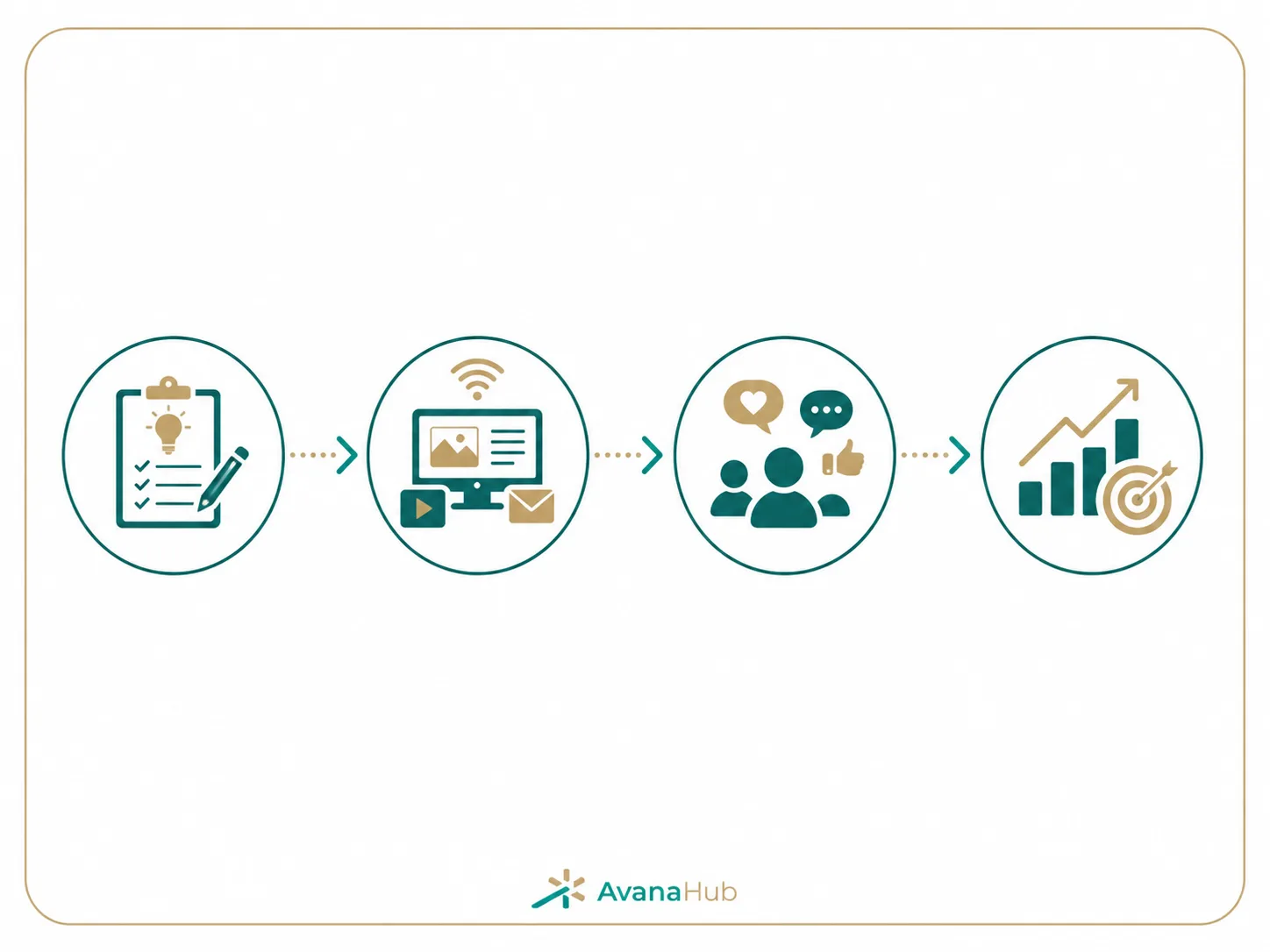
Content marketing works by providing the right information at the point where a customer needs it. The content should change as the user moves from identifying a problem to comparing solutions and taking action.
Awareness
At the awareness stage, the user is trying to understand a problem. A retailer experiencing declining organic traffic might search for “why ecommerce category pages are not ranking.” A useful guide should explain likely causes, diagnostic steps, and the data required to investigate them.
The objective is not to force an immediate sale. It is to establish relevance and guide the user toward a more specific resource.
Consideration
At the consideration stage, the user understands the problem and is comparing approaches. Queries may include “SEO agency vs in-house team” or “Ahrefs vs Semrush.”
Effective content should provide decision criteria, limitations, costs, implementation requirements, and scenarios in which each option is appropriate. A generic list of advantages is weaker than a comparison based on team size, data needs, budget, and workflow.
Decision
At the decision stage, content should reduce commercial risk. Relevant assets include detailed case studies, pricing explanations, product demonstrations, implementation plans, and service pages with clear deliverables.
A case study that states “traffic increased” provides little evidence. A stronger version explains that qualified organic leads grew from 86 to 173 per month over nine months, identifies the pages responsible, and explains which actions produced the result.
Retention
Content can continue creating value after the sale. Product tutorials, implementation guides, onboarding videos, and advanced-use newsletters can increase adoption and reduce preventable support requests.
A software company, for example, may create a five-part onboarding sequence that helps new customers complete setup within seven days. If completion rises from 54% to 71%, the content has contributed to retention rather than acquisition.
Content Marketing vs Traditional Marketing
Traditional marketing generally pays to place a promotional message in front of an audience. Content marketing creates an asset that users can discover, use, reference, and revisit.
A paid search campaign can produce traffic within hours, but traffic usually stops when spending stops. An effective guide may take months to gain visibility, yet it can continue attracting relevant users without a direct payment for every click.
The difference is not simply “promotion versus education.” Both approaches can educate and sell. The practical distinction is how attention is acquired:
- Traditional advertising rents attention through media spend.
- Content marketing earns attention through usefulness and distribution.
- Strong acquisition strategies combine both, using paid media for speed and content assets for depth, remarketing, and long-term discovery.
For example, a company launching a new B2B service may use Google Ads to test five commercial keywords. It can then use the conversion data to decide which search themes deserve permanent service pages, comparison content, and supporting guides.
The Role of Content Marketing in SEO
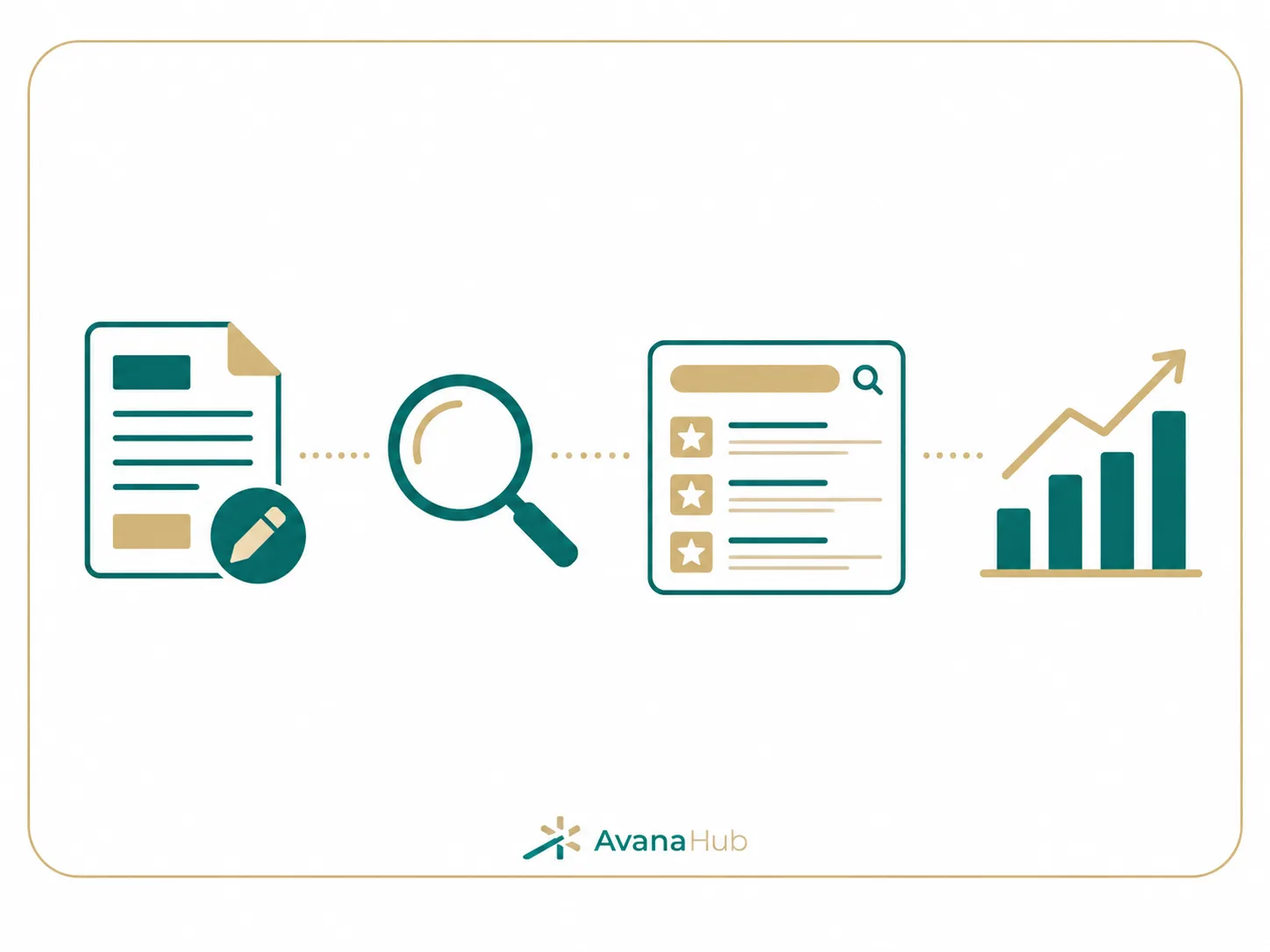
SEO gives useful content a discovery system. Content gives SEO a reason to earn visibility.
A strong SEO content program does more than insert keywords into articles. It identifies search intent, maps each intent to the correct page type, connects related pages through internal links, and builds enough topical depth for users and search engines to understand the site’s expertise.
Teams that need a broader framework can use The Complete SEO Guide to connect content planning with technical eligibility, search intent, internal linking, and performance measurement. This also helps ensure that every important page follows relevant on-page seo principles without reducing content optimization to keyword placement alone.
Consider a company offering specialized seo services. A single “What Is SEO?” article is unlikely to demonstrate sufficient depth. A more complete structure could include a technical audit guide, Core Web Vitals explanation, JavaScript SEO checklist, migration plan, log-file analysis guide, and technical SEO service page.
Each page should have a separate purpose. The technical audit guide answers an informational need. The service page addresses commercial intent. A case study supplies evidence. Internal links connect these assets without making them compete for the same query.
Content also creates backlink opportunities when it contains material worth referencing. Original data, calculators, templates, detailed methodologies, and well-documented experiments are more linkable than summaries of information already available elsewhere. These assets can also support broader Link Building Strategies because external publishers have a clear reason to reference useful, original material.
Content Marketing Strategy: A Brief Overview
This section provides only a summary of content strategy; the full research, planning, governance, and prioritization process belongs in a dedicated guide: [LINK: Complete Content Marketing Strategy Guide].
A content marketing strategy defines who the content serves, which decisions it supports, how it will be distributed, and how performance will be measured.
Define a Commercially Relevant Audience
A general persona such as “marketing managers aged 25–45” is not operationally useful. A stronger definition describes the situation: “marketing managers at B2B software companies with small internal teams, a six-month sales cycle, and increasing paid acquisition costs.”
That level of detail changes the content plan. The audience may need attribution guidance, sales-enablement assets, comparison content, and scalable production workflows rather than introductory marketing definitions.
Build Topics From Customer Evidence
Topic selection should combine search data with internal business evidence. Three useful inputs are:
- Sales-call questions that repeatedly delay deals, such as uncertainty about implementation time or reporting.
- Search Console queries where existing pages receive impressions but fail to earn clicks.
- Support tickets that reveal recurring user confusion and can be converted into tutorials or onboarding resources.
This approach prevents a content calendar from becoming a list of high-volume keywords with weak commercial relevance.
Assign One Job to Each Asset
Every important page should have a primary job. It may attract a new audience, explain a category, compare alternatives, generate a lead, support a sales conversation, or improve customer adoption.
A structured Create Content Brief process should define the page’s primary purpose, target audience, search intent, evidence requirements, internal links, conversion path, and next step before production begins.
A page can contribute to more than one outcome, but one primary role makes its structure and KPI clearer. An industry benchmark report may primarily earn authority and backlinks, while a pricing comparison should primarily support evaluation and conversion.
Create a Distribution and Maintenance Plan
A publishing date is not a strategy. Each asset should have an initial distribution plan and a review trigger.
A research report might be distributed through journalist outreach, partner newsletters, LinkedIn posts, and a webinar. A product tutorial might be added to onboarding emails and support responses. An evergreen article should be reviewed when its rankings decline, its examples become outdated, or search intent changes.
The CMI 2025 report found that 45% of B2B marketers lacked a scalable content-creation model, while only 19% said AI was integrated into daily workflows. The operational gap is therefore not simply a lack of ideas; many teams lack repeatable systems for briefing, expert review, distribution, and measurement.
Avana’s strategy model starts with the revenue or customer decision the content must support, then works backward to the required evidence, format, search intent, and distribution channel. This reduces unnecessary production and makes prioritization easier.Build the full operating plan: [LINK: Content Marketing Strategy Template]
Two Numeric Content Marketing Case Studies
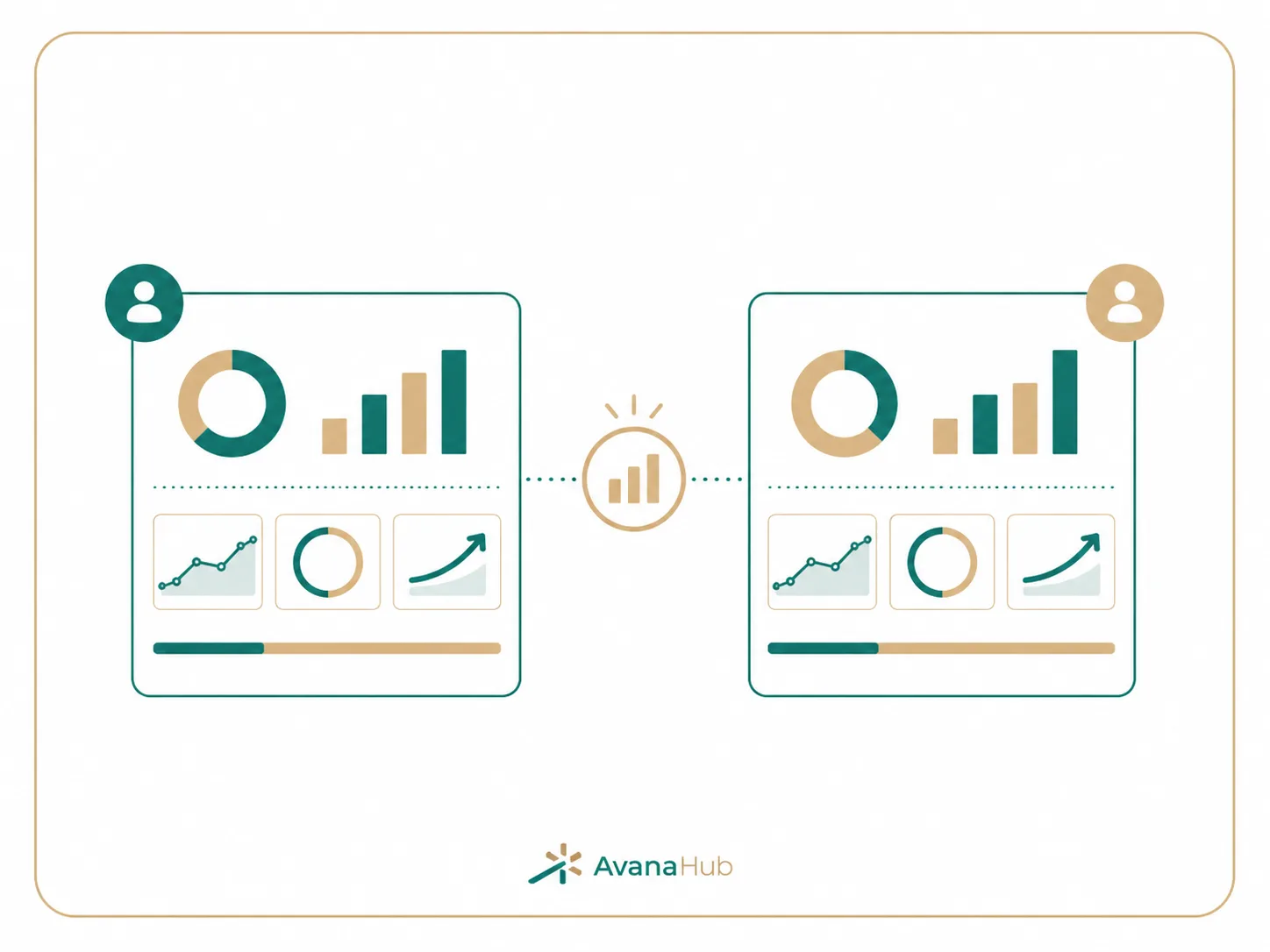
Case Study 1: B2B SaaS Topic Cluster — Hypothetical Example
A project-management software company had 9,800 monthly organic sessions and a visitor-to-lead conversion rate of 1.3%, producing approximately 127 organic leads per month.
Over nine months, the company created one pillar guide, 18 supporting articles, four comparison pages, and three downloadable workflow templates. It also consolidated seven overlapping articles and added contextual internal links from high-traffic educational pages to comparison and product pages.
At the end of the period:
- Organic sessions increased by 118%, from 9,800 to approximately 21,400 per month.
- Visitor-to-lead conversion increased from 1.3% to 2.1%.
- Monthly organic leads increased from 127 to 449.
- Four comparison pages generated 46% of content-attributed demo requests despite receiving only 19% of organic traffic.
The key result was not the traffic increase alone. The company created content for both informational and decision-stage intent, so additional visibility translated into qualified pipeline.
Case Study 2: Ecommerce Buying Guides — Hypothetical Example
An online furniture store generated 37,000 monthly organic sessions, but most traffic landed on generic blog articles with weak product links. Content-assisted revenue averaged $76,000 per quarter.
The store replaced 21 low-value articles with 12 detailed buying guides covering room size, material durability, ergonomic requirements, delivery constraints, and product comparisons. Each guide linked to relevant category pages and included product-selection tables based on price, dimensions, and use case.
After six months:
- Non-branded organic traffic to category pages increased by 39%.
- Content-assisted quarterly revenue increased from $76,000 to $184,000.
- The percentage of blog visitors reaching a category or product page rose from 11% to 28%.
- Retargeting cost per purchase fell by 23% because audiences were segmented by the buying guide they had viewed.
This example shows why content should be evaluated by the journey it creates, not only by visits to the article itself.
Content Distribution
Content distribution is the process of placing an asset in the channels where the intended audience is most likely to discover or reuse it. Publishing on a website is only the first step.
Organic Search
Search is effective when the audience already expresses demand. An article targeting “content marketing ROI formula” should answer the calculation quickly, explain attribution limitations, and link to a measurement framework.
Search distribution also requires technical eligibility, internal links, descriptive metadata, and periodic updates. A strong article that is orphaned from the rest of the site may receive less visibility than a weaker page with better internal support.
Email is most useful when distribution is segmented. Sending every article to the entire database usually produces weak engagement.
A SaaS company could send an implementation checklist to trial users, an attribution report to marketing leaders, and an integration tutorial to existing customers. The content remains the same asset, but the message and CTA reflect the recipient’s context.
Social and Community Distribution
Social distribution should extract a specific insight rather than merely announce that a new article exists. A 2,500-word research report might become a data-led LinkedIn post, a 90-second video explaining one finding, and a discussion question for an industry community.
The CMI 2025 benchmark report found that B2B marketers rated video as the most effective content type at 58%, followed by case studies or customer stories at 53%. These figures do not mean every business should prioritize video; they show that demonstrable and experience-based formats often outperform generic written summaries.
Partnerships and Digital PR
Original research, expert commentary, and practical tools can gain distribution through partners, journalists, associations, and industry newsletters. Outreach is more effective when the content provides something the publisher cannot produce quickly, such as proprietary data or a specialist interpretation.
A generic article titled “10 Content Marketing Tips” offers little incentive for an external publication to reference it. A benchmark showing how 300 regional ecommerce sites handle product content provides a specific reason to cite the page.
Measuring Content Marketing Success
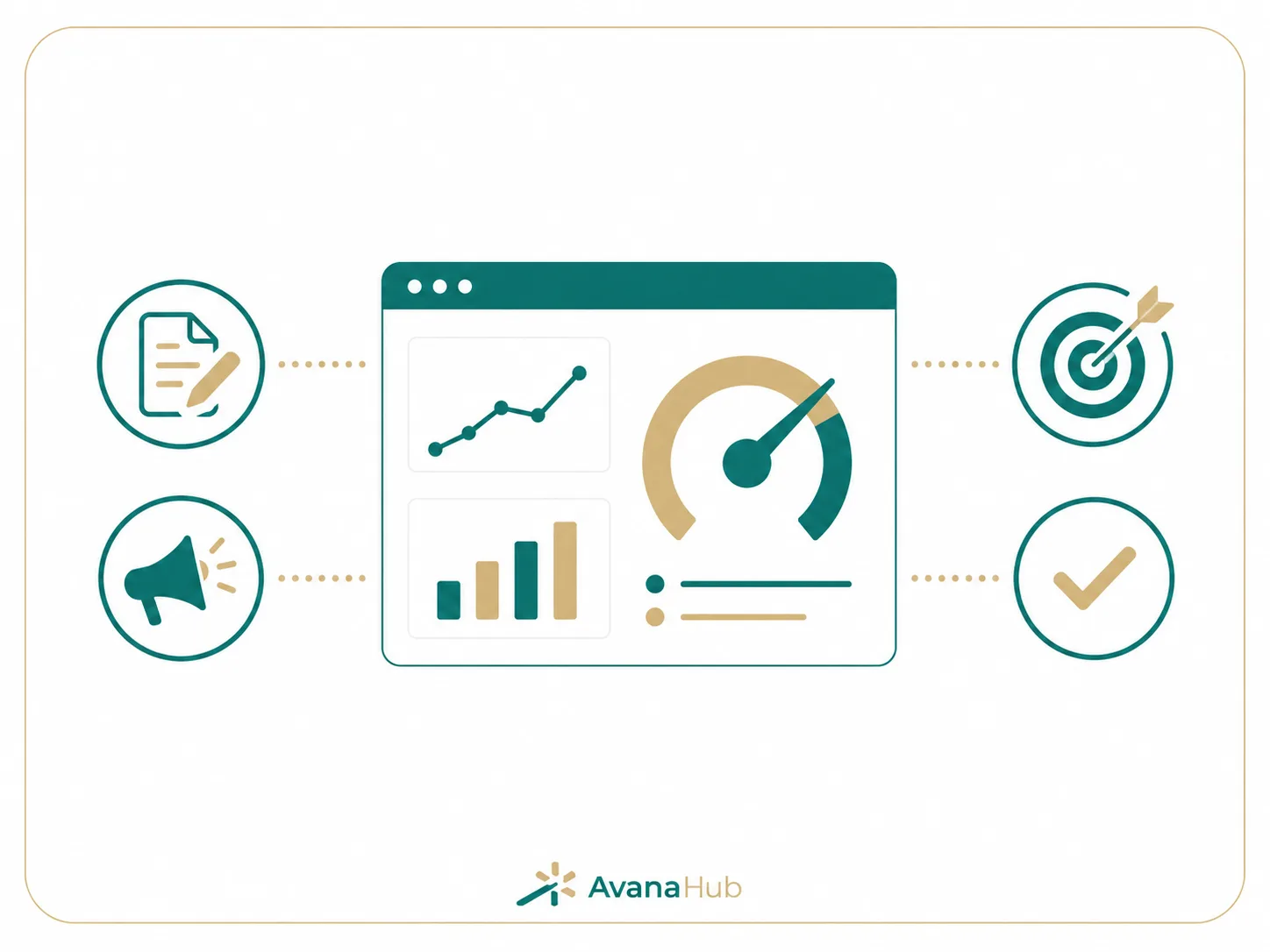
Content marketing success should be measured against the job assigned to each asset. Applying the same KPI to every page creates misleading reports.
An awareness guide may be evaluated through qualified impressions, non-branded entrances, newsletter subscriptions, and assisted conversions. A comparison page should be judged by product visits, demo requests, pipeline contribution, or revenue. A customer tutorial may be assessed through feature adoption, completion rate, or reduction in a specific support issue.
A useful measurement model has four levels:
Attribution should account for longer journeys. A buyer may read a guide, return through branded search, attend a webinar, and convert through a direct visit. Crediting only the final session would hide the article’s role.
Teams should also monitor content efficiency. Dividing content-attributed gross profit by production and distribution cost provides a more useful management view than reporting total pageviews.
Avana recommends separating leading indicators from business outcomes. Rankings and impressions show whether a page is gaining visibility, while qualified leads, assisted pipeline, and retention indicate whether that visibility matters.Create a practical reporting model: [LINK: Measuring Content Marketing Performance]
Content Marketing ROI
Content marketing ROI compares the financial value created by content with the total cost of producing, distributing, and maintaining it.
A basic formula is:
Content Marketing ROI = (Content-Attributed Return − Total Content Cost) ÷ Total Content Cost × 100
Assume a company spends $60,000 on content strategy, production, design, tools, and distribution over one year. If the program contributes $150,000 in gross profit, the calculated ROI is:
($150,000 − $60,000) ÷ $60,000 × 100 = 150%
The calculation becomes more difficult when content influences rather than closes a sale. For B2B businesses, assisted pipeline, opportunity progression, and sales-cycle reduction may be more meaningful than last-click revenue.
ROI analysis should therefore distinguish:
- Direct conversions from content landing pages.
- Assisted conversions where content appeared earlier in the journey.
- Operational value, such as reducing repetitive sales explanations or support tickets.
- Compounding value from assets that continue producing results after the original investment period.
A page with no direct leads may still be valuable if it earns backlinks that strengthen commercial pages. Conversely, an article with 30,000 visits may have poor ROI if the audience is irrelevant and no meaningful next action occurs.
Content Marketing and AI Search in 2026
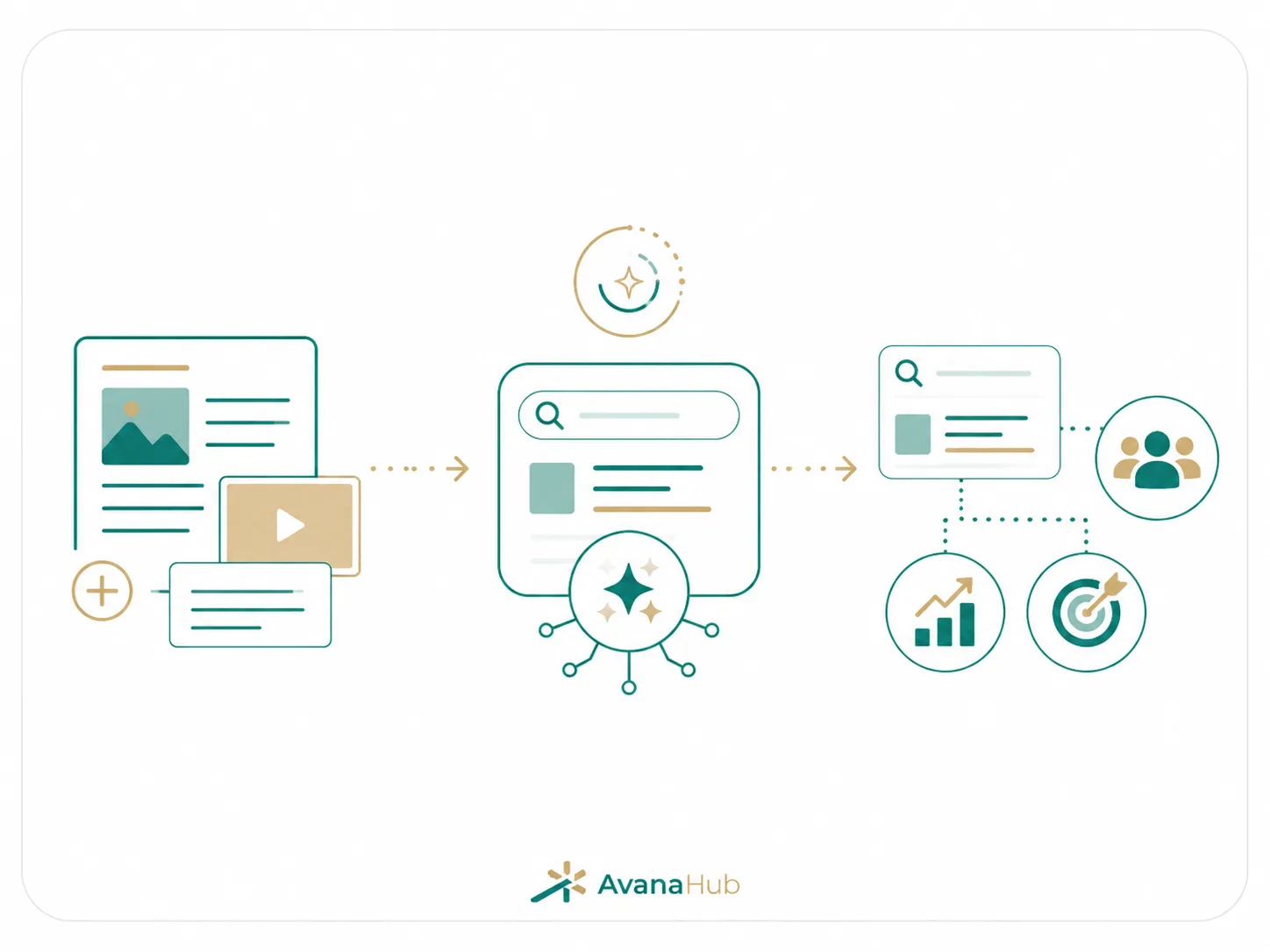
AI search changes both how content is discovered and what happens after a page earns visibility.
Google explains that its generative search features use retrieval-augmented generation, or RAG, to retrieve relevant pages from the search index and ground generated responses in current web content. Google also uses query fan-out, where the system runs multiple related searches to gather information needed for a broader answer. A query about reducing customer acquisition cost might therefore trigger related retrievals about channel mix, conversion rate, retention, attribution, and pricing.
This matters because an article no longer competes only for one exact keyword. Its individual sections may be retrieved as evidence for narrower questions within a larger AI-generated answer. Effective AI SEO therefore requires each section to provide clear, specific, and trustworthy information that generative search systems can understand, retrieve, and cite.
How AI Overviews Affect Content Discovery
AI Overviews synthesize an answer above or among traditional results and may cite several supporting sources. This can increase brand visibility, but it can also reduce visits when the summary completes the user’s task.
Pew Research Center’s 2025 analysis of 68,879 Google searches found that users clicked a traditional result in 8% of visits when an AI summary appeared, compared with 15% when it did not. Links inside the AI summary received clicks in only 1% of those visits.
Ahrefs’ December 2025 analysis of 300,000 keywords found that the presence of an AI Overview correlated with a 58% lower average click-through rate for the top-ranking page. The practical implication is that rankings and impressions can remain stable while traffic declines.
What Is Generative Engine Optimization?
Generative Engine Optimization, or GEO, is the practice of improving the likelihood that a brand’s information is retrieved, understood, and cited by generative search systems. It is not a replacement for SEO. Google’s 2026 guidance states that generative search still relies on core ranking, quality, crawling, and indexing systems.
GEO requires content that can function as reliable evidence. Useful characteristics include clear definitions, visible authorship, specific examples, current data, transparent methodology, and sections that answer distinct questions without losing context.
For example, a generic page stating that “content marketing improves ROI” offers little citation value. A page showing the ROI formula, total cost categories, a worked calculation, attribution limitations, and a nine-month case study provides extractable evidence.
How Zero-Click Search Changes Strategy
Zero-click search means the user completes a task without visiting an external website. Content teams should not respond by making answers deliberately incomplete. That reduces usefulness and may weaken visibility.
Instead, divide content value into two layers:
- Provide the concise answer required for eligibility in featured snippets and AI summaries.
- Offer deeper value that cannot fit into a summary, such as a calculator, downloadable framework, original dataset, implementation steps, or decision tool.
For example, an article can answer “What is content marketing?” in two sentences, then give users a reason to visit through numerical case studies, a channel-selection framework, and an ROI template.
Measurement must also change. Content teams should track branded search growth, citations, assisted conversions, direct traffic to decision-stage pages, and changes in click-through rate for queries that trigger AI Overviews. Traffic remains important, but it is no longer the only evidence of search visibility.
Content Marketing Best Practices: A Brief Overview
This section summarizes the most important operating principles; implementation details should be developed in a separate resource: [LINK: Content Marketing Best Practices for 2026].
Produce Evidence, Not Summaries
Content should include information that cannot be recreated by rewriting the first page of search results. Useful evidence may include internal benchmarks, expert interviews, documented experiments, customer questions, original screenshots, or worked calculations.
A logistics company could analyze 1,000 delivery records and publish delays by route and season. A consultancy could anonymize 50 project audits and identify the five most common implementation failures. Both assets create information gain.
Match the Format to the Decision
Use a comparison table when users must evaluate alternatives. Use a calculator when the decision depends on variables. Use a case study when proof is the main barrier. Use video when the task requires demonstration.
The format should reduce the effort needed to understand or act, not simply create another distribution channel.
Build Expert Review Into Production
Subject-matter experts should contribute before publication, not only approve the finished draft. Ask them for exceptions, real examples, common mistakes, and factors that change the recommendation.
An editor can improve clarity, but only an experienced practitioner may know that a technically correct recommendation fails under specific operational constraints.
Maintain High-Value Assets
Content should be updated based on evidence. Review a page when data changes, rankings decline, conversions weaken, competitors provide stronger information, or search results shift toward a different intent.
Changing the date without substantive revision does not improve quality.
Common Content Marketing Mistakes
Publishing More Content Than the Team Can Maintain
A company publishing 20 articles per month but updating none may create declining accuracy, duplicated topics, and weak internal competition. A smaller publishing schedule with planned maintenance can produce stronger long-term performance.
Measuring Traffic Without Audience Quality
An article attracting 50,000 visits from students may be less valuable to an enterprise software provider than a comparison page attracting 800 qualified operations managers. Traffic should be segmented by intent, geography, engagement, and conversion contribution.
Using AI to Scale Commodity Content
The CMI 2025 report found that only 17% of surveyed B2B marketers rated AI-generated content as excellent or very good, while 35% rated it merely fair. AI can accelerate research, clustering, transcription, and first drafts, but publishing unverified output at scale creates factual, reputational, and differentiation risks.
Treating Distribution as an Afterthought
An original report that receives no outreach, email placement, partner support, or social extraction may fail despite strong quality. Distribution tasks should be included in the brief and assigned before publication.
Creating Content Without a Next Step
Every page does not need a sales CTA, but every page needs a logical continuation. That might be a related guide, template, comparison, product category, webinar, or consultation page.
Conclusion
Content marketing is most effective when it connects a real audience need with credible expertise, deliberate distribution, and a measurable next step. Strong programs do not judge success by publishing volume alone; they assess whether content captures relevant demand, supports customer decisions, contributes to revenue, and remains useful over time. In the AI-driven search environment of 2026, clear definitions and structured answers are still necessary, but they are no longer enough. Content also needs original evidence, practical depth, trustworthy authorship, and value that cannot be fully replaced by an AI summary.
Businesses should treat every important asset as part of a connected system rather than an isolated article. That means aligning content with search intent, customer journeys, internal links, distribution channels, and commercial KPIs. Avana can help review an existing content library or identify where a clearer strategy, stronger evidence, and better conversion paths are needed.