
Search engine optimization is the process of improving a website so search engines can crawl, understand, index, and rank its pages for relevant queries. For businesses, SEO matters because organic search often captures users with active intent: they are already looking for answers, products, services, comparisons, or solutions. A complete SEO strategy connects technical site health, keyword research, content quality, user experience, internal linking, authority building, and performance measurement. In this guide, Avana covers the practical SEO foundations needed to build sustainable organic visibility without relying on shortcuts or outdated tactics.
What Is SEO?
SEO is the practice of improving website visibility in organic search results by making pages technically accessible, useful for users, and relevant to search intent. A strong SEO strategy helps search engines discover pages, understand their purpose, evaluate their quality, and match them with the right queries.
The core components of SEO are:
- Technical SEO: crawlability, indexing, site speed, mobile usability, structured data, redirects, canonicals, and architecture
- On-page SEO: titles, headings, content structure, keyword targeting, internal links, image optimization, and search intent alignment
- Content SEO: useful, original, well-organized content that answers real user needs
- Off-page SEO: backlinks, brand mentions, digital PR, and external trust signals
- Local SEO: visibility for location-based searches, Google Business Profile, reviews, and local citations
- Measurement: tracking rankings, organic traffic, conversions, technical issues, and content performance
SEO works best when it is treated as a long-term growth system, not a one-time checklist.
How Search Engines Work
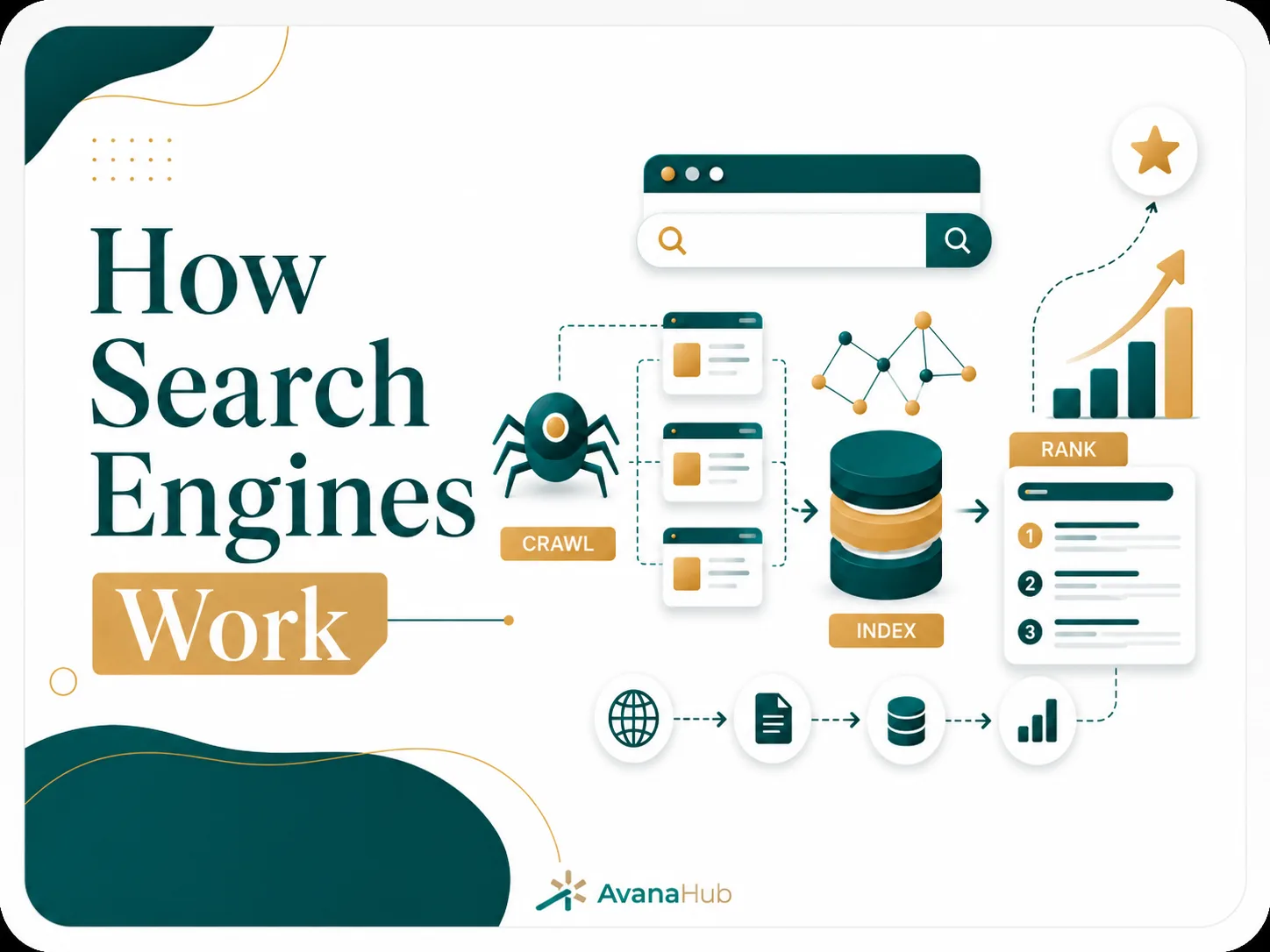
Search engines generally follow three main stages: crawling, indexing, and ranking.
Crawling is the discovery process. Search engines use bots to follow links, read sitemaps, and revisit known URLs. If a page cannot be crawled because of broken links, blocked resources, poor internal linking, or server errors, it may never enter the ranking process.
Indexing is the storage and interpretation process. After discovering a page, the search engine analyzes its content, canonical signals, structured data, page quality, language, media, and relevance. Not every crawled page is indexed, especially if it is duplicate, thin, low-value, blocked, or technically unclear.
Ranking is the selection process. When a user searches, the search engine chooses results based on relevance, quality, intent match, authority, usability, location, freshness where relevant, and many other signals. SEO improves the probability that your pages are eligible, understandable, competitive, and useful enough to rank.
Why SEO Matters for Business Growth
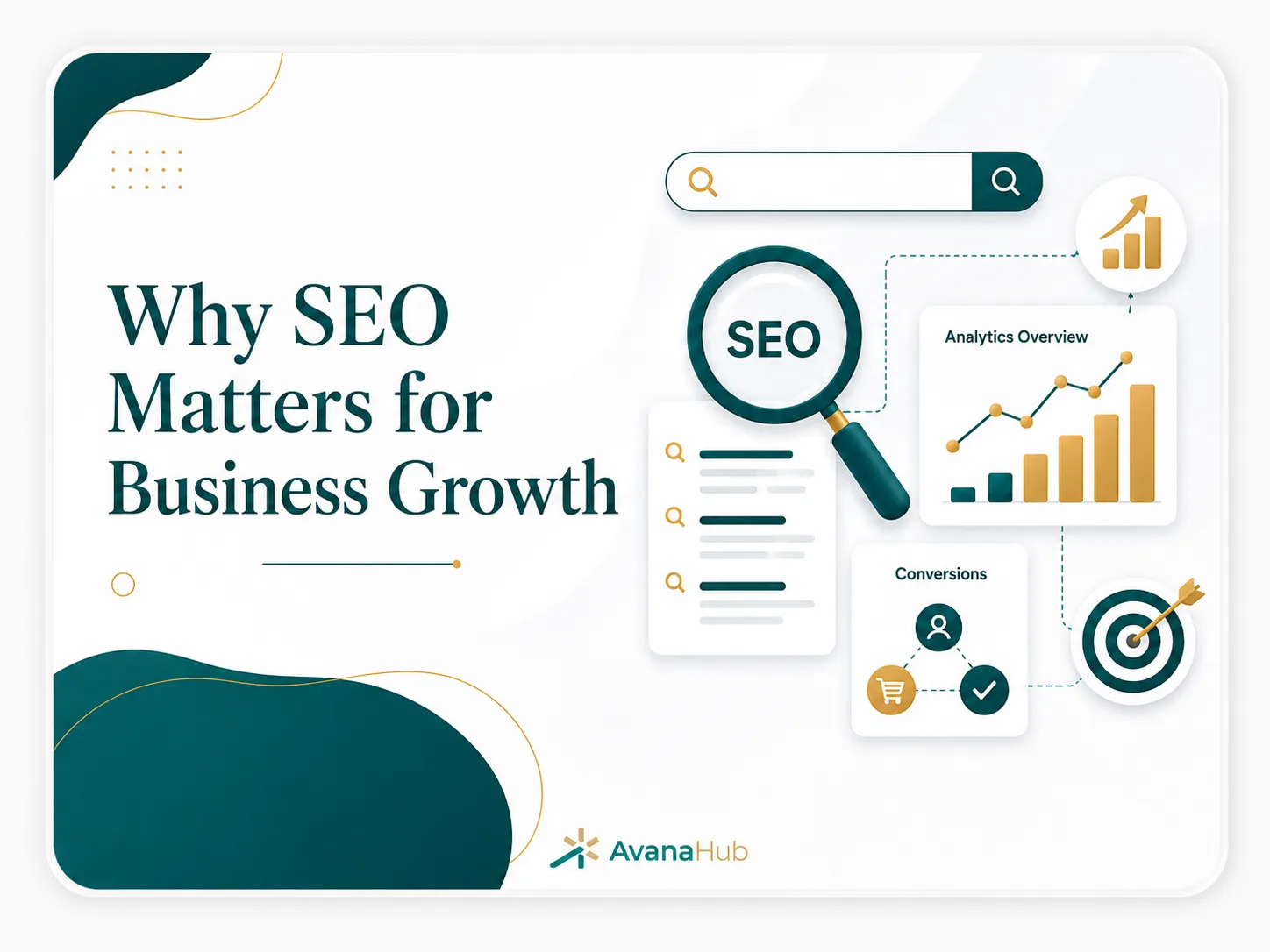
SEO captures demand that already exists. Unlike interruptive advertising, organic search reaches people when they are actively researching a problem, comparing options, or preparing to buy.
The business value of SEO includes:
SEO is not free traffic. It requires strategy, production, technical maintenance, and measurement. The advantage is that strong pages can continue generating traffic and leads long after publication.
Keyword Research: Finding What Users Actually Search
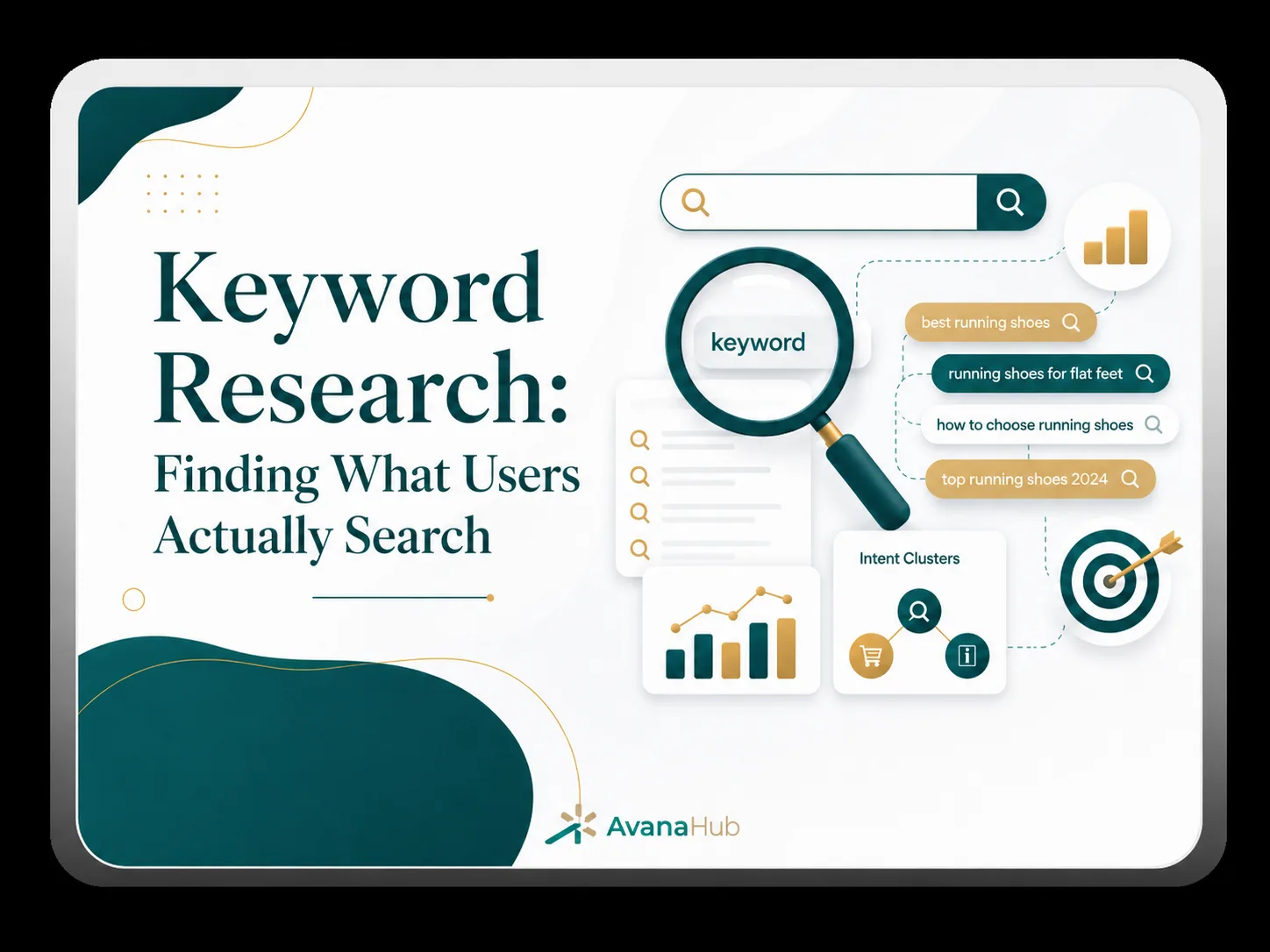
Keyword research identifies the words, phrases, questions, and problems your audience uses in search engines. Good keyword research is not only about search volume; it is about matching the right query to the right page type and business goal.
A practical keyword research process includes:
- Define the target audience and buying stage.
- Collect seed keywords from products, services, customer questions, sales calls, competitor pages, and search suggestions.
- Group keywords by intent, not only by wording.
- Evaluate search volume, difficulty, commercial value, and ranking potential.
- Map each keyword group to a specific page.
- Prioritize pages that can realistically rank and support business outcomes.
Search intent usually falls into four categories:
A common SEO mistake is targeting high-volume keywords without understanding what Google already ranks for them. Before creating a page, review the current search results to identify dominant formats, content depth, featured snippets, People Also Ask questions, and commercial expectations.
Building an SEO-Friendly Site Structure
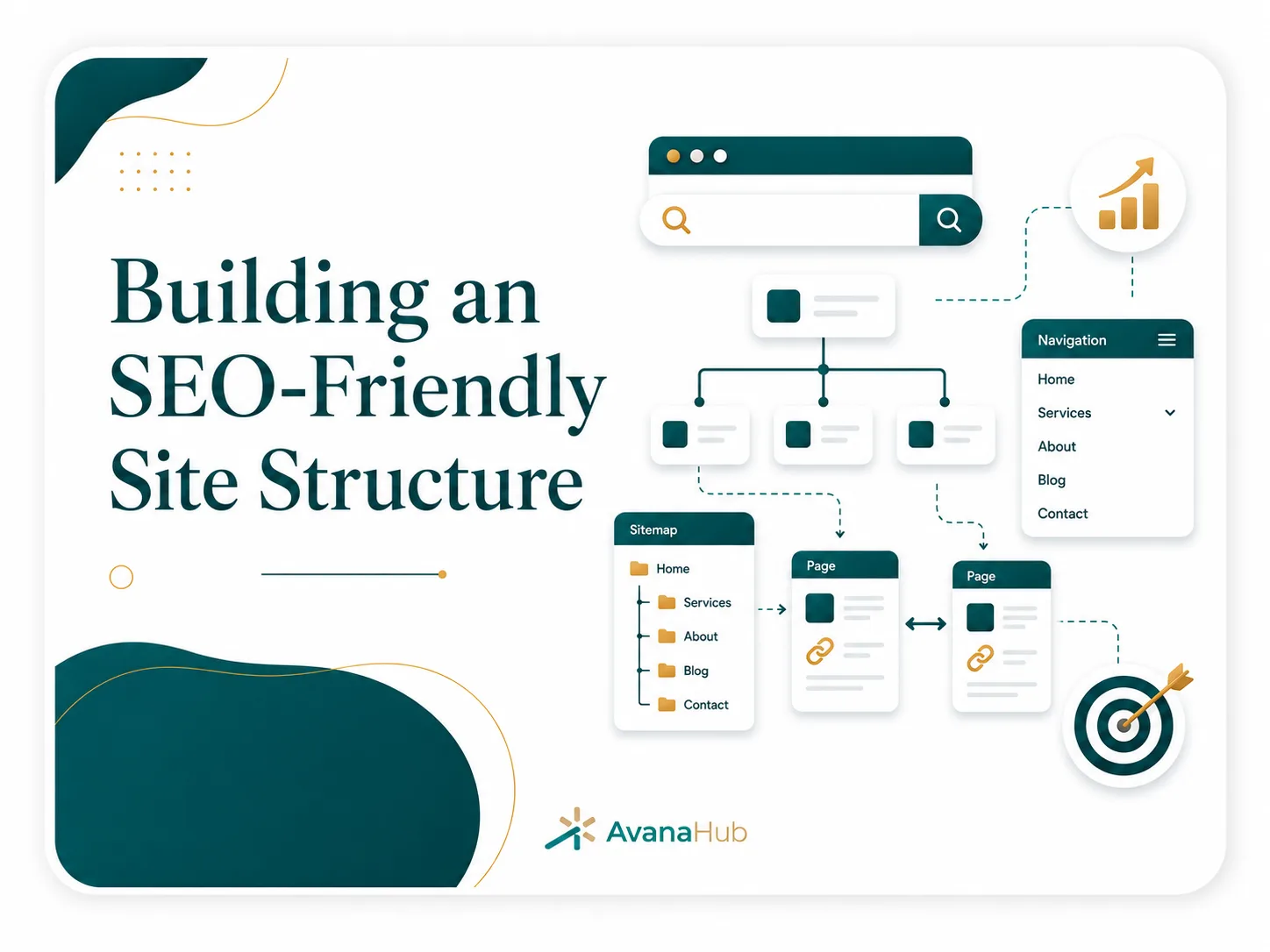
Site structure affects crawling, indexing, user navigation, and topical authority. A clear structure helps search engines understand which pages are most important and how topics relate to each other.
A strong SEO architecture usually includes:
- A clear homepage that links to key business sections
- Main category or service pages targeting broad commercial terms
- Supporting blog posts or guides targeting specific informational terms
- Internal links from supporting content to relevant commercial pages
- Descriptive URLs that reflect topic hierarchy
- XML sitemaps for important indexable pages
- No orphan pages that lack internal links
Example structure for a digital marketing website:
The goal is to make every important page reachable, contextually linked, and clearly assigned to a search intent.
Technical SEO Essentials
Technical SEO ensures that search engines can access, render, understand, and index your website efficiently. It also improves user experience by fixing performance and usability problems.
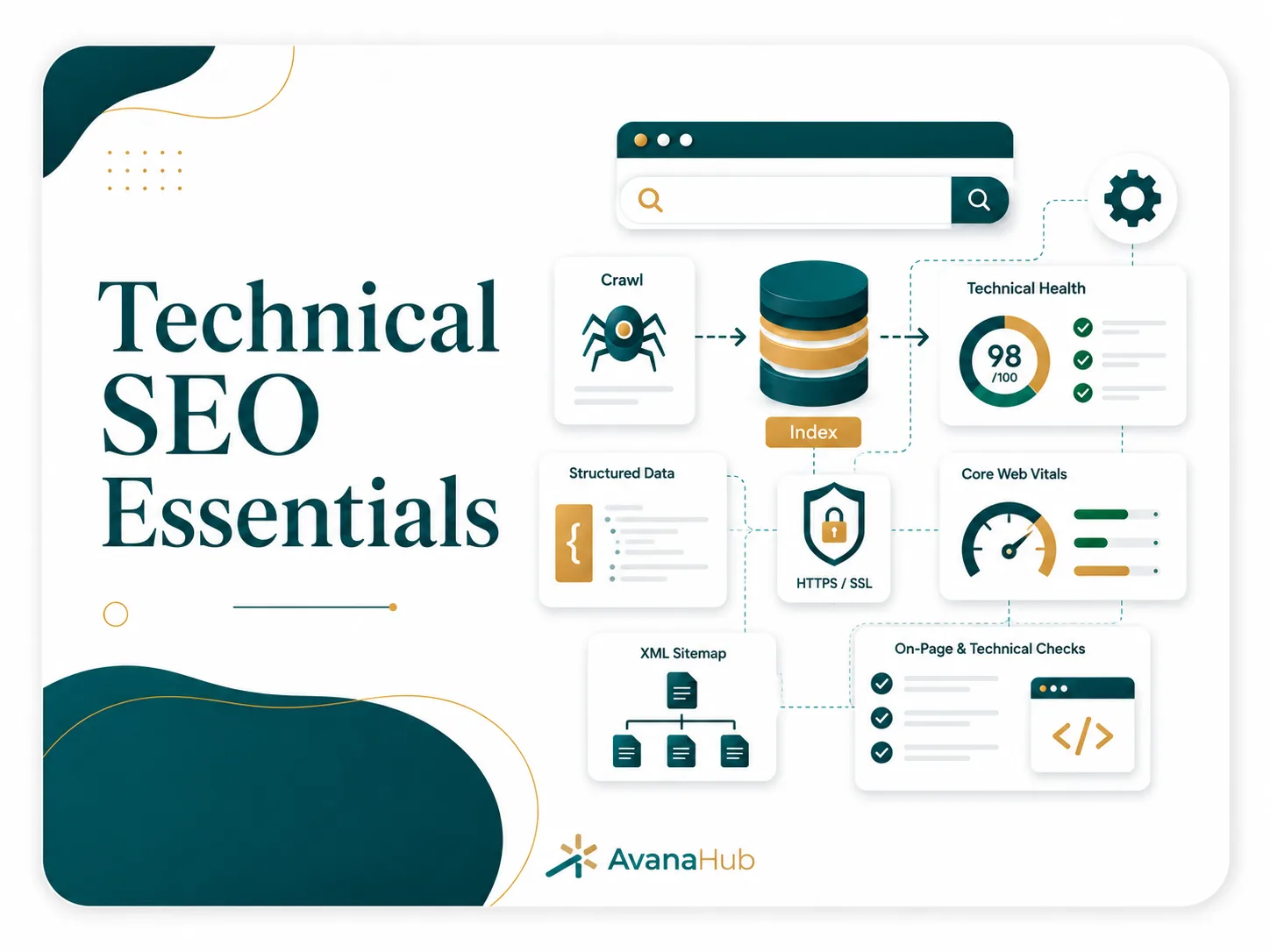
The most important technical SEO checks are:
- Crawlability: important pages should not be blocked by robots.txt, noindex tags, login walls, or broken internal links.
- Indexability: pages intended to rank should return a 200 status code, have self-referencing canonicals where appropriate, and avoid duplicate conflicts.
- Site speed: pages should load quickly on mobile and desktop.
- Mobile usability: layouts, buttons, fonts, and forms should work well on smaller screens.
- HTTPS: all important pages should load securely.
- Redirects: old URLs should redirect cleanly to relevant new URLs without chains or loops.
- Canonical tags: duplicate or similar pages should point to the preferred version.
- XML sitemap: only indexable, important URLs should be included.
- Structured data: schema should match visible page content and follow search engine guidelines.
- Error handling: 404 pages, server errors, and soft 404s should be monitored regularly.
Technical SEO does not replace quality content. It creates the conditions that allow quality content to perform.
Core Web Vitals and Page Experience
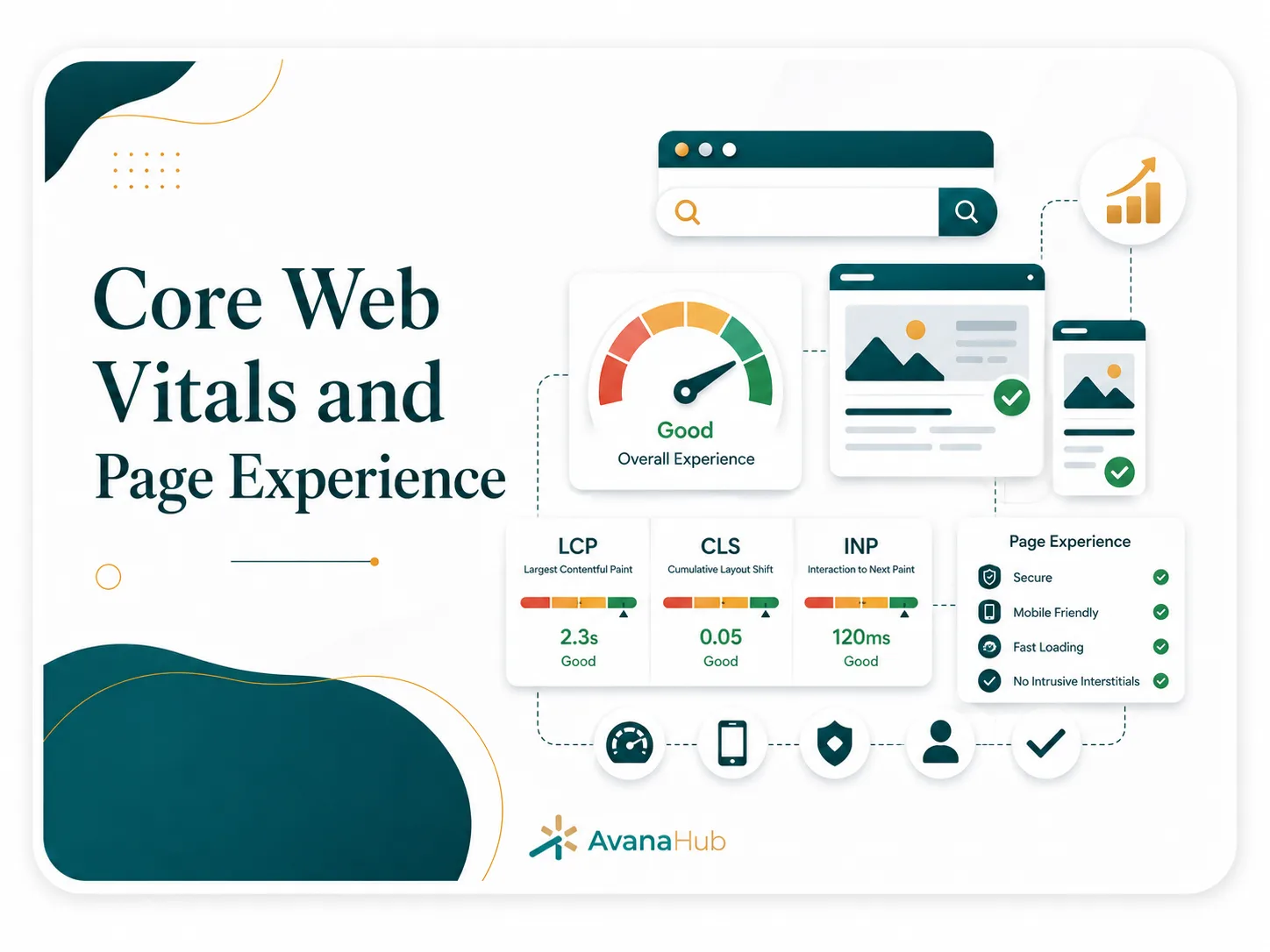
Core Web Vitals are performance metrics that measure important parts of user experience. They focus on loading speed, responsiveness, and visual stability.
The key Core Web Vitals are:
Core Web Vitals should be evaluated with real-user data where possible, not only lab tests. Tools such as Google Search Console, PageSpeed Insights, Chrome UX Report, Lighthouse, and WebPageTest can help identify performance problems.
Common fixes include compressing images, improving server response time, reducing unused JavaScript, using efficient caching, preloading key assets, reserving space for images and ads, and removing unnecessary third-party scripts.
Page experience is not a substitute for relevance. A fast page with weak content will still struggle, but a useful page with poor performance may lose rankings, conversions, and user trust.
On-Page SEO: Optimizing Individual Pages
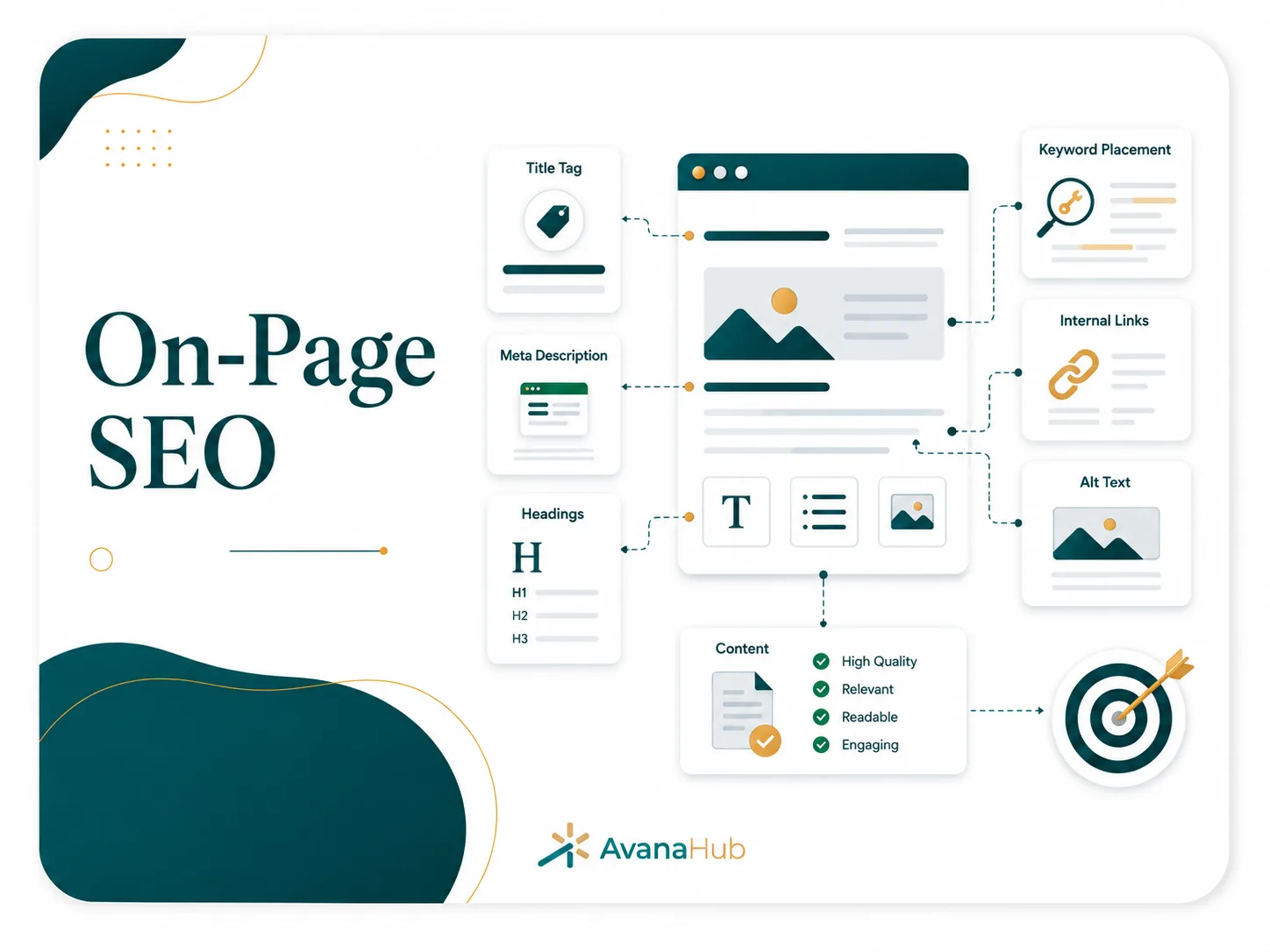
On-page SEO helps search engines and users understand what a page is about. It also improves readability, click-through rate, and content usefulness.
The essential on-page SEO elements are:
The primary keyword should appear naturally in the title, introduction, headings where relevant, and body copy. Avoid repeating the same phrase unnaturally. Search engines are better at understanding topics, entities, synonyms, and context than simple keyword repetition.
Creating SEO Content That Ranks
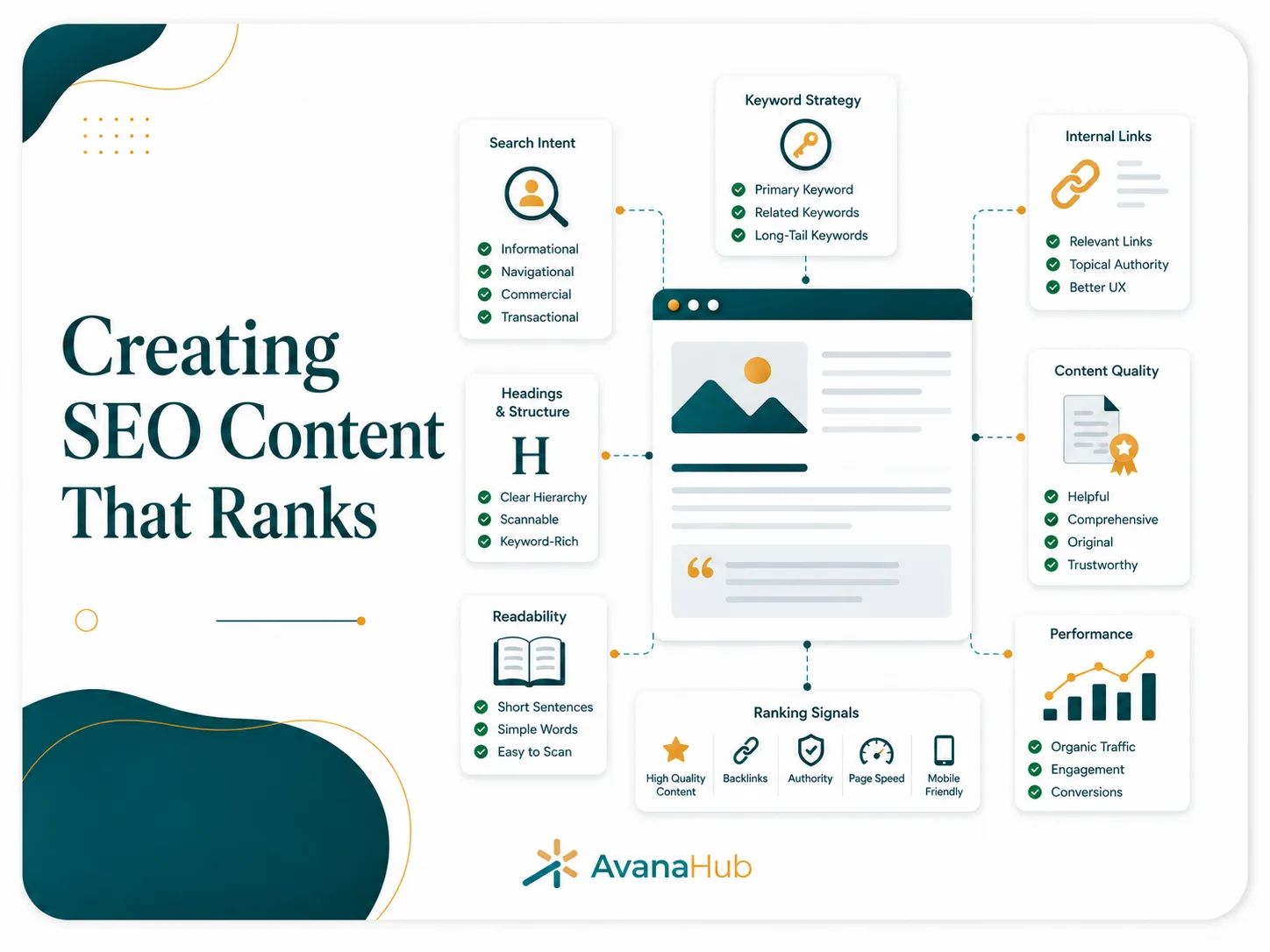
SEO content should satisfy search intent better than competing pages. That means it must answer the query clearly, cover important subtopics, provide accurate information, and help the user take the next step.
A reliable SEO content workflow includes:
- Analyze the SERP before writing.
- Identify the dominant intent and format.
- Build an outline around user questions and decision points.
- Provide the direct answer early.
- Add depth through examples, comparisons, processes, data, and definitions.
- Use internal links to connect related topics.
- Include expert input or first-hand business knowledge where possible.
- Edit for clarity, accuracy, and unnecessary repetition.
- Add schema if relevant.
- Track performance after publishing.
Content quality depends on usefulness, not word count. A 900-word page can outperform a 3,000-word page if it answers the query faster and with better structure. Long-form content works when the topic requires depth, not when length is added without purpose.
EEAT: Experience, Expertise, Authoritativeness, and Trust
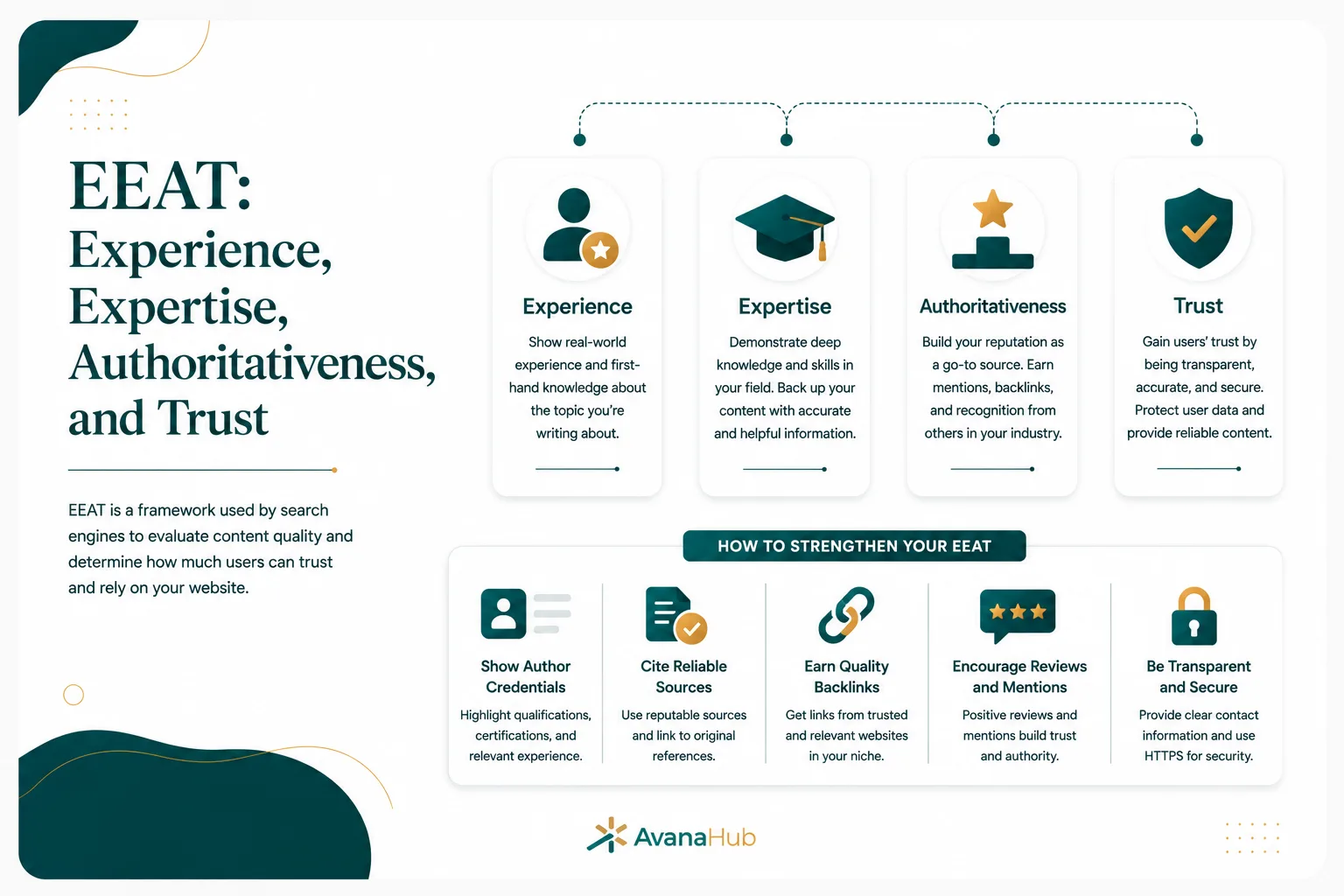
EEAT is a quality framework used to evaluate whether content appears reliable and useful. It is especially important for topics where inaccurate information can affect money, health, legal decisions, safety, or major business outcomes.
Practical ways to improve EEAT include:
- Use qualified authors or reviewers when expertise matters.
- Add author bios with relevant credentials or experience.
- Explain how recommendations were made.
- Cite reliable sources where needed.
- Keep content updated.
- Avoid exaggerated claims.
- Make contact, company, privacy, and policy information easy to find.
- Include real examples, case studies, screenshots, workflows, or original insights.
- Correct outdated information instead of leaving old pages untouched.
Trust is the foundation. A page can be technically optimized and keyword-rich but still underperform if users cannot verify who created it, why it exists, or whether the information is reliable.
Internal Linking Strategy
Internal links distribute authority, guide users, and help search engines understand relationships between pages. They are one of the most controllable SEO levers on a website.
A strong internal linking strategy should:
- Link from high-traffic pages to important conversion pages.
- Connect blog posts to relevant service or product pages.
- Use descriptive anchor text instead of generic phrases like “click here.”
- Link between related informational articles to build topic clusters.
- Add breadcrumbs where useful.
- Update old articles with links to newer strategic pages.
- Avoid excessive links that dilute relevance.
Example:
A blog post about “technical SEO audit” should link to related pages such as “Core Web Vitals,” “SEO services,” “site migration checklist,” and “Google Search Console setup.” This creates a topic network and helps users continue their research.
Link Building and Authority
Backlinks remain important because they help search engines discover pages and evaluate authority. However, modern link building should focus on earning relevant references, not manipulating rankings.
Effective link building methods include:
- Publishing original research, statistics, tools, or templates
- Digital PR campaigns with newsworthy data
- Guest contributions on relevant industry websites
- Partner and supplier mentions
- Resource page outreach
- Expert commentary for journalists
- Reclaiming unlinked brand mentions
- Fixing broken backlinks after URL changes
- Creating case studies others can reference
Avoid paid link schemes, private blog networks, automated link placements, irrelevant directory spam, and mass guest posting with low-quality content. These tactics can create ranking risk and rarely build durable authority.
A good backlink is topically relevant, editorially placed, useful for readers, and located on a page that search engines can crawl and index.
Local SEO for Location-Based Visibility
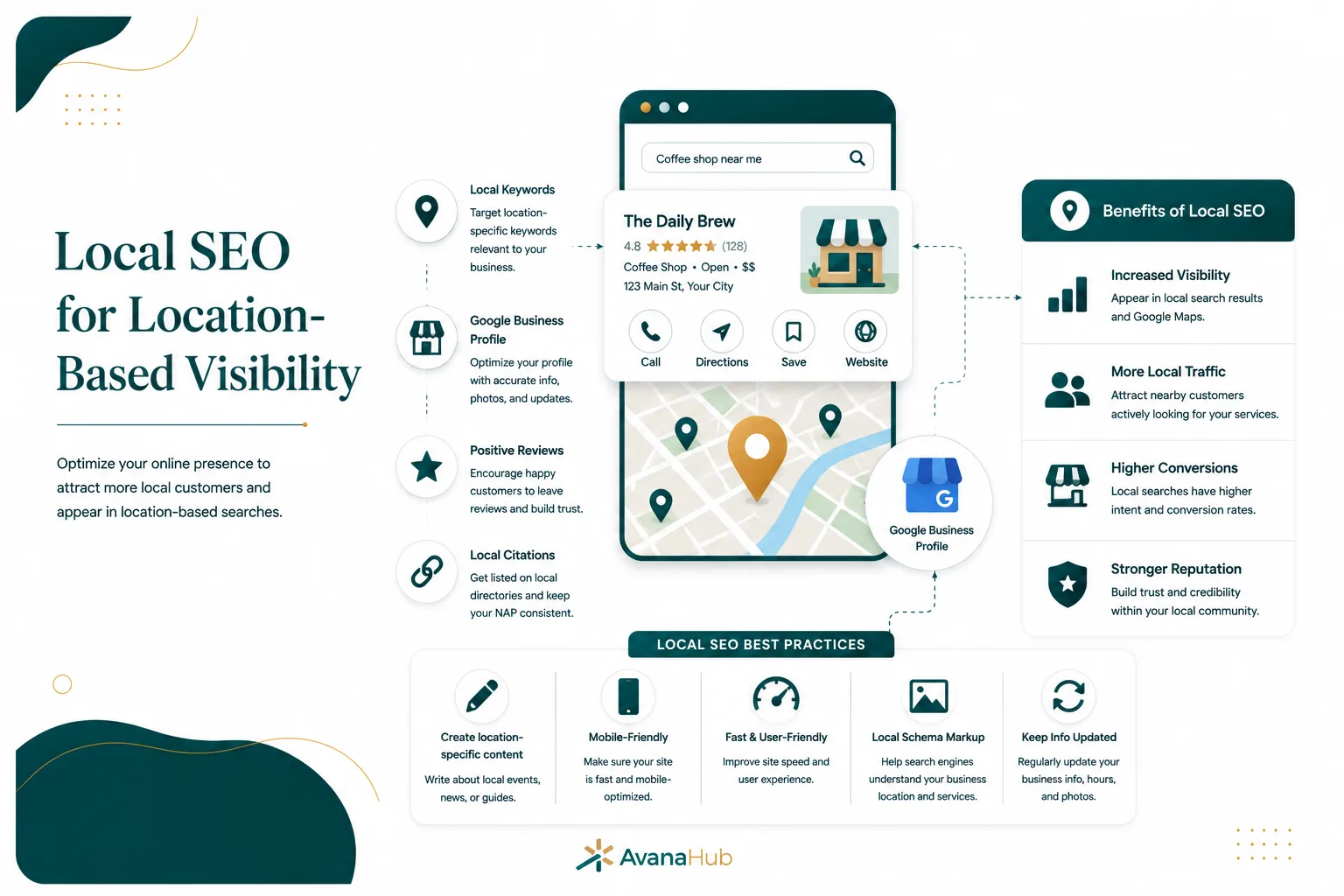
Local SEO helps businesses appear for searches tied to a city, region, or “near me” intent. It is essential for service providers, clinics, agencies, restaurants, stores, and local professionals.
Key local SEO actions include:
- Create and verify a Google Business Profile.
- Keep business name, address, phone number, website, and hours accurate.
- Choose the most relevant business categories.
- Add services, products, photos, and business descriptions.
- Collect authentic customer reviews consistently.
- Respond to reviews professionally.
- Build citations on trusted local directories.
- Create location-specific landing pages where relevant.
- Add local schema markup.
- Publish content answering local customer questions.
Local SEO performance depends heavily on relevance, distance, prominence, reviews, and profile completeness. A business should avoid fake locations, keyword-stuffed business names, and duplicate location pages with nearly identical content.
Ecommerce SEO
Ecommerce SEO requires optimization across category pages, product pages, filters, internal search, faceted navigation, and structured data. The biggest risks are duplicate URLs, thin product descriptions, poor crawl control, and weak category content.
Important ecommerce SEO practices include:
- Optimize category pages for commercial keywords.
- Write unique product descriptions for important products.
- Use product schema with accurate price, availability, and review data.
- Manage filters and parameters to avoid crawl waste.
- Add internal links from guides to product and category pages.
- Include comparison content for high-intent users.
- Improve image compression and product media loading.
- Keep discontinued product pages useful through redirects or alternatives.
- Add FAQs that answer real purchase objections.
For ecommerce websites, category pages often have higher SEO value than individual product pages because they target broader commercial searches and remain stable longer.
SEO Tools You Actually Need
SEO tools help with research, diagnostics, tracking, and reporting. No tool replaces strategy, but the right stack reduces guesswork.
Start with Google Search Console and analytics before investing in advanced tools. Paid tools are most useful when there is a clear process for turning data into content, technical fixes, or strategic decisions.
SEO KPIs and Measurement
SEO should be measured by business impact, not only rankings. Rankings are useful indicators, but they do not show the full value of organic search.
Important SEO KPIs include:
Measure SEO by page type. Blog posts, product pages, service pages, and local pages have different goals. A blog post may be judged by traffic and assisted conversions, while a service page should be judged by qualified leads and conversion rate.
Common SEO Mistakes
Many SEO problems come from over-optimizing small details while ignoring major issues. The most common mistakes include:
- Publishing content without matching search intent
- Targeting keywords that do not support business goals
- Creating many thin pages instead of fewer useful pages
- Blocking important pages from crawling or indexing
- Ignoring mobile performance
- Using duplicate title tags across many pages
- Building backlinks from irrelevant or low-quality websites
- Relying on AI-generated content without review, originality, or expertise
- Updating design without preserving URLs and redirects
- Measuring rankings without tracking conversions
- Treating SEO as a one-time project
SEO failures usually come from weak prioritization. A site with indexation issues, poor content, and no authority will not improve meaningfully by changing meta descriptions alone.
An Operational SEO Framework Most Competitors Ignore
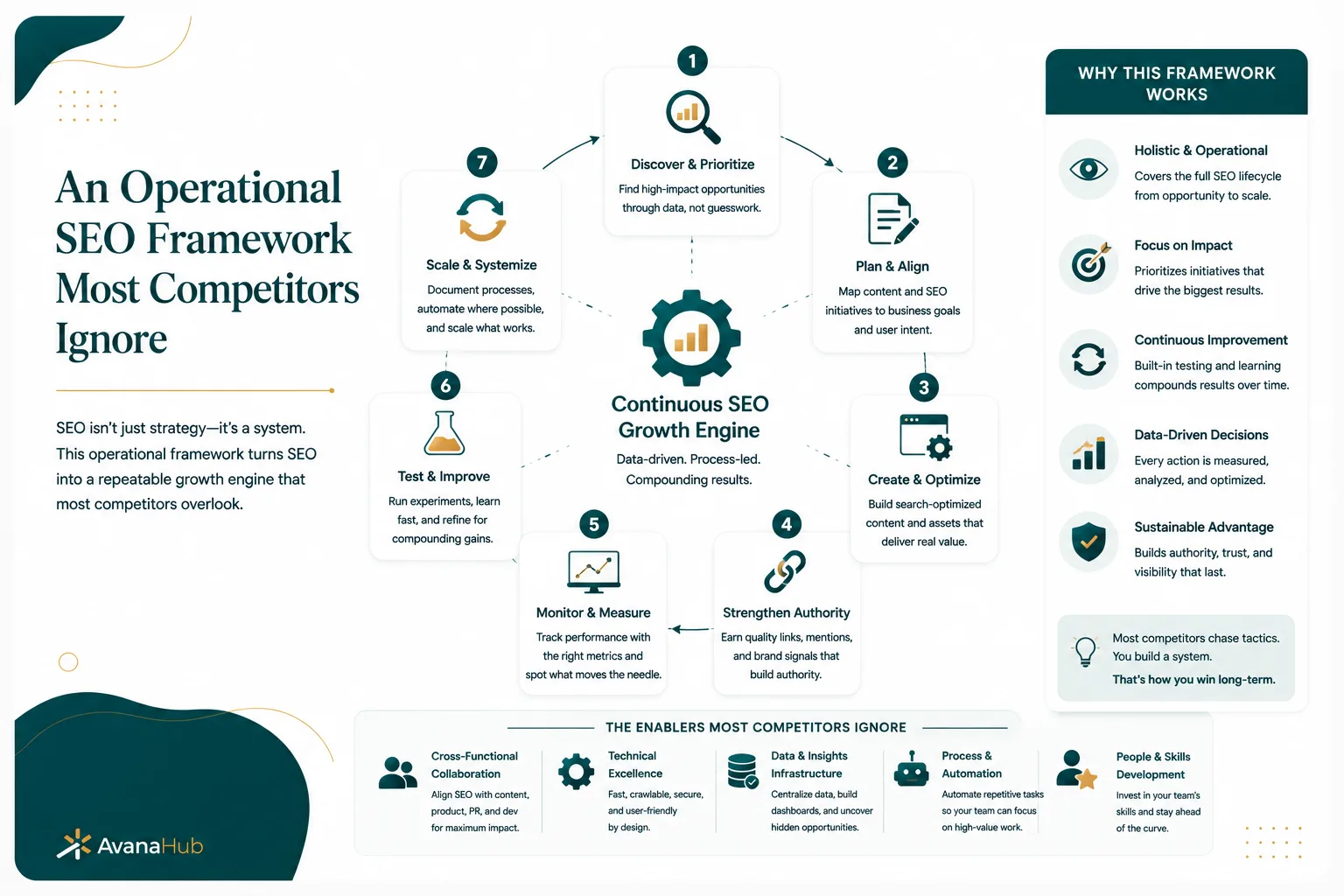
A practical SEO program should run like an operating system, not a collection of disconnected tasks. Use the following framework to decide what to fix, create, update, and measure each month.
1. Classify Every SEO Opportunity
Group opportunities into four categories:
Fix technical blockers first. Then prioritize pages that can influence revenue or strengthen core topics.
2. Score Each Task Before Execution
Use a simple scoring model:
Prioritize tasks with high business value, clear search demand, low technical risk, and realistic execution effort.
3. Create a Monthly SEO Cycle
A useful monthly SEO cycle includes:
- Week 1: Review Search Console, rankings, conversions, crawl issues, and page performance.
- Week 2: Fix technical issues and update priority pages.
- Week 3: Publish new content mapped to keyword clusters and business goals.
- Week 4: Build internal links, refresh old content, review backlink opportunities, and report outcomes.
This prevents SEO from becoming reactive. It also keeps technical, content, and authority work moving together.
4. Maintain a Decision Log
For every meaningful SEO change, document:
- Page URL
- Change made
- Reason for change
- Target keyword or intent
- Date implemented
- Expected outcome
- Performance after 30, 60, and 90 days
A decision log helps separate real SEO learning from guesswork. It also prevents teams from repeating changes without knowing whether they worked.
SEO Implementation Checklist
Use this checklist before publishing or optimizing an important page:
- The page has one clear primary search intent.
- The title tag includes the main keyword naturally.
- The H1 clearly describes the page topic.
- The introduction answers the user’s need quickly.
- Headings follow a logical structure.
- The content includes original value, examples, data, or practical guidance.
- The page links to relevant internal pages.
- Relevant internal pages link back to it.
- Images are compressed and have useful alt text.
- The URL is short and descriptive.
- The page is indexable.
- The canonical tag points to the correct version.
- The page loads well on mobile.
- Schema markup is added where appropriate.
- The CTA matches the user’s stage.
- The page is included in the XML sitemap if it should be indexed.
- Performance is tracked after publication.
How Long SEO Takes to Work
SEO usually takes several months to show meaningful results, but the timeline depends on site age, competition, technical health, content quality, authority, crawl frequency, and execution speed.
A new website in a competitive industry may need 6 to 12 months to gain traction. An established website with authority and technical issues may see improvements faster after fixing indexation problems or updating existing content. Low-competition keywords can rank sooner, while competitive commercial terms require stronger content, links, trust, and time.
The best approach is to separate early indicators from final outcomes. Indexing, impressions, and improved rankings can appear before traffic and conversions. Business results usually require consistent optimization across many pages, not one isolated article.
SEO vs Paid Ads
SEO and paid ads solve different growth problems. SEO builds long-term organic visibility, while paid ads generate controlled traffic faster.
Most businesses should not treat SEO and paid ads as competitors. Paid search can test keywords and landing pages quickly, while SEO can turn proven demand into lower-cost long-term visibility.
Future of SEO: AI, Search Changes, and User Expectations
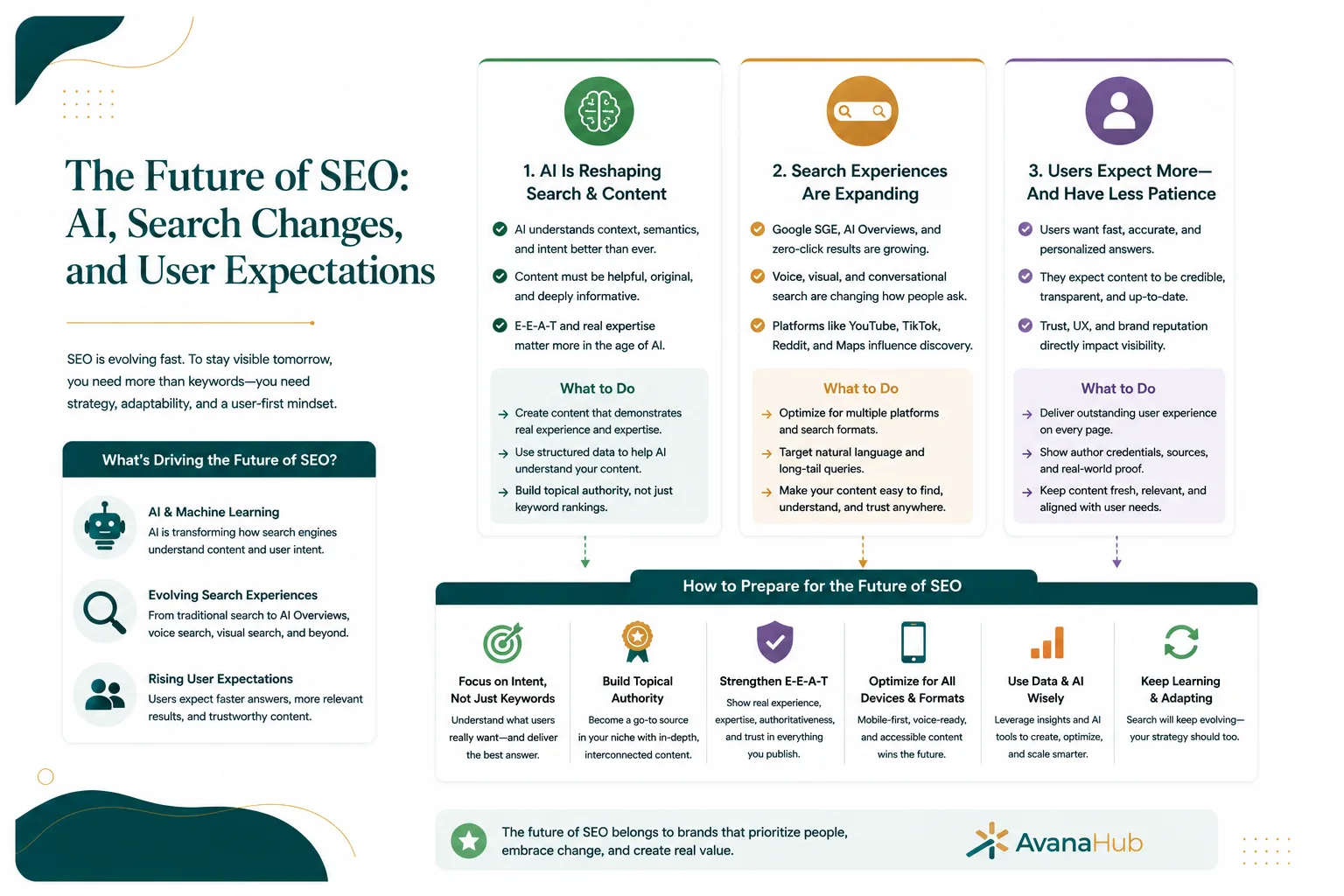
SEO is becoming less about isolated keyword placement and more about information quality, entity clarity, brand trust, and usefulness across formats. AI-generated summaries, conversational search, visual search, and zero-click results are changing how users discover information.
To adapt, websites should:
- Build strong topical coverage around core business areas.
- Publish content with original insight, examples, and real expertise.
- Structure pages so answers are easy to extract.
- Use clear entities, definitions, and schema where appropriate.
- Strengthen brand search demand through content, PR, social, and community visibility.
- Refresh important content regularly.
- Diversify formats with video, images, tools, templates, and comparison content.
- Optimize for conversions, not only traffic.
SEO will continue to reward websites that are technically accessible, trustworthy, relevant, and genuinely useful. Shortcuts will become less reliable as search systems improve at detecting low-value content.
Conclusion
SEO is a complete growth discipline that connects technical performance, content quality, search intent, authority, user experience, and measurement. The strongest results come from fixing crawl and indexation problems, publishing content that fully satisfies user needs, building relevant authority, and improving pages based on real performance data. Businesses should prioritize pages that support both search demand and commercial goals instead of chasing traffic without purpose. A sustainable SEO strategy requires consistent execution, regular auditing, and clear KPIs tied to visibility, qualified traffic, and conversions.
What is the most important part of SEO?
The most important part of SEO is matching search intent with useful, trustworthy, technically accessible content. Without intent alignment, even well-optimized pages may fail to rank or convert.
Can SEO work without backlinks?
SEO can work without many backlinks for low-competition or highly specific queries. Competitive keywords usually require authority signals, including relevant backlinks, strong internal links, brand trust, and high-quality content.
How often should SEO content be updated?
Important SEO content should be reviewed every 3 to 6 months, especially if rankings drop, search intent changes, competitors improve, or the topic depends on current information.
Is technical SEO more important than content?
Technical SEO and content solve different problems. Technical SEO makes ranking possible, while content gives search engines and users a reason to rank the page.
How do I know if SEO is working?
SEO is working when impressions, rankings, organic clicks, indexed priority pages, engagement quality, and conversions improve over time. The most reliable measure is organic traffic that contributes to business goals.
SEO Title:The Complete SEO Guide: Strategy, Technical SEO, Content, Links and KPIs
Meta Description:Learn complete SEO strategy, technical SEO, content optimization, link building, KPIs, tools, and common mistakes for organic growth.
Slug:complete-seo-guide