
AI SEO in 2026 is the practice of making a website clear, trusted, and useful enough to be ranked, summarized, cited, or used as a source by AI-driven search systems. It combines traditional SEO fundamentals with entity clarity, structured content, original insight, and visibility inside AI Overviews and zero-click search results. In this guide, Avana examines how these changes are reshaping search visibility and what businesses need to build content that both users and AI systems can understand, trust, and reference.
The goal is no longer only to rank. The goal is to become a reliable source in the search journey.
Author and Brand Context
This guide is written from the perspective of an SEO and content team working on technical SEO, content strategy, and search visibility for service-based, B2B, and growth-focused websites. At Avana, this usually means connecting content quality with crawlability, topical authority, conversion intent, and measurable business outcomes.
The article does not treat AI SEO as a separate trick. It treats it as the next stage of serious SEO: clearer pages, stronger entities, better evidence, and content that is useful enough to deserve being cited.
Methodology
This analysis is based on four inputs:
- Google’s public guidance on generative AI features in Search, AI Overviews, structured data, and AI-generated content.
- Published research on AI Overviews, source selection, and traffic impact.
- Repeated agency-side patterns observed while auditing content clusters, service pages, programmatic pages, and technical SEO issues.
- Practical SEO principles that still hold in 2026: crawlability, indexability, intent alignment, internal linking, authority, and conversion quality.
Google’s own guidance says that optimizing for generative AI features in Search is still part of SEO. Pages still need to meet technical requirements, be indexable, be eligible for snippets, and offer valuable non-commodity content.
What Changed: Search Became an Answer-and-Source System
Traditional SEO was built around a simple path: user searches, sees ten blue links, clicks one, and reads.
That path still exists, but it is no longer the only path. In 2026, many search results include AI Overviews, featured snippets, People Also Ask boxes, videos, forums, local packs, product panels, and other SERP features that answer part of the query before the user clicks.
This creates a different SEO problem:
The result is not “SEO is dead.” The result is that weak SEO is less useful. Pages that only repeat common explanations are easier to ignore. Pages with clear expertise, original value, and strong structure have more ways to appear.
AI Overviews: Why Source Selection Matters
AI Overviews summarize information directly in Google Search and may cite selected sources. Their exact appearance varies by query, market, language, topic, and sensitivity. They are not equally present across all searches.
A 2026 measurement study of Google AI Overviews examined more than 55,000 trending queries across 19 topical categories. It reported that AI Overview activation was 13.7% overall and much higher for question-form queries, at 64.7%. The same study found that nearly 30% of cited domains did not appear in the co-displayed first-page organic results, which suggests that AI Overview source selection can differ from traditional ranking order.
That matters for SEO strategy.
Ranking still matters. But ranking alone is not enough. A page can rank and still fail to be selected as a useful source. Another page may be cited because it gives a clearer answer, stronger evidence, or a more extractable explanation.
In practice, this means every important page should answer three questions:
- Can a human understand the answer quickly?
- Can a search engine identify the entity, topic, and purpose of the page?
- Can an AI system extract a reliable answer without guessing?
If the answer is no, the page is not ready for AI-era search.
Zero-Click Search: Fewer Clicks, Higher Pressure on Content
Zero-click search happens when users get enough information from the results page and do not click through to a website.
This is not new. Featured snippets, knowledge panels, calculators, maps, and direct answers already created zero-click behavior. AI Overviews expand the pattern because they can synthesize longer answers from multiple sources.
Research on Google AI Overviews and Wikipedia found that exposure to AI Overviews reduced daily traffic to English Wikipedia articles by approximately 15%, with stronger effects in some informational categories.
For SEO teams, the lesson is not to panic over every traffic drop. The lesson is to separate visibility from clicks.
In 2026, content has three different jobs:
A blog post may influence a user without receiving the final click. A comparison page may receive fewer visits but better leads. A service page may convert users who already saw the brand in an AI answer.
This is why SEO reporting must move beyond raw traffic. Organic clicks still matter, but impressions, branded search, assisted conversions, AI citations, and conversion quality now matter too.
Entity-Based Ranking: The Center of AI SEO
Entity-based ranking is the shift from matching keywords to understanding things: brands, people, products, services, locations, topics, and relationships.
For AI search, this is critical. AI systems need to understand not only what a page says, but who is saying it and whether that source fits the topic.
A clear entity answers questions like:
- Who is the brand?
- What does it do?
- Which topics is it known for?
- Where does it operate?
- Who writes or reviews the content?
- Is the information consistent across the web?
- Do other trusted sources mention the brand?
For an agency like Avana, entity clarity means the website should not look like a random collection of blog posts. It should clearly connect the brand to SEO, content strategy, Google Ads, technical SEO, web design, conversion optimization, and digital growth.
That connection should appear in:
- service pages
- author bios
- About page
- case studies
- internal links
- schema markup
- Google Business Profile
- third-party mentions
- social profiles
- client reviews
- consistent brand descriptions
Google’s Organization structured data documentation says organization markup can help Google understand administrative details and disambiguate an organization in search results.
That is the real role of structured data in AI SEO. It does not magically create authority. It helps machines understand the authority you have already built.
What We See in Real SEO Work
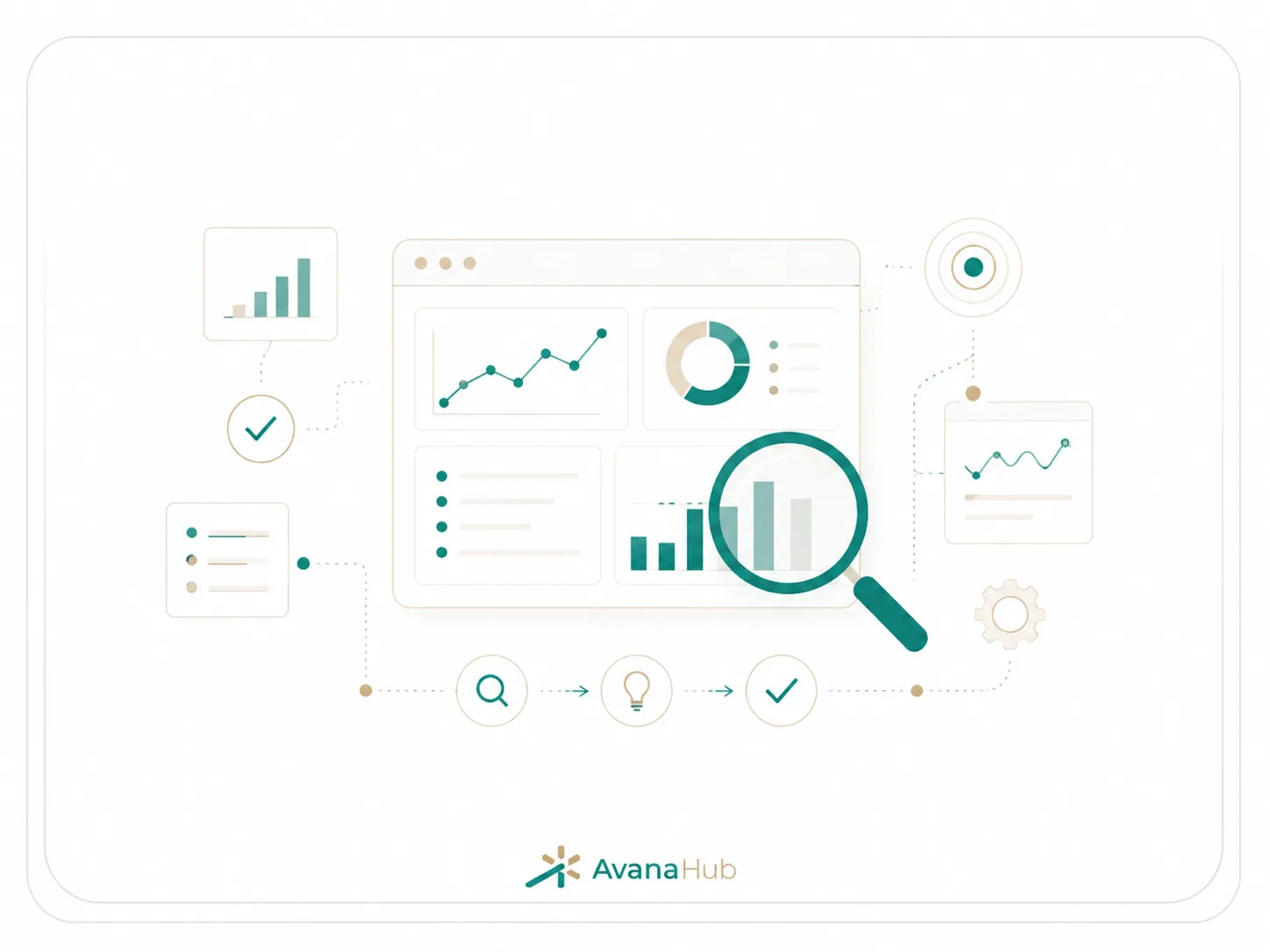
AI SEO discussions often stay theoretical. Real websites fail for simpler reasons.
1. Programmatic pages can disappear when technical quality is weak
In agency audits, one recurring pattern is that large sets of programmatic or template-based pages can become unstable when the server response is slow, rendering is inconsistent, or internal linking is thin.
The issue is not “programmatic SEO is bad.” The issue is that programmatic pages often multiply technical weaknesses. If thousands of pages depend on the same slow template, unclear canonical logic, weak content blocks, or poor crawl paths, the risk scales quickly.
The practical lesson: before scaling templates, test crawlability, indexability, server latency, rendering, canonical rules, and internal links on a smaller sample.
A complete technical seo review should identify these issues before they affect hundreds or thousands of template-based pages.
2. B2B content performs better when clusters are built around decisions, not keywords
In B2B projects, isolated blog posts often struggle even when they are well-written. A single article about “technical SEO” is rarely enough to build authority or convert a serious buyer.
What tends to work better is a hub-and-spoke structure:
- a main service or pillar page
- supporting educational guides
- comparison pages
- implementation checklists
- case studies
- FAQ pages
- internal links that connect the full journey
This gives users a path from problem awareness to vendor evaluation. It also gives search engines a clearer map of topical authority.
3. The best AI-search pages are usually not the longest pages
Another pattern we see: the page that performs best is not always the most detailed. It is often the clearest.
Strong pages usually answer early, define terms cleanly, use tables where they help, include specific examples, show brand context, and connect to related pages. They do not bury the answer under a long introduction.
This is why “write more” is not a strategy. Better structure, better evidence, and clearer entity signals usually matter more than word count.
AI SEO vs SEO vs AEO vs GEO
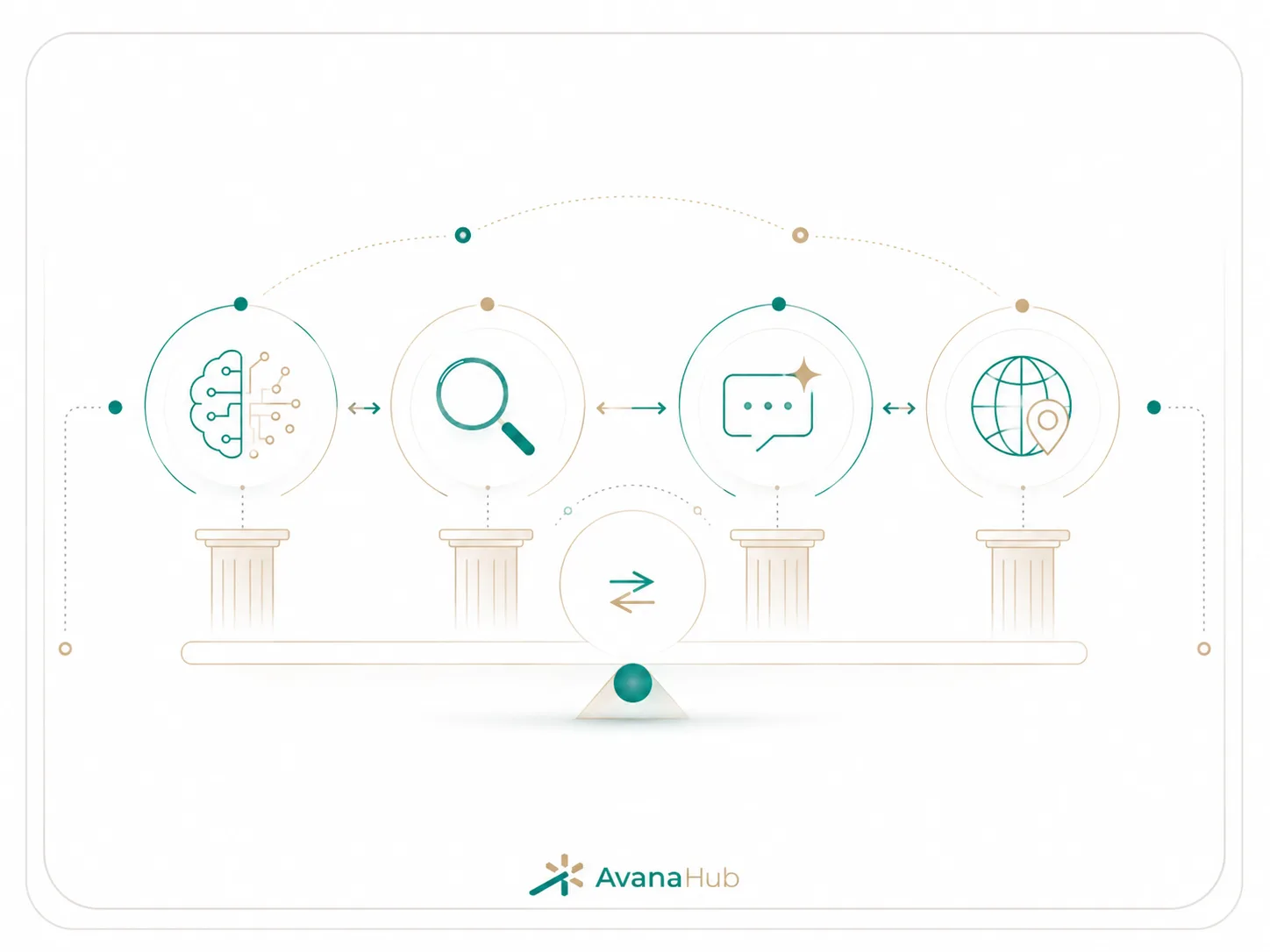
Many teams now use terms like AEO, GEO, LLMO, or AI visibility. These labels can be useful, but they should not distract from the fundamentals.For a broader understanding of the core principles behind this approach, see The Complete SEO Guide, which covers the foundations needed before developing an AI-focused search strategy.
Google’s guidance is clear that generative AI optimization is still SEO from Google Search’s perspective. The practical approach is not to replace SEO with a new acronym. It is to improve SEO so pages work in both traditional and AI-driven search experiences.
How to Build Source-Worthy Content
Source-worthy content is content that deserves to be referenced because it adds something useful, clear, or verifiable.
It usually has at least one of these qualities:
- first-hand experience
- original data
- a practical framework
- a clear definition
- a useful comparison
- a specific example
- expert interpretation
- transparent methodology
- current sources
- strong internal context
Commodity content does the opposite. It repeats common definitions, lists generic tips, and gives advice that the page itself does not follow.
Strong on-page seo also makes content easier to understand and extract by using clear headings, direct answers, relevant internal links, and a structure aligned with search intent.
For example, a weak AI SEO article says: “Use original insights.”A stronger article includes the original insight inside the article.
A weak article says: “Add methodology.”A stronger article explains how the analysis was created.
A weak article says: “Build topic clusters.”A stronger article shows where this page sits in the cluster.
This article should be treated as the hub page for an AI SEO cluster. Suggested spokes:
- [Internal link: How AI Overviews Affect SEO Traffic]
- [Internal link: Entity SEO Checklist for B2B Brands]
- [Internal link: Zero-Click Search Strategy]
- [Internal link: Structured Data for Service Businesses]
- [Internal link: How to Build SEO Topic Clusters]
- [Internal link: AI Content Risk and Editorial QA]
This structure keeps the pillar focused while giving each subtopic enough depth elsewhere.
Structured Data: Use It for Clarity, Not Decoration
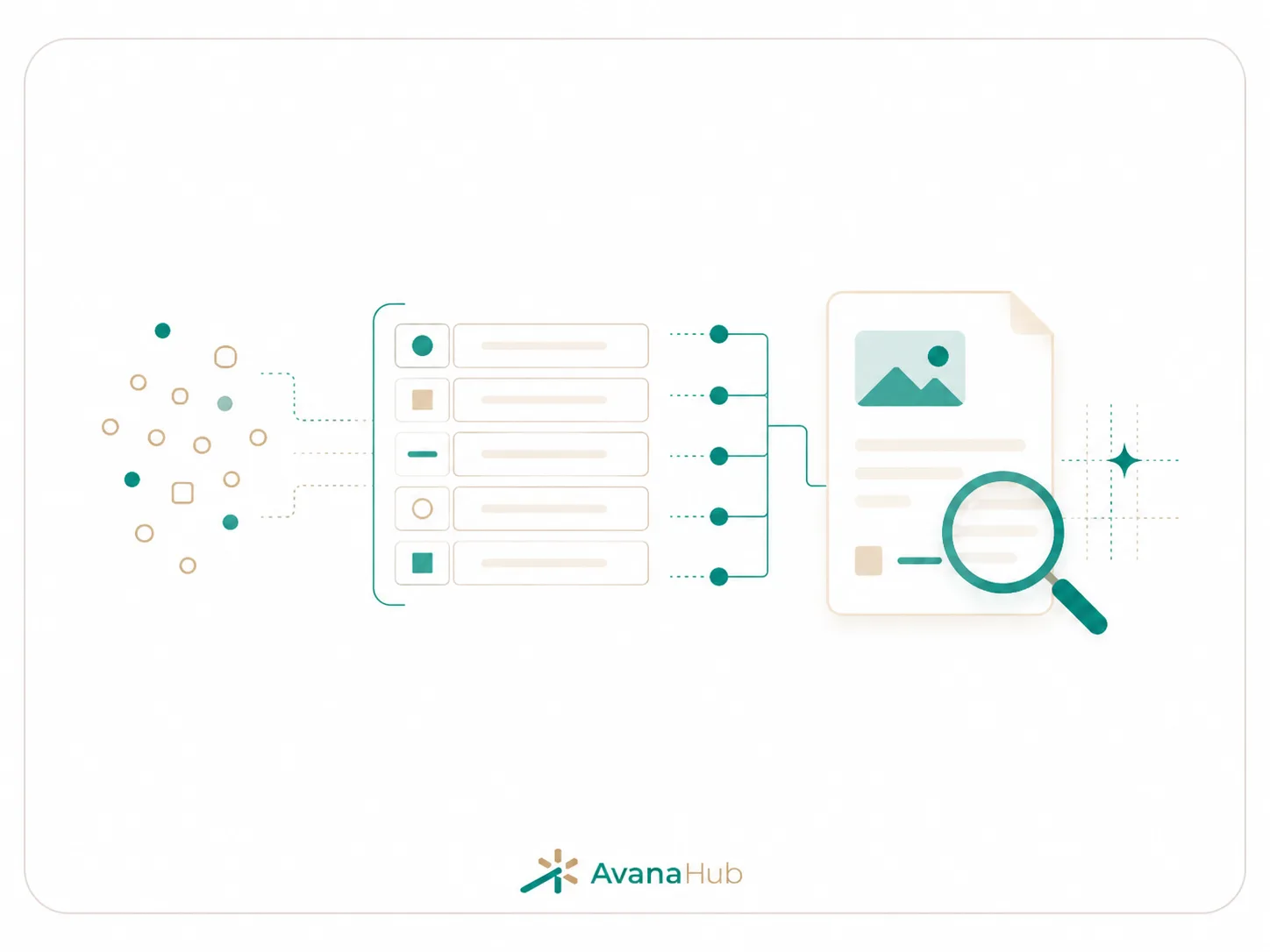
Structured data helps search engines understand what a page, brand, product, person, or service represents. Google states that structured data helps it understand page content, but markup should be valid and aligned with the visible page.
For a pillar page like this, useful schema may include:
- Organization schema
- Article or BlogPosting schema
- Person schema for the author or reviewer
- Breadcrumb schema
- FAQ schema if FAQs are visible on the page
For the broader cluster, other schema types may apply:
- Service schema for SEO service pages
- LocalBusiness schema for local agency visibility
- Product schema for ecommerce content
- Review schema only when eligible and compliant
Structured data is not a substitute for trust. It is a translation layer. It helps search engines process what the page already communicates.
AI Content Risk: The Problem Is Scale Without Value
AI-generated content is not automatically bad for SEO. Google’s guidance says generative AI can support research and structure, but using AI or automation to generate many pages without adding value may violate scaled content abuse policies.
The risk is not the tool. The risk is the output.
Safe AI use:
- outlining
- clustering topics
- editing drafts
- summarizing research
- checking content gaps
- generating brief variations
- preparing internal QA checklists
Risky AI use:
- mass publishing generic articles
- creating many near-duplicate pages
- writing without expert review
- making claims without sources
- using fake experience
- adding schema that does not match the page
- producing pages only to capture keyword variations
If AI helps produce the article, human editorial responsibility still remains. The page must be accurate, useful, and differentiated.
Practical AI SEO Framework for 2026
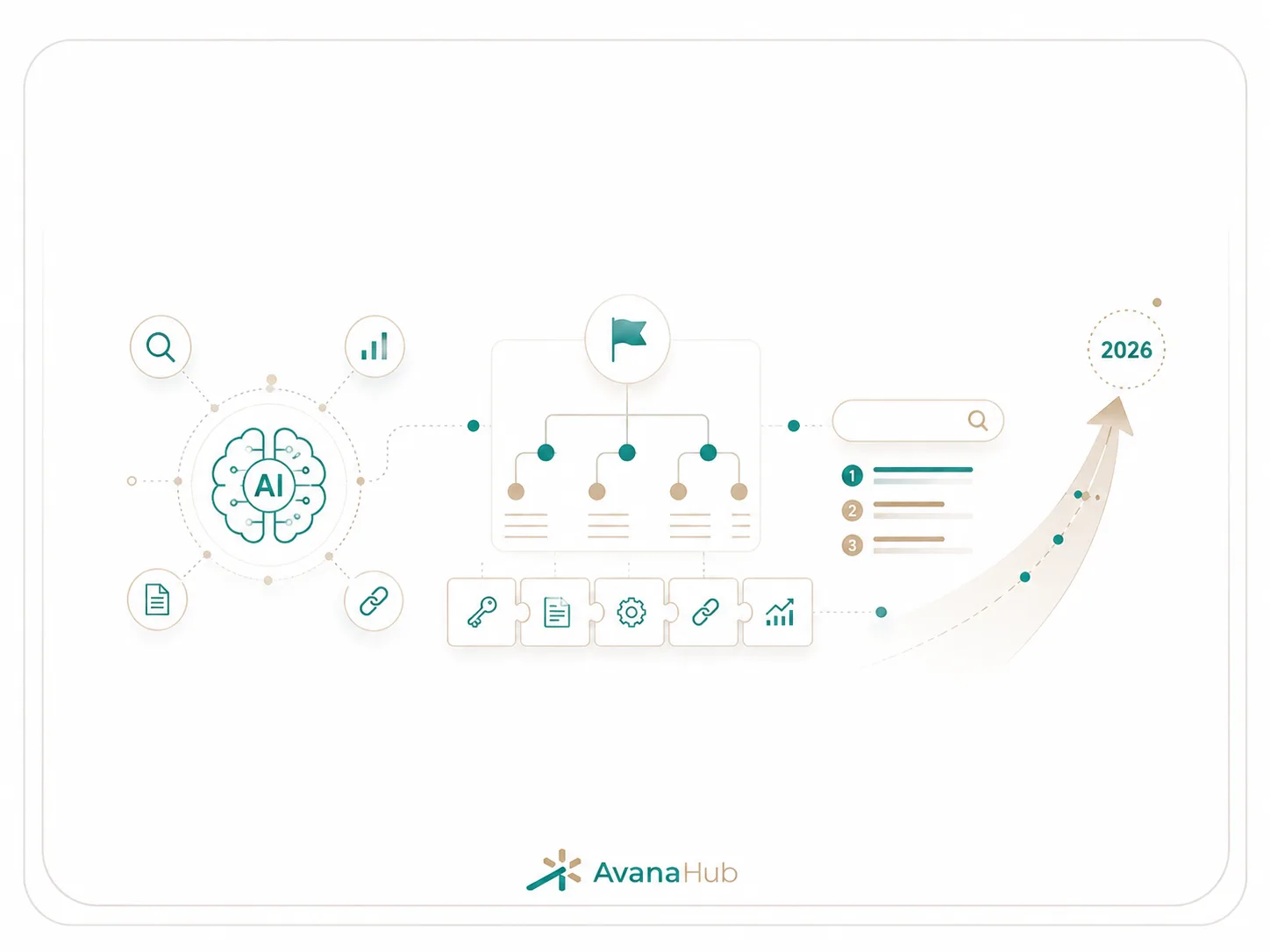
A strong AI SEO strategy should follow this order.
1. Define the entity
Clarify the brand, author, service, location, and topical focus. Do this before scaling content.
2. Build the pillar
Create one strong hub page for the core topic. The hub should answer the main query early, explain the framework, and link to deeper spokes.
3. Create focused spokes
Each spoke should cover one specific subtopic in depth. Do not overload the pillar with every related topic.
For this article, Local SEO, Ecommerce SEO, and B2B SEO should not be full sections inside the main hub. They should become separate spoke articles because each one needs its own strategy, examples, schema, and conversion path.
Suggested spokes:
- [Internal link: AI SEO for Local Businesses]
- [Internal link: AI SEO for Ecommerce Websites]
- [Internal link: AI SEO for B2B Companies]
4. Add evidence and experience
Use examples, audit patterns, case studies, sources, or methodology. Do not rely only on abstract advice.
5. Make the page extractable
Use direct answers, tables, short sections, descriptive headings, and clear definitions.
6. Connect the journey
Link informational content to comparison pages, service pages, case studies, and conversion pages.
7. Measure visibility differently
Track more than rankings and clicks.
AI SEO Metrics That Matter
A traffic-only SEO report can misread AI search. A page may lose clicks but gain visibility. Another page may keep rankings but stop influencing buyers. The reporting model has to reflect the new search journey.
Practical AI SEO Checklist
Use this checklist before publishing or updating an important page.
Answer and intent
- Does the page answer the main query in the first 2–3 sentences?
- Is the search intent clear?
- Does the page avoid a long generic introduction?
- Are the headings aligned with real user questions?
Entity and trust
- Is the brand clearly identified?
- Is the author, reviewer, or team context visible?
- Is there a clear connection between the brand and the topic?
- Are claims supported when they need evidence?
- Is the content consistent with other brand profiles and service pages?
Content quality
- Does the page include original insight, examples, methodology, or experience?
- Does it avoid repeating generic advice?
- Is every major recommendation demonstrated in the page itself?
- Are tables or lists used only where they improve clarity?
Technical clarity
- Is the page crawlable and indexable?
- Is it eligible to show a snippet in Google Search?
- Is the HTML structure clean?
- Is schema implemented only where it matches visible content?
- Are canonical rules, rendering, and page speed checked?
Cluster and conversion
- Does the page link to relevant spoke articles?
- Does it link to a related service or conversion page naturally?
- Is there a next step for users who need help?
- Is the page measured by visibility, engagement, and conversion quality?
What Not to Do in AI SEO
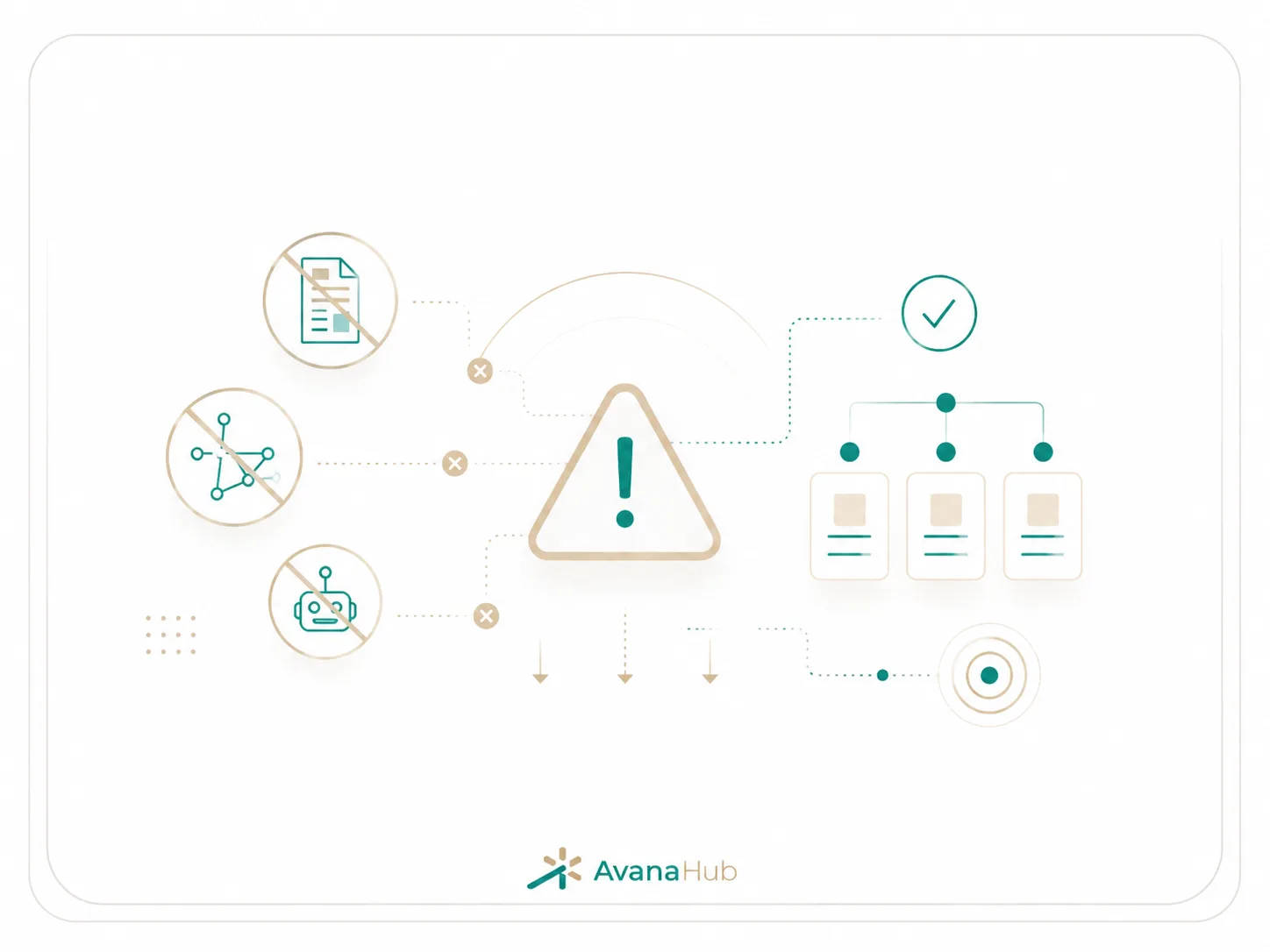
Avoid these mistakes:
- treating AI SEO as a separate hack
- publishing generic AI-written articles at scale
- chasing every new acronym without fixing SEO basics
- adding fake FAQs for schema
- using unsupported statistics
- claiming experience the brand does not have
- writing about entities without building entity clarity
- expanding one pillar until it loses topical focus
- ignoring technical issues across template-based pages
- measuring success only by traffic
AI SEO rewards the same things users reward: clarity, usefulness, trust, and relevance.
Where Local, Ecommerce, and B2B Fit
Local SEO, Ecommerce SEO, and B2B SEO are not minor subsections of AI SEO. Each one deserves its own spoke page because the signals, schema, page types, and conversion paths are different.
For this pillar, the important point is simple: the same AI SEO principles apply, but the execution changes by business model.
- Local SEO needs stronger business identity, reviews, location signals, and Google Business Profile consistency.
- Ecommerce SEO needs clean product data, comparison content, category quality, and product schema.
- B2B SEO needs decision-stage content, service clarity, case studies, and internal links between education and conversion pages.
Recommended internal spokes:
- [Internal link: AI SEO for Local Businesses]
- [Internal link: AI SEO for Ecommerce Websites]
- [Internal link: AI SEO for B2B Companies]
This keeps the pillar focused while giving each vertical enough depth to rank on its own.
Conclusion
AI SEO in 2026 is not about abandoning traditional SEO. It is about making SEO strong enough for AI-driven search.
The strongest pages are not just optimized for keywords. They answer early, show experience, clarify entities, use structured information, cite sources when needed, connect to a wider topic cluster, and guide users toward a useful next step.
AI Overviews and zero-click search reduce the value of shallow informational content. Entity-based ranking increases the value of trusted brands, clear expertise, and well-structured websites.
For businesses, the opportunity is clear: stop producing interchangeable content and start building source-worthy assets that users, search engines, and AI systems can understand and trust.
If your website already has content but lacks structure, entity clarity, or conversion-focused SEO, Avana’s SEO and content strategy team can help turn scattered pages into a connected search system built for ranking, citation, and business results.
Businesses that need support with content structure, entity signals, technical implementation, and performance measurement can use professional seo services to manage these areas as one connected strategy.