

Ecommerce SEO is the process of optimizing an online store so product pages, category pages, and supporting content can appear in organic search results for commercial, transactional, and product-related queries. For online stores, SEO is not only about traffic; it directly affects product discovery, category visibility, conversion rate, customer acquisition cost, and long-term revenue. A strong ecommerce SEO strategy requires technical control, clean site architecture, optimized category pages, useful product content, structured data, internal linking, and ongoing performance review. This guide from Avana explains how ecommerce businesses can build an SEO foundation that supports both rankings and sales.
What Is Ecommerce SEO?
Ecommerce SEO is the practice of improving an online store’s visibility in search engines for product, category, brand, comparison, and buying-intent searches. It helps users find relevant products through organic search without relying only on paid ads or marketplace traffic.
The main areas of ecommerce SEO include:
- Keyword research for products and categories
- SEO-friendly site architecture
- Category page optimization
- Product page optimization
- Technical SEO
- Faceted navigation control
- Structured product data
- Internal linking
- Image optimization
- Content marketing
- Review optimization
- Core Web Vitals
- Indexation management
- Conversion-focused page improvements
Ecommerce SEO works best when product discovery, technical structure, and user experience are planned together.
Why Ecommerce SEO Matters for Online Stores

Ecommerce websites often depend heavily on paid ads, marketplaces, email, and social media. SEO reduces dependency on paid acquisition by building organic visibility for searches that already show buying intent.
Understanding SEO vs Google Ads is especially important for online stores. Google Ads can generate immediate product traffic as long as the advertising budget remains active, while SEO focuses on building sustainable visibility for category, product, and informational searches over time. Many ecommerce businesses use both channels together to balance short-term sales with long-term organic growth.
Ecommerce SEO can help online stores:
For ecommerce businesses, the most valuable SEO traffic often comes from category, collection, and comparison queries rather than only individual product names.
Ecommerce SEO vs Standard SEO
Ecommerce SEO has the same foundation as general SEO, but online stores have more technical and structural challenges.
Ecommerce SEO needs stronger technical discipline because a single template or filter issue can affect thousands of URLs.
Ecommerce Keyword Research
Ecommerce keyword research identifies how users search for products, categories, features, brands, comparisons, and buying guidance. The goal is to map each keyword to the right type of page.
A structured Keyword Research process should consider search intent, product availability, profit margins, competition, seasonality, and the type of page that currently ranks. This prevents online stores from targeting valuable commercial terms with the wrong content format.
Important ecommerce keyword types include:
A common mistake is targeting all keywords with blog posts. In ecommerce SEO, commercial and transactional keywords usually need category, product, or collection pages.
Mapping Keywords to Ecommerce Pages
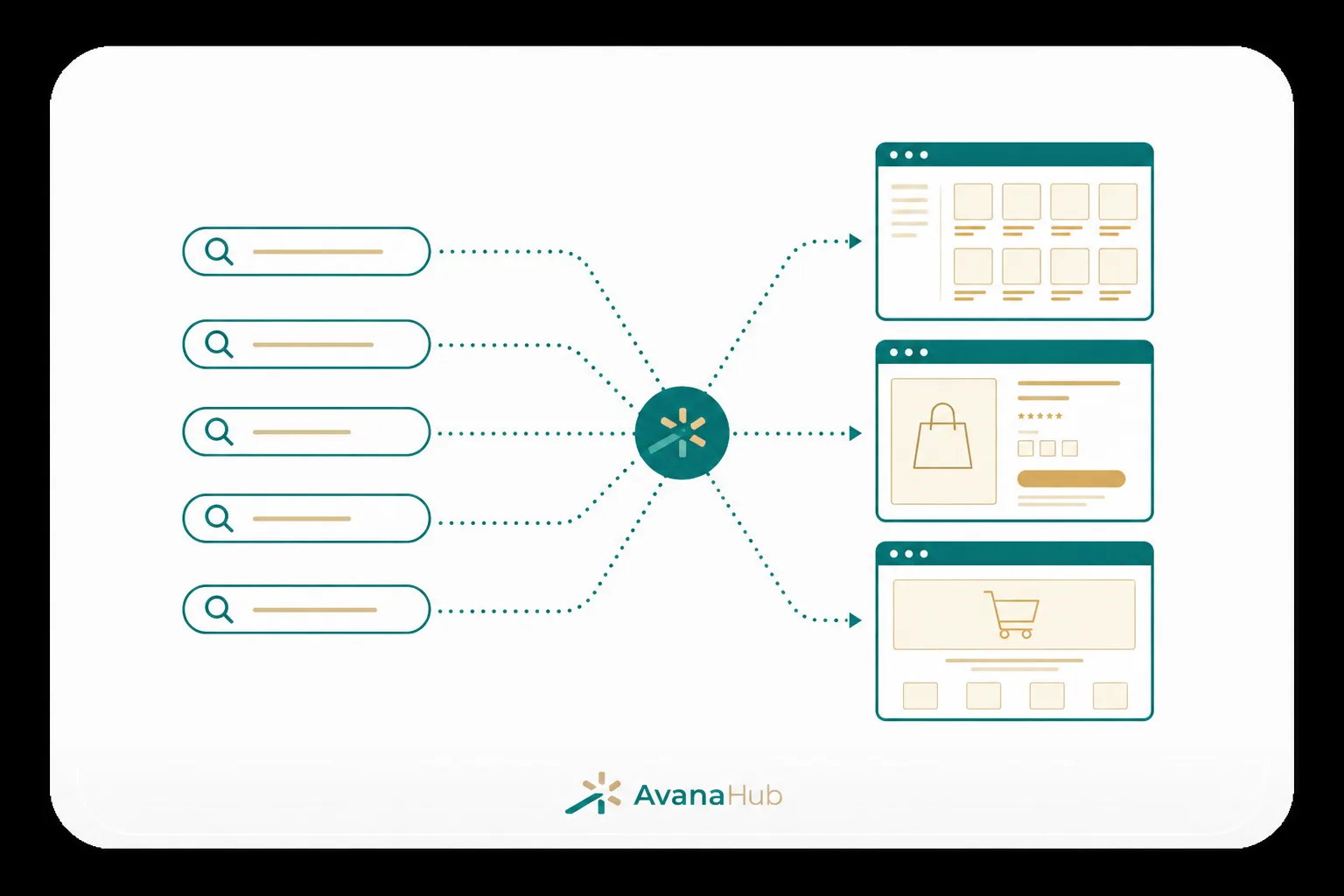
Keyword mapping prevents cannibalization and ensures each query has the right destination. Every important keyword cluster should be assigned to one primary page.
Example keyword map:
Before creating a new page, check whether an existing category, filter, or product page already satisfies the intent. Creating multiple similar pages can split rankings and confuse search engines.
Ecommerce Site Architecture
Site architecture determines how categories, subcategories, products, filters, and content are organized. A clear structure helps users browse and helps search engines understand page importance.
A strong ecommerce structure usually looks like this:
- Homepage
- Main category pages
- Subcategory pages
- Product pages
- Buying guides
- Comparison pages
- Brand pages
- Support pages
- Blog or resource center
Example:
Important category pages should be reachable within a few clicks from the homepage. Products should be connected to relevant categories, filters, related items, and internal search paths.
Category Page SEO

Category pages are often the most important SEO pages for ecommerce websites because they target broad commercial searches. They help users compare products and move toward purchase.
Effective On-Page SEO for category pages involves optimizing the title tag, H1, introductory content, headings, product descriptions, internal links, image alt text, breadcrumbs, and supporting copy. These elements should clearly communicate the category’s topic without making the page difficult to browse.
An optimized category page should include:
- Clear H1 with the main category keyword
- Short helpful intro copy
- Relevant product listings
- Useful filters and sorting
- Internal links to subcategories
- Descriptive title tag
- Clean URL
- Breadcrumbs
- Product availability
- Review signals where relevant
- FAQ section if useful
- Unique content below or around the product grid
- Fast loading and mobile usability
Category copy should support buying decisions, not block product browsing. Avoid long text walls above the product grid. A short intro near the top and deeper guidance lower on the page usually works better.
Product Page SEO
Product pages target specific product names, models, SKUs, brands, and purchase-intent searches. They also need to convert users who already know what they want.
A strong product page should include:
Avoid using only manufacturer descriptions. Duplicate product content is common across ecommerce websites and makes it harder to stand out.
Product Descriptions That Support SEO
A product description should help users decide whether the product is right for them. It should not simply repeat specifications already shown in a table.
A useful product description includes:
- What the product is
- Who it is for
- Main features
- Practical benefits
- Materials, size, compatibility, or technical details
- Use cases
- Care or maintenance information
- What is included
- Differences from similar products
- Common buyer questions
Example structure:
For large catalogs, prioritize unique descriptions for high-margin, high-traffic, and strategically important products first.
Technical SEO for Ecommerce Websites

Technical SEO is critical for ecommerce because stores often generate many URLs through filters, variants, sorting, parameters, pagination, and internal search pages.
Important technical checks include:
- Crawlability
- Indexability
- Canonical tags
- Robots.txt
- XML sitemaps
- Parameter handling
- Pagination
- Duplicate content
- Redirects
- Broken links
- Product availability handling
- Structured data validation
- Core Web Vitals
- Mobile usability
- JavaScript rendering
- HTTPS
- Internal search control
A technical issue in an ecommerce template can affect thousands of pages. Regular crawling and monitoring are necessary.
Faceted Navigation and Filter SEO
Faceted navigation allows users to filter products by size, color, brand, price, rating, material, availability, and other attributes. It improves UX but can create serious SEO problems if every filter combination creates an indexable URL.
Common faceted navigation risks:
- Duplicate pages
- Crawl budget waste
- Infinite URL combinations
- Thin filtered pages
- Keyword cannibalization
- Parameter duplication
- Indexing low-value URLs
- Canonical confusion
A practical approach:
Only filters with real search demand, useful product sets, and unique value should become indexable landing pages.
Canonical Tags for Ecommerce
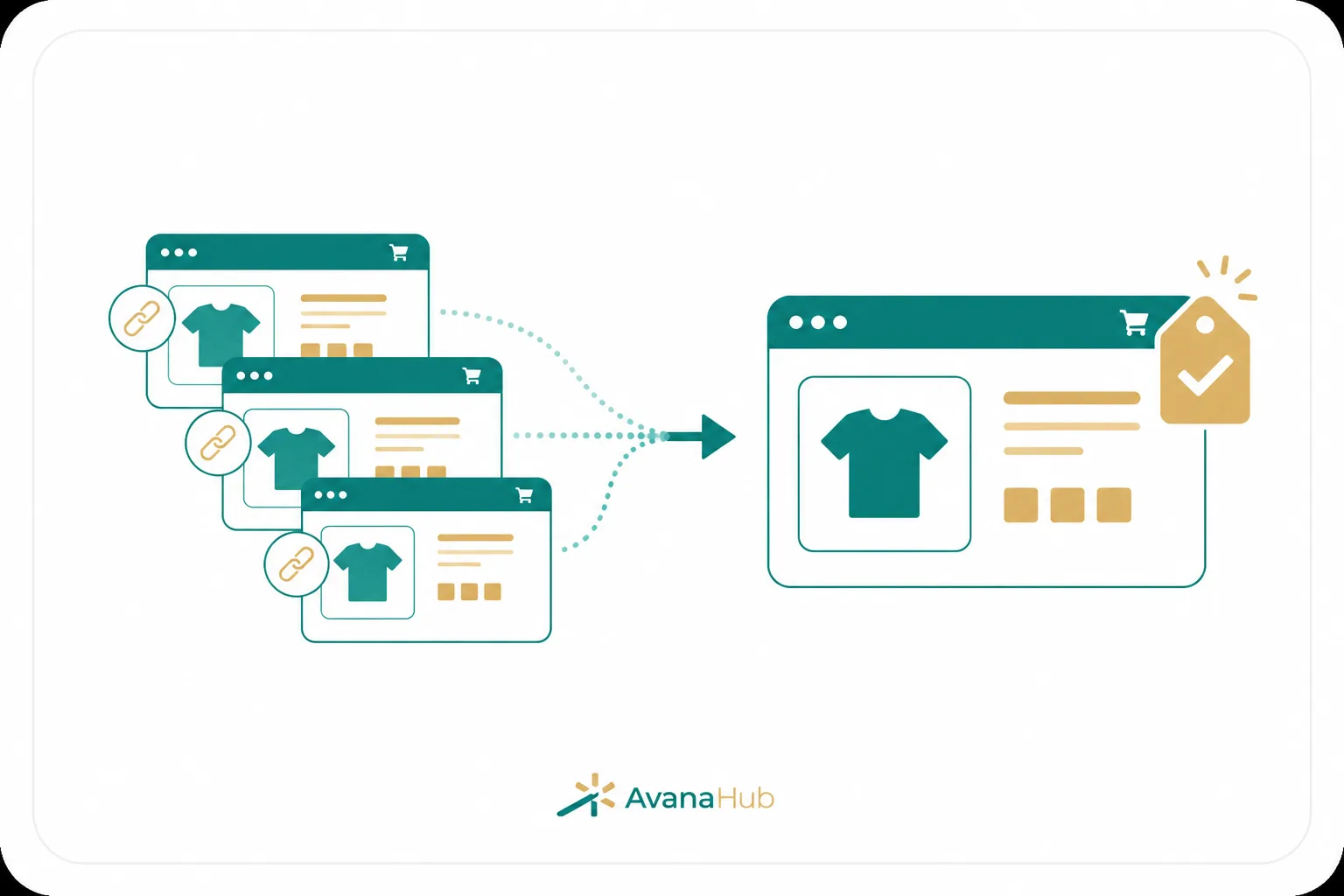
Canonical tags help search engines identify the preferred version of similar or duplicate pages. Ecommerce sites need canonicals because products and categories often appear through multiple URL paths.
Use canonical tags for:
- Product variants
- Tracking parameters
- Sort parameters
- Duplicate category paths
- Similar filtered pages
- HTTP/HTTPS consistency
- www/non-www consistency
- Pagination where appropriate based on structure
Common canonical mistakes include:
- Canonicalizing important category pages to the wrong page
- Pointing canonicals to redirected URLs
- Canonicalizing all filtered pages to the main category when some deserve indexation
- Missing self-referencing canonicals
- Using canonicals while internal links point to non-canonical URLs
Canonical tags must align with internal links, sitemaps, redirects, and indexation rules.
XML Sitemaps for Ecommerce
XML sitemaps help search engines discover important ecommerce URLs. A clean ecommerce sitemap should include only canonical, indexable, high-value pages.
Include:
- Main category pages
- Important subcategory pages
- Indexable product pages
- Brand pages where useful
- Buying guides and content pages
- Priority attribute landing pages
Exclude:
- Noindex pages
- Redirected URLs
- 404 pages
- Out-of-stock pages that should not be indexed
- Sort URLs
- Internal search pages
- Parameter URLs
- Duplicate filtered combinations
For large stores, separate sitemaps by URL type. This makes monitoring easier.
Example:
- /category-sitemap.xml
- /product-sitemap.xml
- /brand-sitemap.xml
- /blog-sitemap.xml
Handling Out-of-Stock Products
Out-of-stock products need careful handling because they may still have rankings, backlinks, and demand.
Use different actions depending on the situation:
Do not automatically delete all out-of-stock product pages. This can cause avoidable SEO loss.
Product Variants and SEO
Product variants include differences in size, color, material, model, storage, bundle, or configuration. The SEO treatment depends on search demand and uniqueness.
Example:
A “black leather office chair” may deserve its own page if users search for that exact variation and the store has enough products or detail to support it. A simple size variation usually does not need a separate indexed page.
Structured Data for Ecommerce SEO
Structured data helps search engines understand product information. It can also support rich results when implemented correctly.
Important ecommerce schema types:
Product schema should match visible page content. Do not mark up fake reviews, hidden ratings, inaccurate prices, or unavailable products as in stock.
Ecommerce Internal Linking
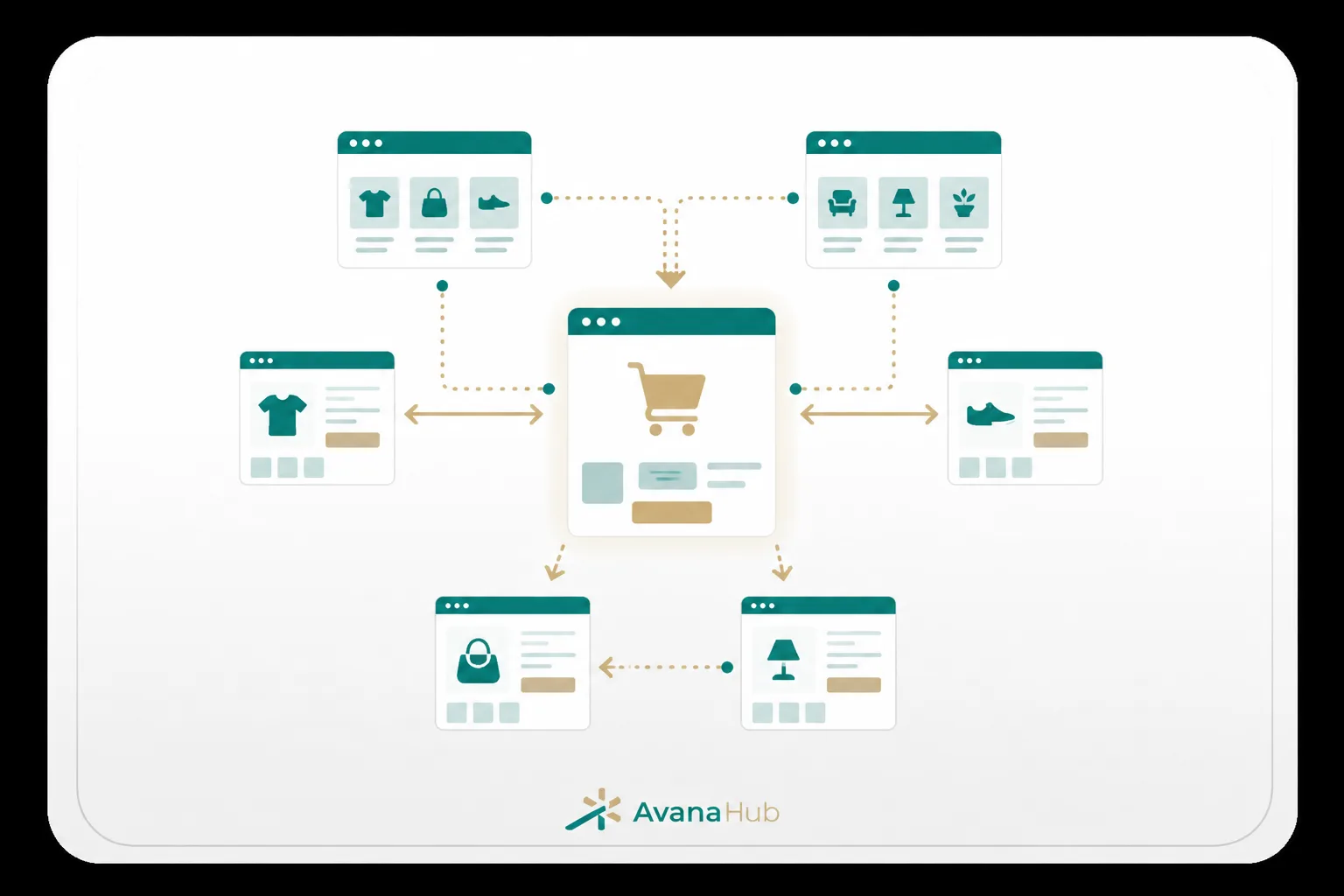
Internal linking helps search engines discover important pages and helps users navigate product options.Internal linking helps search engines discover important pages and helps users navigate product options. However, internal links are only one part of building stronger search authority. Ecommerce businesses that want to improve their backlink profile and strengthen the authority of key category and product pages can explore Link Building Strategies for Authority for practical approaches to earning relevant, high-quality links and supporting long-term organic growth.
Ecommerce internal links should connect:
- Homepage to main categories
- Main categories to subcategories
- Categories to priority products
- Product pages to related products
- Buying guides to relevant categories
- Blog posts to product collections
- Brand pages to product categories
- Best-seller pages to product pages
- Seasonal pages to evergreen categories
Useful internal linking modules include:
- Breadcrumbs
- Related products
- Recently viewed products
- Popular categories
- Best sellers
- Complete the look
- Customers also bought
- Buying guide links
- Brand navigation
- Product comparison links
Internal links should not be random. They should support product discovery, authority flow, and purchase intent.
Ecommerce Content Marketing
Content marketing supports ecommerce SEO by targeting research-stage and comparison-stage searches. It helps users choose products and builds topical authority.
Useful ecommerce content types include:
- Buying guides
- Product comparisons
- “Best” lists
- Size guides
- Style guides
- Maintenance guides
- Use-case guides
- Gift guides
- Seasonal guides
- Problem-solving guides
- Brand comparisons
- Material explainers
- Installation guides
- FAQs
- Video guides
Example:
A mattress store could create:
- Best Mattress for Back Pain
- Memory Foam vs Spring Mattress
- Mattress Size Guide
- How to Choose a Mattress for Side Sleepers
- Mattress Care Guide
Each guide should link to relevant categories and products. Otherwise, content may attract traffic without supporting sales.
Ecommerce SEO and User Reviews
Reviews support both SEO and conversion. They add unique content, answer buyer concerns, and create trust.
Reviews can help with:
- Fresh user-generated content
- Long-tail keyword coverage
- Product credibility
- Conversion rate
- Rich result eligibility where guidelines are met
- Buyer confidence
- Objection handling
Review strategy should focus on authentic customer feedback. Avoid fake reviews, duplicate review blocks across products, or marking up reviews that do not follow platform guidelines.
Useful review elements include:
- Rating summary
- Review count
- Verified buyer labels
- Review filters
- Photos from customers
- Pros and cons
- Common themes
- Review sorting
- Responses from the store where appropriate
Reviews are especially important for products with high consideration, high price, or quality concerns.
Image SEO for Ecommerce

Images influence product discovery, page speed, and conversion rate. They are especially important for fashion, furniture, beauty, food, electronics, real estate, and lifestyle products.
Ecommerce image SEO checklist:
- Use descriptive filenames.
- Compress images before upload.
- Use WebP or AVIF where appropriate.
- Provide multiple product angles.
- Add accurate alt text.
- Avoid keyword stuffing in alt text.
- Use responsive image sizes.
- Lazy-load below-the-fold images.
- Preload important above-the-fold images.
- Include image dimensions to avoid layout shifts.
- Use high-quality images without slowing the page.
Example filename:
black-leather-office-chair-front-view.webp
Example alt text:
“Black leather office chair with adjustable armrests and metal base”
Alt text should describe the image accurately for accessibility and context.
Page Speed and Core Web Vitals for Online Stores
Ecommerce websites often struggle with page speed because they use product images, tracking scripts, reviews, recommendations, chat widgets, filters, and personalization tools.
Core Web Vitals issues often appear on:
- Homepage
- Category pages
- Product pages
- Cart pages
- Checkout pages
- Landing pages
- Search result pages
Common fixes include:
Performance improvements should focus first on pages that drive traffic and revenue.
Mobile SEO for Ecommerce
Many ecommerce users browse and buy on mobile devices. Mobile experience directly affects rankings, engagement, and sales.
Mobile ecommerce checks:
- Product images fit properly.
- Add-to-cart buttons are visible.
- Filters are easy to use.
- Navigation is simple.
- Search works well.
- Checkout has minimal friction.
- Forms use correct input types.
- Text is readable.
- Pop-ups do not block shopping.
- Product options are easy to select.
- Page speed is acceptable.
- Reviews are easy to scan.
- Payment options work smoothly.
A page can rank well and still lose sales if mobile users cannot filter products, compare options, or complete checkout.
Ecommerce SEO for Shopify, WooCommerce, and Custom Stores
Different ecommerce platforms have different SEO strengths and limitations.
Platform choice matters less than implementation quality. A well-built Shopify store can outperform a poorly managed custom website. A technically strong custom store can outperform template-based stores if it handles scale, speed, and indexing well.
Ecommerce SEO for International Stores
International ecommerce SEO requires language, currency, shipping, regional product availability, and hreflang planning.
Important checks:
- Correct hreflang implementation
- Country-specific URLs
- Local currency
- Local shipping and return details
- Translated product content
- Local keyword research
- Regional categories
- Local reviews where possible
- Correct canonicals
- Separate sitemaps by language or country
- Avoid automatic redirection that blocks crawlers
- Support local payment methods
International SEO problems can cause the wrong country or language page to rank. Each market should have its own keyword and content strategy.
Ecommerce SEO for Marketplaces
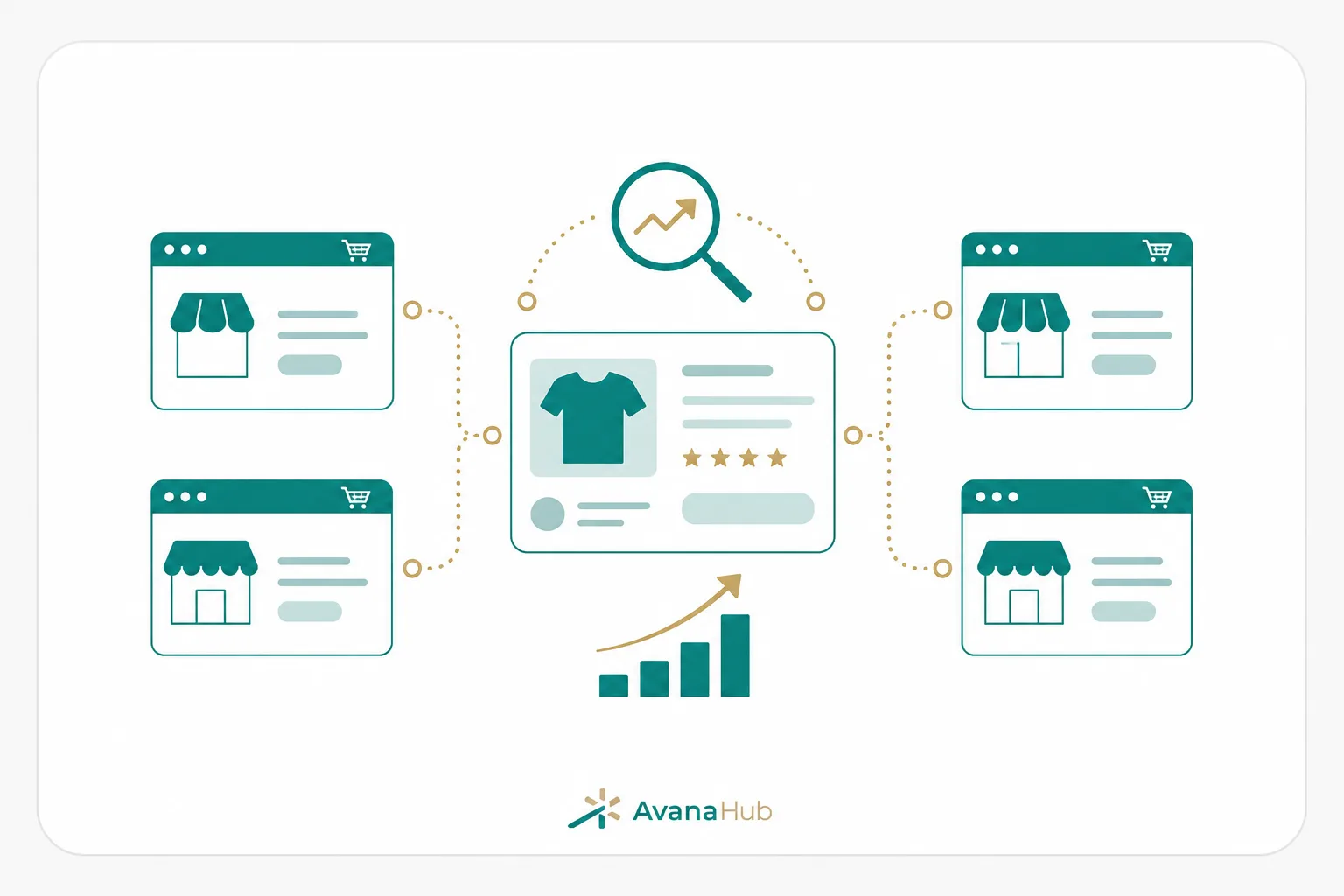
Marketplaces have additional complexity because they contain many sellers, listings, categories, filters, and user-generated pages.
Marketplace SEO priorities include:
- Scalable category architecture
- Listing quality controls
- Duplicate listing management
- Seller profile indexation rules
- Internal search control
- Filter and parameter management
- Review and rating structure
- Location-based pages where relevant
- Strong internal linking
- Fresh inventory handling
- Crawl budget management
- Programmatic SEO quality controls
Marketplaces should avoid indexing every possible listing or filter combination. Indexation must be tied to demand, quality, and unique value.
Common Ecommerce SEO Mistakes
Common ecommerce SEO mistakes include:
- Indexing too many filter URLs
- Using duplicate manufacturer descriptions
- Neglecting category pages
- Deleting out-of-stock products without redirects
- Missing product schema
- Slow product images
- Weak internal linking
- Poor mobile checkout
- Thin product pages
- Duplicate title tags
- Ignoring search intent
- Creating blog posts for keywords that need category pages
- Allowing internal search pages to be indexed
- Not tracking organic revenue
- Ignoring Core Web Vitals
- Poor handling of product variants
- Not updating discontinued product pages
The most costly mistake is allowing technical issues to scale across thousands of URLs without monitoring.
Ecommerce SEO KPIs
Ecommerce SEO should be measured by visibility, traffic, and revenue impact.
Important KPIs include:
Do not evaluate ecommerce SEO only by blog traffic. Organic revenue, category performance, product visibility, and conversion rate are more important.
Ecommerce SEO Audit Checklist
Use this checklist to review an online store:
This checklist should be reviewed regularly because ecommerce stores change often.
A Practical Ecommerce SEO Growth Framework
Many online stores treat SEO as a content task, but ecommerce SEO should be managed as a commercial growth system.
1. Prioritize Categories Before Blog Posts
Category pages usually target higher-value commercial keywords. Start by identifying the categories that have the best mix of search demand, margin, inventory depth, and ranking potential.
Prioritize categories with:
- Strong search volume
- High product availability
- Good profit margins
- Existing impressions
- Weak competitor content
- Clear buyer intent
- Internal linking potential
A well-optimized category page can drive more revenue than several informational blog posts.
2. Control Indexation Before Scaling Content
Before publishing more pages, make sure the store is not wasting crawl budget on low-value URLs.
Review:
- Filter URLs
- Sort URLs
- Internal search pages
- Empty categories
- Duplicate product paths
- Tag pages
- Parameter URLs
- Outdated campaign pages
Search engines should spend more time on pages that can rank and convert.
3. Build Buying Guides Around Revenue Categories
Create content that supports category and product pages.
Example:
Each guide should link to relevant categories and products. This builds topical authority and moves users toward purchase.
4. Improve Product Pages by Business Value
Do not try to rewrite every product page at once. Start with products that matter most.
Prioritize:
- Best sellers
- High-margin products
- Products with organic impressions
- Products with paid search conversions
- Products with high return rates
- Products with low conversion rates
- Products with strong review potential
- Products with unique features
Improve descriptions, images, FAQs, reviews, schema, internal links, and comparison support.
5. Measure Revenue, Not Just Rankings
Ecommerce SEO success should be tied to commercial outcomes.
Review monthly:
- Organic revenue
- Organic conversion rate
- Category traffic
- Product traffic
- Add-to-cart rate
- Cart abandonment
- Assisted conversions
- Average order value
- Top organic landing pages
- Pages with impressions but low CTR
- Pages with traffic but low sales
This prevents SEO from becoming a traffic-only activity.
Ecommerce SEO Tools
Useful tools include:
For ecommerce, connect SEO reporting with revenue data. Traffic without sales does not show the full value of organic search.
Conclusion
Ecommerce SEO helps online stores improve organic visibility, product discovery, category rankings, and revenue. The strongest results come from optimizing category pages, improving product content, controlling indexation, managing filters, using accurate structured data, improving internal links, and tracking commercial KPIs.
Businesses with large catalogs, complex faceted navigation, international storefronts, or recurring indexation problems may benefit from professional seo services that combine technical auditing, keyword mapping, content optimization, structured data, internal linking, and commercial performance analysis.
Online stores should prioritize pages with buying intent and business value before scaling blog content. Ecommerce SEO is most effective when technical SEO, content, UX, product data, and conversion optimization work together.