

Keyword research is the process of finding the search terms people use when they look for information, products, services, comparisons, or solutions online. It helps businesses understand what their audience wants, how they describe their problems, and which pages should be created or optimized to capture organic traffic. Without keyword research, SEO content often becomes disconnected from real search demand and business goals. This guide from Avana explains how beginners can find keywords, understand search intent, evaluate opportunities, organize keyword groups, and turn research into an SEO content plan.
What Is Keyword Research?
Keyword research is the process of discovering, analyzing, and prioritizing the words and phrases users type into search engines. The goal is to identify which topics are worth targeting, what kind of content users expect, and how difficult it may be to rank for each query.
A complete keyword research process includes:
- Finding seed keywords
- Expanding keyword ideas
- Understanding search intent
- Checking search volume
- Evaluating keyword difficulty
- Reviewing SERP competition
- Grouping related keywords
- Mapping keywords to pages
- Prioritizing keywords by business value
- Creating or updating content based on keyword opportunities
Keyword research is not just a list of popular phrases. It is a decision-making process that connects audience demand, SEO potential, content strategy, and business outcomes.
Why Keyword Research Matters for SEO
Keyword research helps SEO teams avoid guessing. It shows what users are actually searching for, how competitive each topic is, and which content formats are most likely to perform.
Keyword research affects:
Strong keyword research helps a website build topical authority instead of publishing disconnected articles. It also helps SEO teams understand How Long Does SEO Take to Work by showing which keywords are realistic now and which broader topics should be targeted later.
Keyword Research for Beginners: The Basic Process
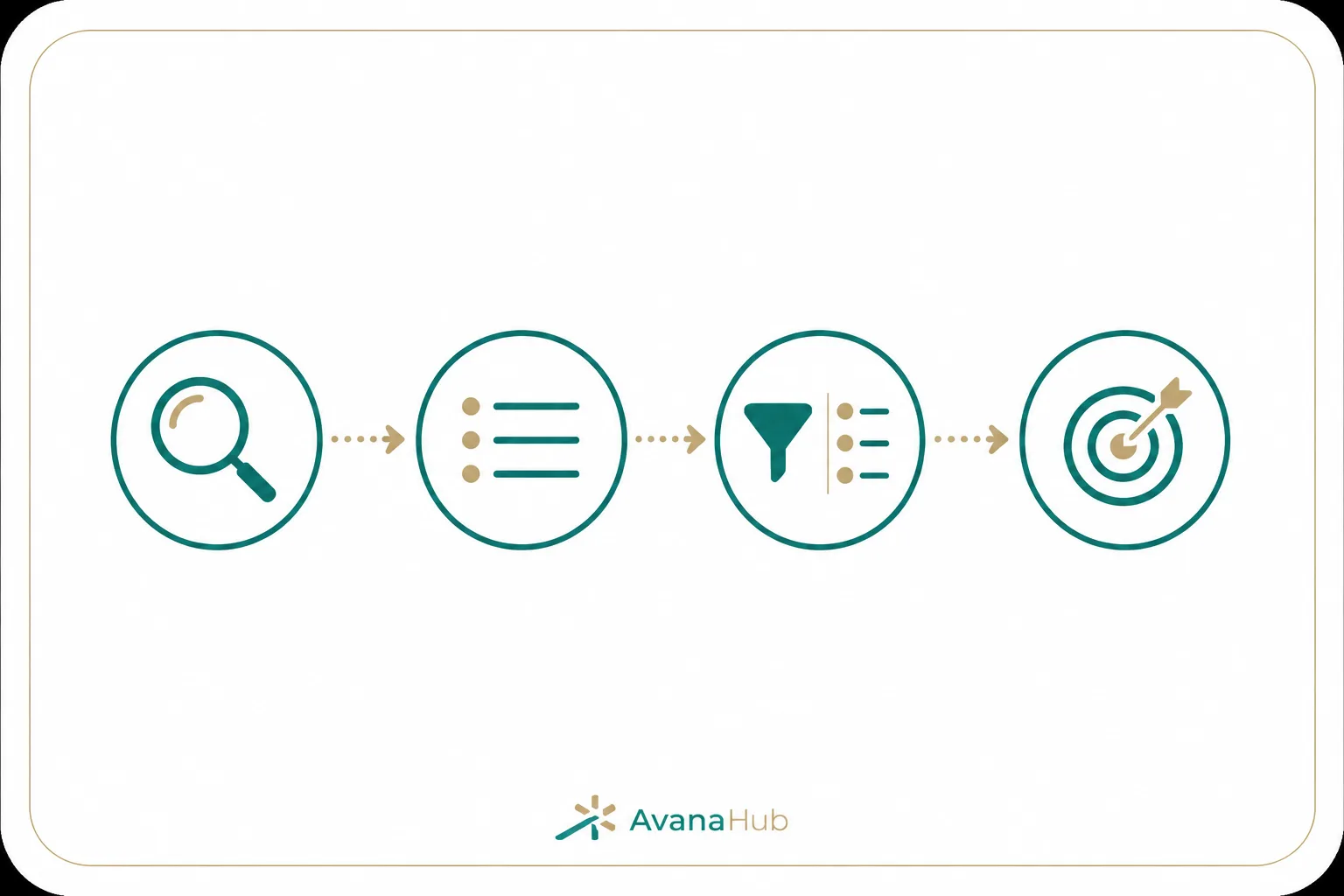
Beginners can follow a simple keyword research process:
- Start with seed topics related to the business.
- Use keyword tools to expand ideas.
- Separate keywords by search intent.
- Check search volume and difficulty.
- Analyze the current search results.
- Group related keywords into clusters.
- Choose one primary keyword per page.
- Map keywords to the right content type.
- Prioritize keywords by business value and ranking potential.
- Track performance after publishing.
The most important rule is to choose keywords based on intent and usefulness, not only search volume. A low-volume keyword with strong buying intent can be more valuable than a high-volume keyword that brings unqualified traffic.
Step 1: Start With Seed Keywords
Seed keywords are the basic words or phrases that describe your business, products, services, audience problems, and industry topics. They are the starting point for deeper keyword research.
For example, a digital marketing agency may start with seed keywords such as:
- SEO
- Google Ads
- content marketing
- social media marketing
- technical SEO
- local SEO
- digital marketing strategy
- website audit
- landing page design
- conversion rate optimization
A beginner should collect seed keywords from:
Seed keywords are usually broad. The next step is to expand them into more specific keyword opportunities.
Step 2: Expand Keyword Ideas
After collecting seed keywords, use keyword research tools and search engine suggestions to find related phrases, questions, and long-tail variations.
Useful sources for keyword expansion include:
- Google autocomplete
- People Also Ask
- Related searches
- Google Search Console
- Google Keyword Planner
- Ahrefs
- Semrush
- Moz
- SE Ranking
- AlsoAsked
- AnswerThePublic
- Competitor ranking pages
- Reddit, Quora, forums, and industry communities
- YouTube search suggestions
- Ecommerce marketplace search suggestions
Example expansion from the seed keyword “keyword research”:
The goal is to build a wide list first. Filtering and prioritization happen later.
Step 3: Understand Search Intent

Search intent is the reason behind a keyword. It tells you what the user expects to find after searching. Matching intent is more important than simply using the keyword in the article.
The four main types of search intent are:
Search intent can also be mixed. For example, “best keyword research tools” has commercial investigation intent, but users still expect educational comparisons, pricing context, and use cases.
Before choosing a page type, search the keyword and analyze what already ranks. If the top results are beginner guides, a product page will usually struggle. If the top results are service pages, a blog post may not satisfy the query.
Step 4: Check Search Volume
Search volume estimates how many times a keyword is searched within a period, usually per month. It helps estimate demand, but it should not be treated as exact data.
Search volume is useful for:
- Comparing keyword demand
- Prioritizing topic clusters
- Identifying seasonal trends
- Avoiding topics with no meaningful demand
- Estimating traffic potential
- Understanding market language
However, search volume has limits:
- Different tools show different numbers.
- Low-volume keywords can still convert well.
- Some new or niche topics are underreported.
- Volume does not show ranking difficulty.
- Volume does not show business value.
- One page can rank for many related keywords, not only the primary keyword.
A keyword with 50 searches per month can be valuable if it brings users with strong buying intent. A keyword with 10,000 searches per month may be weak if users are only looking for basic definitions and never convert.
Step 5: Evaluate Keyword Difficulty
Keyword difficulty estimates how hard it may be to rank for a keyword. Tools calculate difficulty differently, often using backlink profiles, domain strength, SERP competition, and ranking page authority.
Keyword difficulty should be reviewed with caution. Beginners should not rely only on a single score.
Evaluate difficulty by checking:
- Strength of top-ranking domains
- Number and quality of backlinks to ranking pages
- Content depth and quality of competitors
- Search intent fit
- SERP features taking clicks
- Brand dominance in results
- Page type ranking on page one
- Your website’s current authority
- Your ability to create better content
- Internal linking opportunities
Example:
New websites should usually begin with specific long-tail keywords before targeting broad competitive terms.These checks also connect to Technical SEO because crawlability, site structure, internal links, and page performance can affect how realistic a keyword opportunity is.
Step 6: Analyze the SERP
SERP analysis means reviewing the search engine results page for a keyword. It shows what Google believes users want.
Check the SERP for:
- Ranking page types
- Content format
- Content length and depth
- Featured snippets
- People Also Ask questions
- Videos
- Images
- Local packs
- Shopping results
- Ads
- Forum results
- Comparison pages
- Freshness requirements
- Dominant brands
- Common headings and subtopics
SERP analysis helps answer three important questions:
- Can we create the right type of page?
- Can we add more value than current ranking pages?
- Is this keyword worth targeting based on traffic and business value?
If the SERP is dominated by large websites with strong authority, beginners should look for more specific variations or supporting long-tail topics.
Step 7: Find Long-Tail Keywords
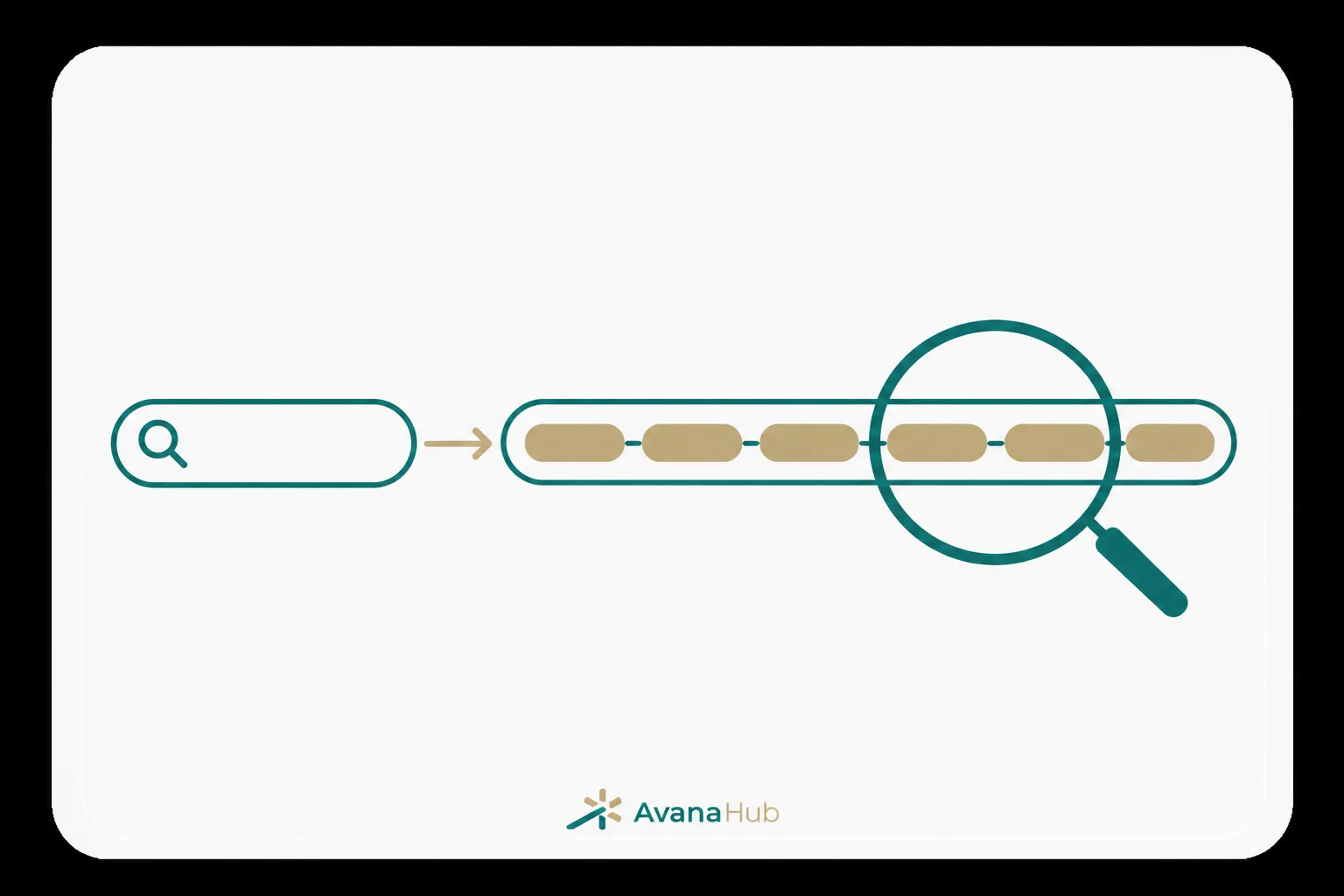
Long-tail keywords are specific search queries, usually with lower volume and clearer intent. They are often easier to rank for and can attract more qualified visitors.
Examples:
Long-tail keywords are useful because they:
- Have clearer intent
- Often face lower competition
- Support topic clusters
- Attract specific users
- Reveal detailed audience needs
- Help new websites gain early traction
- Can convert better than broad queries
A beginner SEO strategy should include a mix of long-tail informational, commercial, and transactional keywords.
Step 8: Group Keywords Into Clusters
Keyword clustering means organizing related keywords into groups that can be targeted by one page or a connected group of pages.
For example:
Not every keyword needs a separate page. If several keywords have the same intent, they can usually be covered in one strong page. If they have different intent, they may need separate pages.
A simple test: search each keyword and compare the top-ranking results. If the same pages rank for multiple keywords, one page may be enough. If different page types rank, separate pages are safer.
Step 9: Choose the Primary Keyword for Each Page
Each page should have one primary keyword or primary keyword theme. Secondary keywords can support the topic, but the page needs a clear main target.
A primary keyword should be:
- Closely aligned with the page topic
- Relevant to the audience
- Connected to business goals
- Realistic for the website’s authority
- Supported by clear search intent
- Suitable for the page format
- Broad enough to attract related searches
- Specific enough to guide the content
Example:
For a beginner guide, the primary keyword could be “keyword research for beginners.” Secondary terms may include “how to do keyword research,” “keyword research process,” “keyword research tools,” and “SEO keyword research.”
This prevents the article from becoming unfocused while still allowing it to rank for related queries.
Step 10: Map Keywords to the Right Page Type
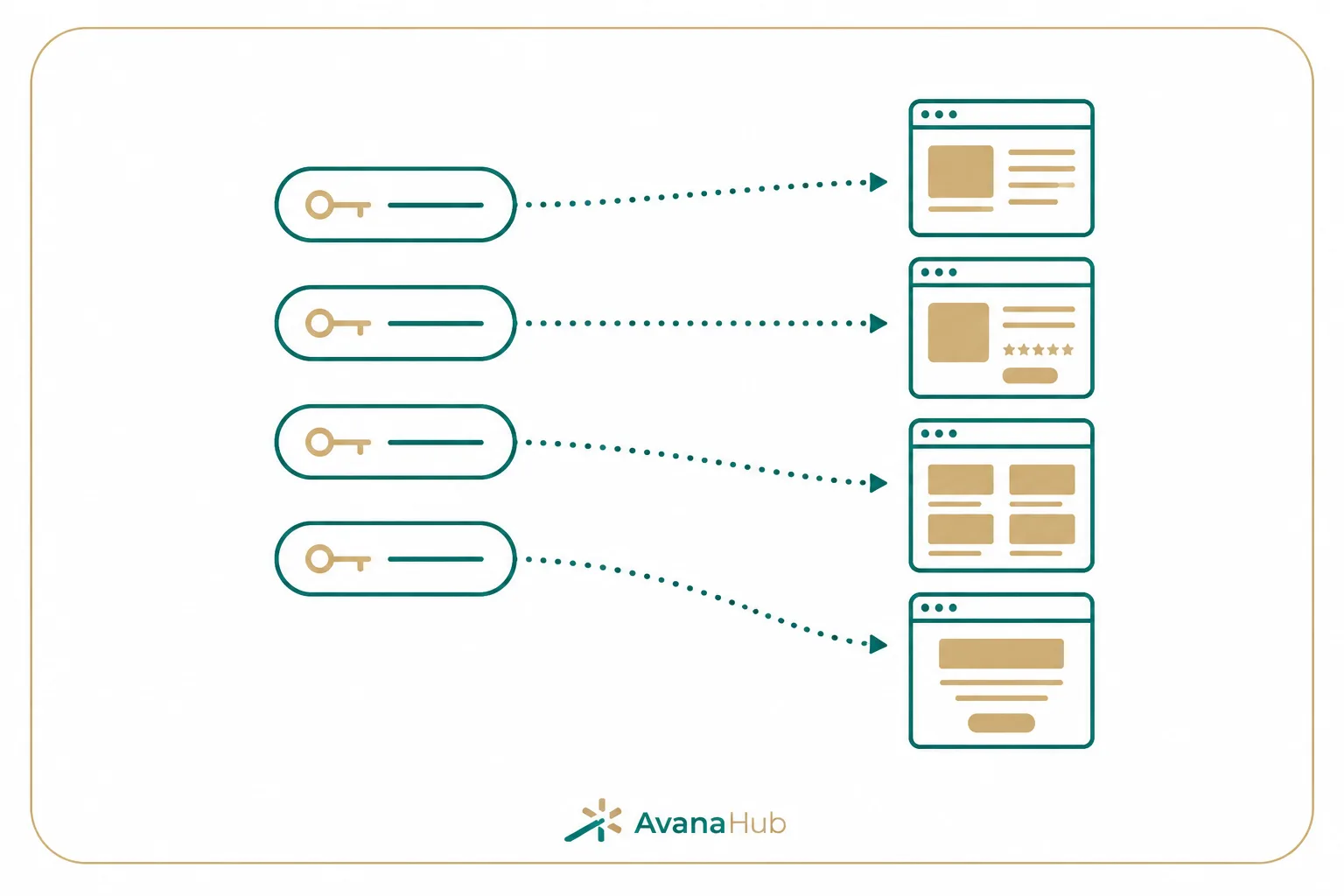
Keyword mapping assigns each keyword cluster to a specific page. This prevents keyword cannibalization and helps organize the website.
Common page mapping examples:
Keyword mapping helps answer: “Should this be a blog post, landing page, category page, tool page, or FAQ?”
Publishing the wrong page type is one of the fastest ways to waste SEO effort.
Step 11: Prioritize Keywords by Business Value
Not all keywords deserve equal attention. Business value measures how likely a keyword is to support revenue, leads, customer acquisition, retention, or brand authority.
A simple business value scoring model:
A complete SEO strategy should include awareness keywords, but beginners should not spend all resources on low-conversion topics. Prioritize keywords that connect to real business outcomes.
Step 12: Check Existing Rankings Before Creating New Content
Before creating a new page, check whether your website already ranks for related keywords. This prevents duplicate content and keyword cannibalization.
Use Google Search Console to find:
- Pages already getting impressions for the keyword
- Keywords ranking on page two or three
- Pages with high impressions but low CTR
- Queries that do not have a dedicated page yet
- Existing content that can be updated instead of replaced
- Pages competing for the same keyword
Sometimes the best SEO opportunity is not a new article. It may be updating an existing page, improving internal links, changing the title tag, adding missing sections, or consolidating similar articles.
Step 13: Create a Keyword Map
A keyword map is a document that connects keywords to URLs, search intent, funnel stage, priority, and content status.
A basic keyword map should include:
This document becomes the bridge between research and execution. Without keyword mapping, research often remains unused.
Step 14: Use Keywords in Content Correctly
Once the target keyword is selected, it should be used naturally in the page. Keyword placement helps search engines understand relevance, but overuse reduces quality.
Use the primary keyword or close variation in:
- SEO title
- H1
- Introduction
- URL slug
- One or more relevant headings
- Body content
- Image alt text where accurate
- Meta description
- Internal link anchor text where natural
Use secondary keywords to cover related subtopics. Do not force every variation into the article. A page should read naturally and answer the topic comprehensively.This is one of the most important parts of On-Page SEO because keyword placement helps search engines understand the page topic without forcing unnatural repetition.
Example:
Instead of repeating “keyword research guide for beginners” ten times, use related language such as “SEO keyword research,” “search intent,” “keyword difficulty,” “long-tail keywords,” and “keyword mapping.”
Step 15: Avoid Keyword Cannibalization
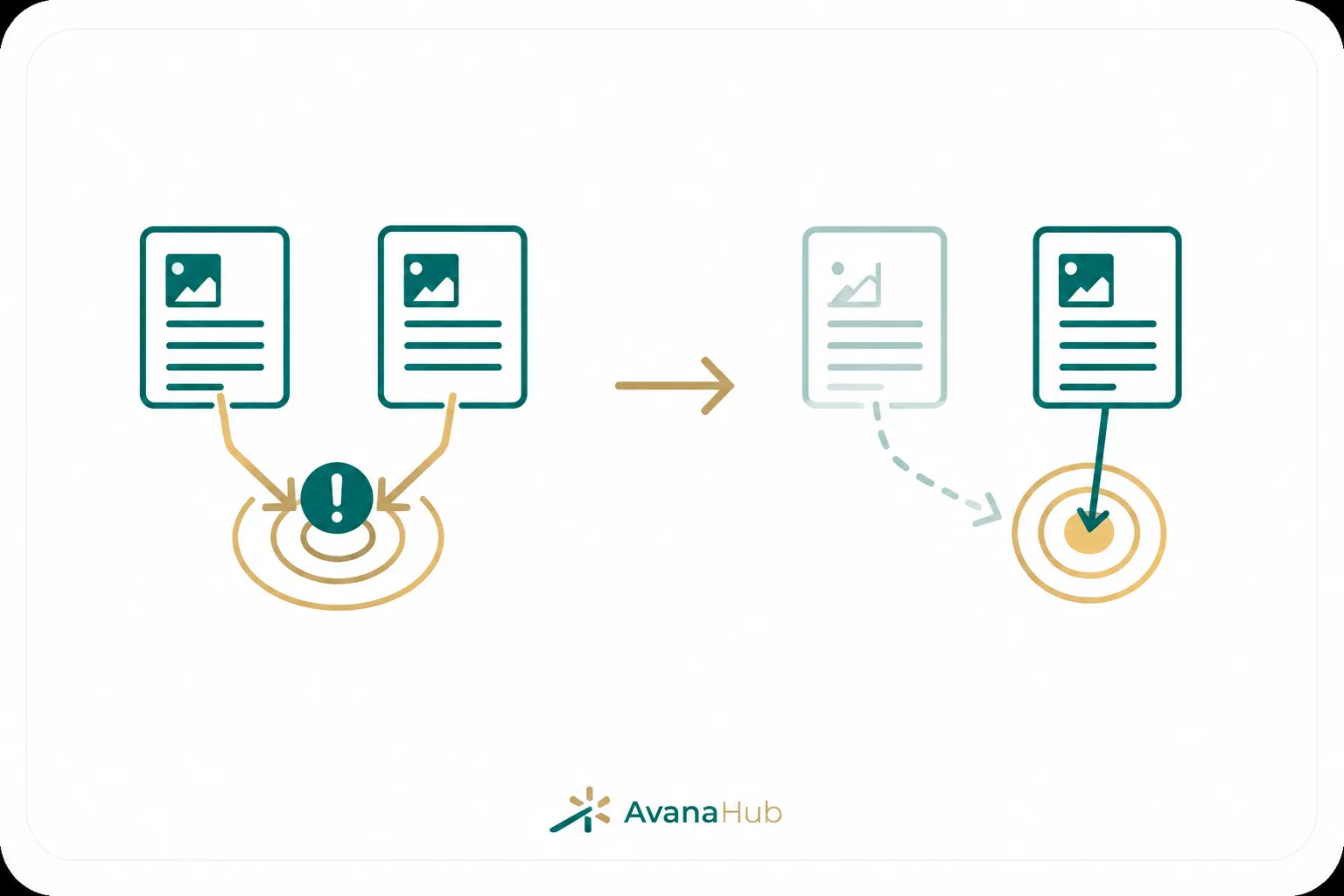
Keyword cannibalization happens when multiple pages target the same or very similar keyword intent. This can confuse search engines and split ranking signals.
Signs of cannibalization include:
- Multiple pages ranking for the same query
- Rankings switching between URLs
- Similar articles competing internally
- Duplicate title tags or headings
- Several pages covering the same intent
- Weak performance across all competing pages
Fix cannibalization by:
Keyword research should reduce cannibalization, not create it.
Step 16: Understand Keyword Difficulty Beyond Tool Scores
Keyword difficulty tools are helpful, but beginners should also manually evaluate whether they can realistically compete.
Ask these questions:
- Are the top results from very strong domains?
- Do ranking pages have many backlinks?
- Are results from brands users already trust?
- Is the content deeper or more useful than what we can create?
- Are SERP features reducing clicks?
- Is the query dominated by ads?
- Does Google prefer product pages, guides, tools, or local results?
- Can we provide original examples, data, or expertise?
- Can we internally link to the new page strongly?
- Does the keyword match our business authority?
If the answer shows strong competition and weak site authority, begin with supporting long-tail keywords and build toward the main topic over time.
Step 17: Use Competitor Keyword Research
Competitor keyword research shows which queries bring traffic to similar websites. It helps identify gaps, opportunities, and content formats that already work in the market.
Analyze competitors for:
- Top organic pages
- Ranking keywords
- Content gaps
- Blog topics
- Service page keywords
- Category page structure
- Featured snippet ownership
- Backlink-generating pages
- Internal linking patterns
- Comparison content
- Local landing pages
- FAQ topics
Do not copy competitor content. Use competitor research to understand market demand, then create content that is more useful, clearer, more current, or better aligned with your audience.
A competitor ranking for a keyword does not automatically mean you should target it. Filter every opportunity through business relevance and realistic ranking potential.
Step 18: Find Question Keywords
Question keywords are useful for blog content, FAQ sections, featured snippets, and content refreshes. They often reveal specific user concerns.
Examples:
- What is keyword research?
- How do you find keywords for SEO?
- What is keyword difficulty?
- How many keywords should a page target?
- Are long-tail keywords better for beginners?
- What is search intent in SEO?
- How do I use Google Search Console for keyword research?
Sources for question keywords include:
- People Also Ask
- Google autocomplete
- AnswerThePublic
- AlsoAsked
- Reddit and forums
- Customer support tickets
- Sales calls
- Blog comments
- YouTube comments
- Search Console queries
Question keywords should be answered directly. If a question deserves only a short answer, include it in an FAQ. If it requires a full explanation, create a dedicated section or article.
Step 19: Use Google Search Console for Keyword Research
Google Search Console is one of the best keyword research tools because it shows real queries your website already appears for.
Use it to find:
- Keywords with high impressions and low clicks
- Queries where your page ranks between positions 5 and 20
- Pages ranking for unexpected keywords
- Long-tail queries not found in paid tools
- Keywords that need a better title tag
- Pages that need content expansion
- Topics that deserve dedicated pages
- Countries or devices where performance differs
A practical Search Console workflow:
- Open Performance report.
- Filter by page.
- Review queries for that page.
- Identify keywords with impressions but low CTR.
- Check whether the page fully answers those queries.
- Update headings, sections, title, and internal links where needed.
- Monitor changes after several weeks.
Search Console is especially useful for improving existing content.
Step 20: Use Google Ads Data for Keyword Research
Google Ads data can reveal which keywords produce conversions, not only traffic. This is valuable for SEO prioritization.
Review:
- Search terms with conversions
- Search terms with high cost but no conversions
- Keywords with strong click-through rates
- Landing pages with high conversion rates
- Geographic performance
- Device performance
- Negative keyword patterns
- Commercial language used by searchers
If a keyword is expensive in Google Ads but converts well, it may be a strong SEO target. If a keyword gets many paid clicks but no leads or sales, ranking organically for it may not be valuable either.
Google Ads can reduce SEO guesswork by showing which queries have commercial value before months are spent ranking for them.
Step 21: Keyword Research for Local SEO
Local keyword research focuses on searches with geographic intent. These can include city names, neighborhoods, “near me” searches, and service-area queries.
Examples:
- SEO agency in Dubai
- digital marketing agency near me
- local SEO services UAE
- PPC agency in Abu Dhabi
- website design company in Dubai
Local keyword research should consider:
- Service keywords
- City and neighborhood modifiers
- Google Business Profile categories
- Local competitor pages
- Review language
- Map pack results
- Local directories
- Location page opportunities
- Customer questions specific to the market
For local SEO, the ranking page may be a location landing page, service page, or Google Business Profile result. Blog posts can support local authority, but commercial local keywords often need optimized service or location pages.
Step 22: Keyword Research for Ecommerce SEO
Ecommerce keyword research should focus on categories, products, filters, comparisons, and buying intent.
Important ecommerce keyword types include:
Category keywords are often more valuable than product keywords because they capture broader commercial intent and remain relevant even when individual products change.
Ecommerce keyword mapping must also manage filters, duplicate URLs, canonical tags, and crawl budget.
Step 23: Keyword Research for B2B Websites
B2B keyword research should account for longer sales cycles, multiple decision-makers, and different funnel stages.
B2B keyword groups may include:
- Problem keywords
- Solution keywords
- Software or service keywords
- Industry-specific keywords
- Comparison keywords
- Alternative keywords
- Pricing keywords
- Integration keywords
- Use case keywords
- Compliance or technical requirement keywords
- Vendor evaluation keywords
Example:
B2B SEO should not target only broad educational keywords. Decision-stage content often brings fewer visitors but stronger pipeline value.
Step 24: Keyword Research for Content Marketing
Content marketing keyword research should balance traffic potential with audience usefulness and brand authority. Not every content topic needs direct conversion intent, but it should support a broader strategic purpose.
Content keywords can support:
- Audience education
- Product awareness
- Sales enablement
- Lead nurturing
- Thought leadership
- Topical authority
- Newsletter growth
- Internal linking
- Social distribution
- Retargeting audiences
A content marketing keyword should answer at least one of these questions:
- Does this topic help our target customer?
- Does it connect to a product, service, or business area?
- Can we add original insight?
- Can it support a pillar page?
- Can it attract links or shares?
- Can it help sales conversations?
- Can it move users toward another useful page?
Content marketing SEO fails when teams chase high-volume keywords that bring the wrong audience.
Common Keyword Research Mistakes
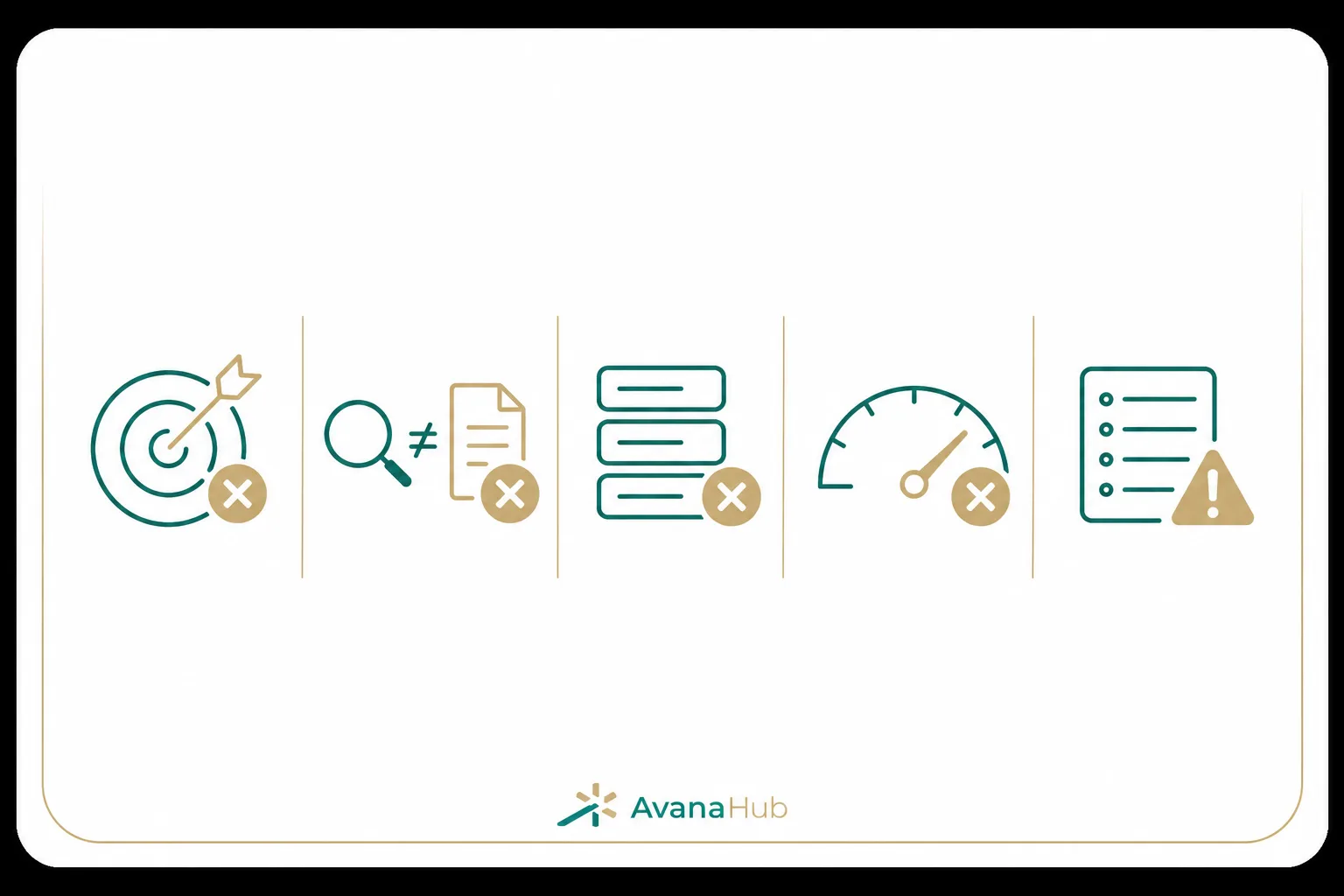
Beginners often make the same keyword research mistakes:
- Choosing keywords only by search volume
- Ignoring search intent
- Targeting keywords that are too competitive
- Creating separate pages for every keyword variation
- Forgetting long-tail keywords
- Not checking the SERP before writing
- Ignoring business value
- Relying on one tool only
- Copying competitor keywords without filtering
- Not using Google Search Console
- Creating content without a keyword map
- Cannibalizing existing pages
- Targeting informational keywords with sales pages
- Targeting transactional keywords with blog posts
- Not updating keyword research over time
The biggest mistake is treating keyword research as a one-time task. Search behavior, competitors, SERP features, and business priorities change.
A Practical Keyword Research Framework for Beginners
Most beginner keyword guides explain how to find keywords but not how to decide what to do with them. Use this framework to turn research into action.
1. Build a Keyword Universe
Collect keywords from tools, competitors, search suggestions, customer conversations, Search Console, and paid search data. At this stage, do not filter too aggressively.
Include:
- Broad keywords
- Long-tail keywords
- Questions
- Comparisons
- Service keywords
- Product keywords
- Local keywords
- Problem keywords
- Use case keywords
- Alternative keywords
This creates a full view of available search demand.
2. Classify by Intent and Funnel Stage
Assign each keyword to an intent type and funnel stage.
This helps prevent mismatched content and improves conversion planning.
3. Score the Keyword Opportunity
Use a simple scoring system:
Prioritize keywords with strong business relevance, clear intent, and realistic ranking potential.
4. Assign an Action
Each keyword cluster should lead to one of these actions:
This step turns keyword research into an executable SEO roadmap.
5. Review Performance After Publishing
After publishing or updating content, review:
- Impressions
- Clicks
- Average position
- CTR
- Ranking keywords
- Organic conversions
- Assisted conversions
- Engagement
- Internal link clicks
- Competitor changes
Keyword research should improve after real data arrives. Search Console often reveals new long-tail opportunities that tools missed.
Keyword Research Checklist
Use this checklist before creating a page:
A keyword is only worth targeting when there is a clear user need, a suitable page type, and a realistic path to ranking or business value.
Recommended Keyword Research Tools
Beginners can start with free tools, then add paid tools when they need deeper competitor and difficulty analysis.
Free tools are enough to start. Paid tools become useful when keyword research must support larger content plans, competitive markets, or detailed SEO reporting.
How to Measure Keyword Research Success
Keyword research is successful when it leads to pages that attract the right users and support business goals.
Track:
Do not judge keyword research only by ranking for the exact primary keyword. A well-built page can rank for hundreds of related queries and still be successful even if the primary keyword is not the top traffic source.
Conclusion
Keyword research helps beginners create SEO content based on real search behavior instead of assumptions. The strongest process starts with seed topics, expands keyword ideas, analyzes search intent, checks volume and difficulty, reviews the SERP, groups related terms, and maps each keyword cluster to the right page type. This process works best when it sits inside The Complete SEO Guide, not as a separate task from content strategy, technical optimization, and performance tracking.
How many keywords should one page target?
One page should target one primary keyword theme and several closely related secondary keywords. If keywords have different search intent, they usually need separate pages.
What is the best free keyword research tool?
Google Search Console is the best free tool for finding real queries from an existing website. Google Keyword Planner, Google Trends, autocomplete, and People Also Ask are also useful for beginners.
Are low-volume keywords worth targeting?
Yes, low-volume keywords can be valuable when they have clear intent and strong business relevance. Many long-tail keywords convert better than broad high-volume terms.
How do I know if a keyword is too competitive?
A keyword may be too competitive if page-one results are dominated by strong domains, high-authority pages, many backlinks, and content that is difficult to outperform.
Should keyword research be done before or after content writing?
Keyword research should be done before writing. It defines search intent, content structure, page type, and the terms users actually use when searching.