
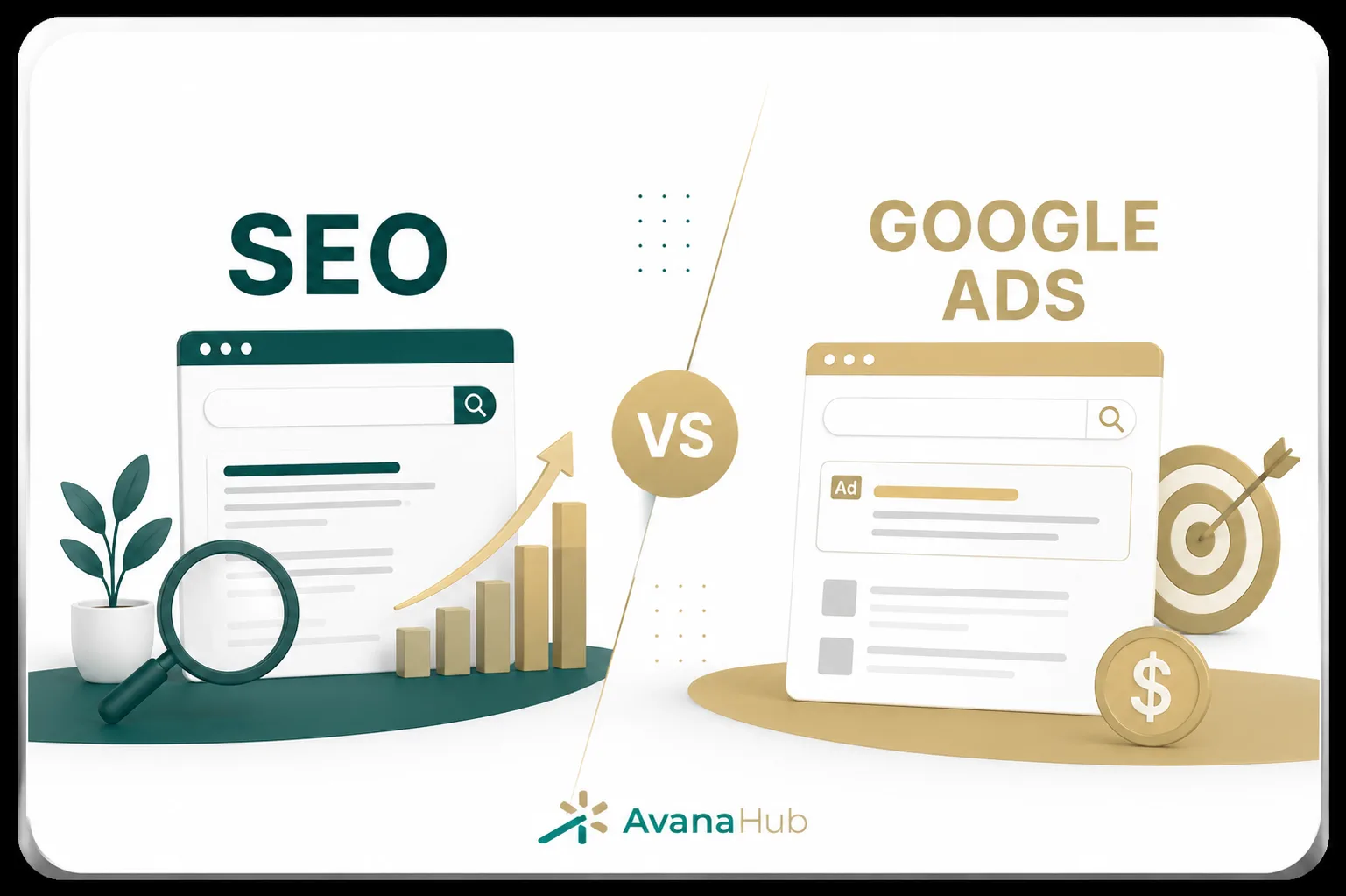
SEO and Google Ads are two of the most important channels for acquiring traffic from Google, but they work in different ways and serve different business goals. SEO builds organic visibility over time by improving website relevance, technical health, content quality, and authority. Google Ads generates paid visibility by allowing businesses to appear in sponsored results for selected keywords, audiences, and placements. For businesses comparing both channels, Avana recommends choosing based on speed, budget, competition, customer intent, conversion goals, and long-term growth strategy.
SEO vs Google Ads: Which One Should You Choose?
Choose SEO if your goal is long-term organic growth, lower dependency on paid traffic, stronger topical authority, and sustainable visibility for informational or commercial searches. Choose Google Ads if you need immediate traffic, fast testing, lead generation, product promotion, or predictable campaign control.
The best choice depends on the business situation:
Most businesses should not treat SEO and Google Ads as direct competitors. Google Ads can produce fast data, while SEO can turn proven search demand into long-term organic visibility.
What Is SEO?
SEO, or search engine optimization, is the process of improving a website so it can rank in unpaid search results. It includes keyword research, technical optimization, content creation, internal linking, user experience improvements, and authority building.
SEO focuses on organic search results. These are the listings that appear because Google considers them relevant and useful, not because the business paid for each click.
Core SEO activities include:
- Optimizing website structure and crawlability
- Improving page speed and mobile usability
- Creating content that matches search intent
- Optimizing title tags, headings, URLs, and internal links
- Building topical authority through related content
- Earning backlinks and brand mentions
- Updating old content
- Measuring organic rankings, traffic, and conversions
SEO is a compounding channel. A well-optimized page can continue generating traffic for months or years if it remains relevant, competitive, and technically healthy.
What Is Google Ads?
Google Ads is Google’s paid advertising platform. It allows businesses to show ads across Google Search, YouTube, Display Network, Gmail, Discover, Maps, and partner sites. In the context of SEO comparison, most businesses focus on Google Search Ads because they target users actively searching for specific keywords.
Google Ads works through an auction system. Advertisers choose keywords, write ads, set bids, define budgets, and send users to landing pages. Google determines ad visibility based on factors such as bid, ad relevance, expected click-through rate, landing page experience, competition, and ad quality.
Common Google Ads campaign types include:
- Search campaigns
- Performance Max campaigns
- Shopping campaigns
- Display campaigns
- YouTube campaigns
- App campaigns
- Demand Gen campaigns
- Remarketing campaigns
Google Ads is useful when a business needs traffic quickly and has a clear offer, landing page, budget, and conversion tracking setup.
Main Difference Between SEO and Google Ads
The main difference is that SEO earns organic visibility over time, while Google Ads buys visibility through paid campaigns.
SEO builds assets. Google Ads buys access. Both can be profitable when aligned with search intent and business goals.
Cost Comparison: SEO vs Google Ads
SEO and Google Ads have different cost structures. SEO does not charge per click, but it is not free. It requires investment in strategy, technical audits, content production, website improvements, tools, and link-building or digital PR.
Google Ads charges based on campaign activity, usually clicks, impressions, or conversion-focused bidding. Costs can start quickly and scale quickly, but inefficient campaigns can spend budget without producing profitable results.
Google Ads can be expensive in competitive industries such as legal services, insurance, finance, SaaS, real estate, healthcare, and B2B lead generation. SEO can also be expensive in these industries because ranking organically requires stronger content, authority, and technical quality.
Speed: Which Channel Works Faster?
Google Ads works faster than SEO. A campaign can start generating traffic soon after launch if the account is approved, targeting is correct, ads are active, and budget is available.
SEO usually takes longer. A new or updated page must be crawled, indexed, evaluated, and compared with competing pages before rankings improve. Meaningful SEO results often take several months.
If a business needs leads this month, Google Ads is usually the better short-term channel. If a business wants durable search visibility, SEO is necessary.
Traffic Quality and User Intent
Both SEO and Google Ads can attract high-quality traffic when keywords and landing pages are chosen correctly. The difference is how each channel captures intent.
SEO can target the full search journey:
- Problem-aware users
- Research-stage users
- Comparison-stage users
- Local searchers
- Buyers looking for products or services
- Existing customers searching for support or information
Google Ads is strongest when intent is clear and commercially valuable. Search Ads are especially useful for users who are ready to compare, request a quote, book a call, buy a product, or contact a service provider.
Example:
A strong search strategy maps each keyword to the right channel instead of using one channel for every query.
SEO Advantages
SEO has several advantages for long-term growth. Its value increases when content, authority, and technical improvements accumulate over time.
Key SEO advantages include:
- No direct cost per organic click
- Long-term traffic potential
- Better coverage of informational searches
- Stronger topical authority
- Higher trust among some users
- Supports brand credibility
- Improves website structure and user experience
- Can lower customer acquisition cost over time
- Helps with content marketing, PR, and conversion support
- Builds assets that can keep performing
SEO is especially valuable when customers research before buying. In B2B, SaaS, finance, education, healthcare, ecommerce, and professional services, users often search multiple times before making a decision. SEO can influence each stage of that journey.
SEO Limitations
SEO is not the best option for every short-term need. It requires patience, consistency, and ongoing work.
Common SEO limitations include:
- Results are not immediate.
- Rankings cannot be guaranteed.
- Algorithm updates can affect visibility.
- Competitive keywords require time and authority.
- Technical issues can delay performance.
- Content must be maintained and updated.
- Attribution can be harder than paid campaigns.
- New websites usually need more time.
- SEO may not work well without implementation resources.
SEO can also fail when businesses publish content without a clear keyword strategy, ignore search intent, or measure only traffic instead of leads and revenue.
Google Ads Advantages
Google Ads gives businesses speed, control, and measurable campaign data. It is useful when quick market feedback is needed.
Key Google Ads advantages include:
- Fast visibility in search results
- Precise keyword targeting
- Budget control
- Location targeting
- Audience targeting
- Ad copy testing
- Landing page testing
- Conversion tracking
- Remarketing options
- Useful data for SEO and content strategy
- Scalable traffic when campaigns are profitable
Google Ads is especially useful for new businesses that do not yet rank organically, seasonal promotions, high-margin services, ecommerce campaigns, event registrations, and urgent lead generation.
Google Ads Limitations
Google Ads can waste budget if campaigns are poorly structured or conversion tracking is weak. Paying for traffic does not guarantee profit.
Common Google Ads limitations include:
- Traffic stops when budget stops.
- Cost per click can rise over time.
- Competitive keywords can be expensive.
- Poor landing pages reduce performance.
- Irrelevant clicks can drain budget.
- Campaigns require ongoing optimization.
- Some users skip ads and prefer organic results.
- Tracking restrictions can make attribution harder.
- Ad fatigue can reduce performance in some formats.
Google Ads should not be treated as a shortcut for weak offers, slow websites, unclear messaging, or poor conversion paths. Paid traffic exposes problems quickly.
When SEO Is the Better Choice
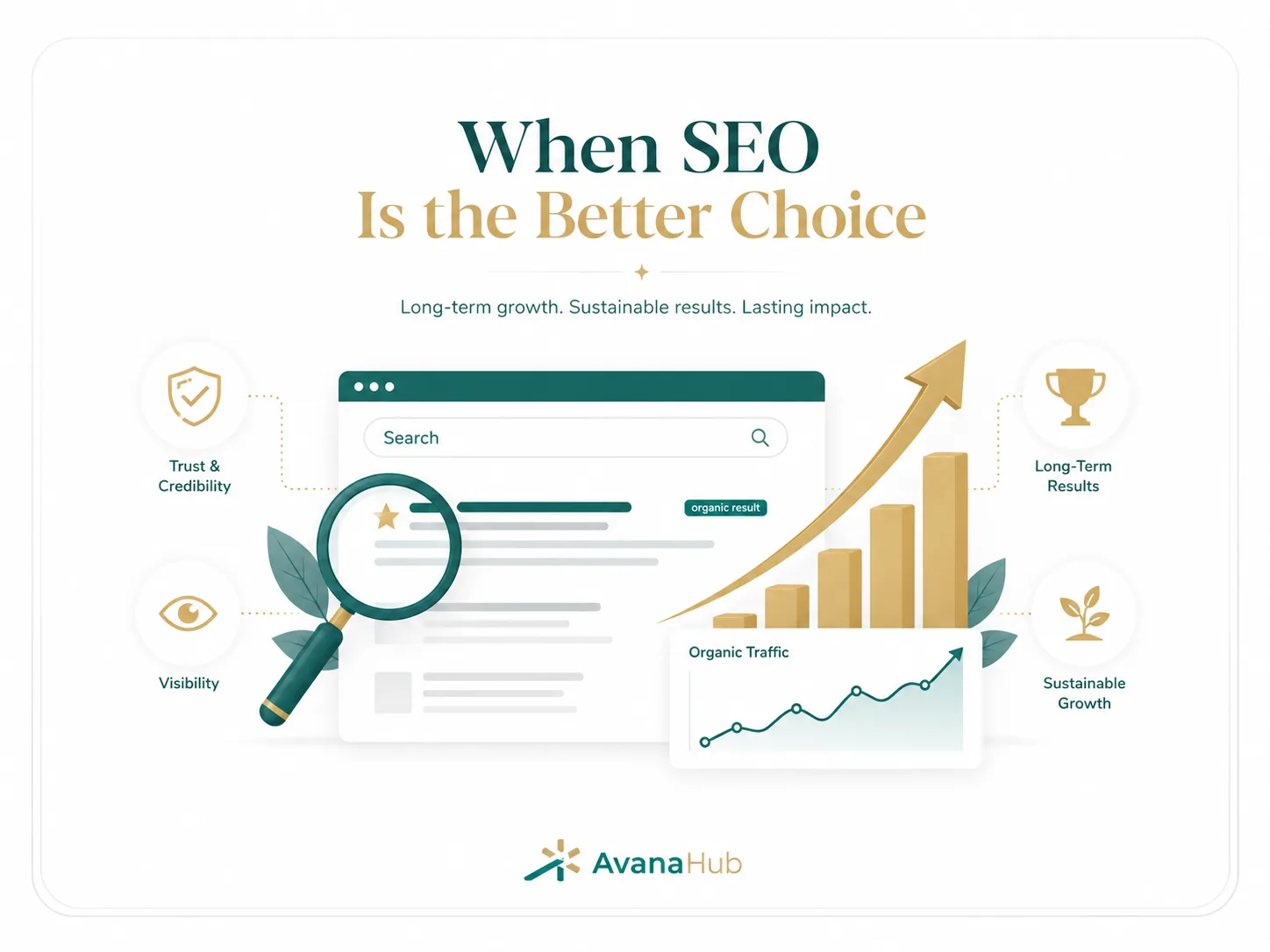
SEO is the better choice when the goal is sustainable visibility and the business can invest consistently over time.
Choose SEO when:
- Customers research before buying.
- The business has long-term growth goals.
- Organic search demand exists for the topic.
- The website can publish or improve useful content.
- The company wants to reduce reliance on ad spend.
- The product or service has educational complexity.
- There are many long-tail keyword opportunities.
- The business wants to build authority in a niche.
- Conversion cycles are longer.
- Content can support sales, support, and brand trust.
SEO is also the better choice when paid clicks are too expensive and the business needs a lower long-term acquisition cost.
When Google Ads Is the Better Choice
Google Ads is the better choice when speed, testing, and control are more important than long-term organic compounding.
Choose Google Ads when:
- The business needs leads or sales immediately.
- A product, service, or offer is newly launched.
- There is a clear landing page and conversion goal.
- The business wants to test keyword profitability.
- Seasonal demand is short.
- Competitors dominate organic rankings.
- The sales margin can support paid acquisition.
- Location or audience targeting is important.
- The business needs predictable traffic volume.
- SEO has not had enough time to mature.
Google Ads is also useful when a company needs to appear for competitive commercial keywords while SEO work is still developing.
When to Use SEO and Google Ads Together
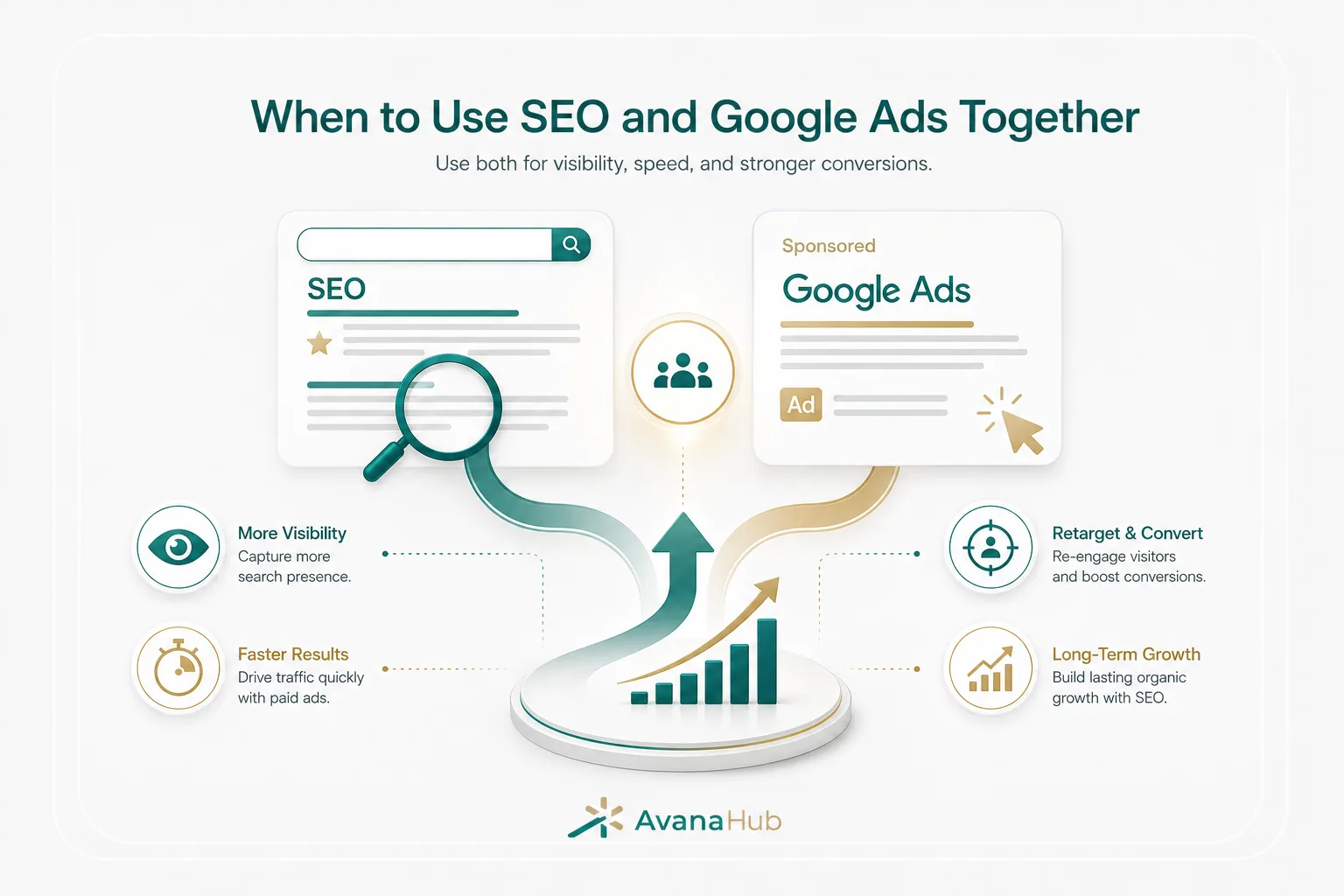
SEO and Google Ads work best together when they share data. A combined strategy captures both short-term and long-term search demand.
Use both channels together when:
- You need immediate leads while SEO grows.
- Paid campaign data can identify high-converting keywords.
- SEO content can reduce future dependence on expensive clicks.
- Ads can support product launches or seasonal campaigns.
- Retargeting can bring back organic visitors.
- Organic rankings and ads can increase SERP coverage.
- Landing page tests can improve both paid and organic conversion rates.
A practical combined workflow:
- Use Google Ads to test commercial keywords quickly.
- Identify keywords with strong conversion rates and reasonable cost.
- Build or improve SEO pages for those keyword groups.
- Use SEO content to answer early-stage questions.
- Retarget SEO visitors through paid campaigns.
- Use Search Console and Ads data together to refine messaging.
- Shift budget gradually from low-performing paid terms to stronger SEO assets.
This approach reduces guesswork because paid search provides fast market data, while SEO builds durable visibility around proven demand.
SEO vs Google Ads by Business Type
Different businesses should prioritize channels differently based on sales cycle, competition, budget, and search behavior.
The right mix should be based on revenue goals and search behavior, not generic channel preference.
Impact on Conversion Rate
Traffic source affects conversion behavior. Google Ads visitors often arrive through high-intent keywords and targeted campaigns, so they may convert quickly if the landing page matches the ad. SEO visitors may come from different stages of the journey, from early research to final purchase.
To improve conversion rates from both channels:
- Match landing pages to search intent.
- Use clear headlines and specific offers.
- Show pricing, process, or next steps where relevant.
- Add trust signals such as reviews, case studies, credentials, and guarantees.
- Reduce form friction.
- Improve mobile usability.
- Use fast-loading pages.
- Add internal links from informational content to commercial pages.
- Track micro-conversions such as downloads, calls, scroll depth, and form starts.
SEO often contributes to assisted conversions. A user may first read an article, later search for the brand, compare services, and then convert through a paid or direct visit.
Impact on Brand Building
SEO supports brand building by placing a business in front of users across many informational and commercial searches. When users repeatedly see a brand answering relevant questions, perceived authority can increase.
Google Ads supports brand visibility through paid placements, especially for competitive categories, branded search protection, remarketing, YouTube, Display, and Demand Gen campaigns.
Brand impact differs by channel:
A mature brand strategy often uses SEO for authority and Google Ads for controlled visibility.
How Google Ads Data Can Improve SEO
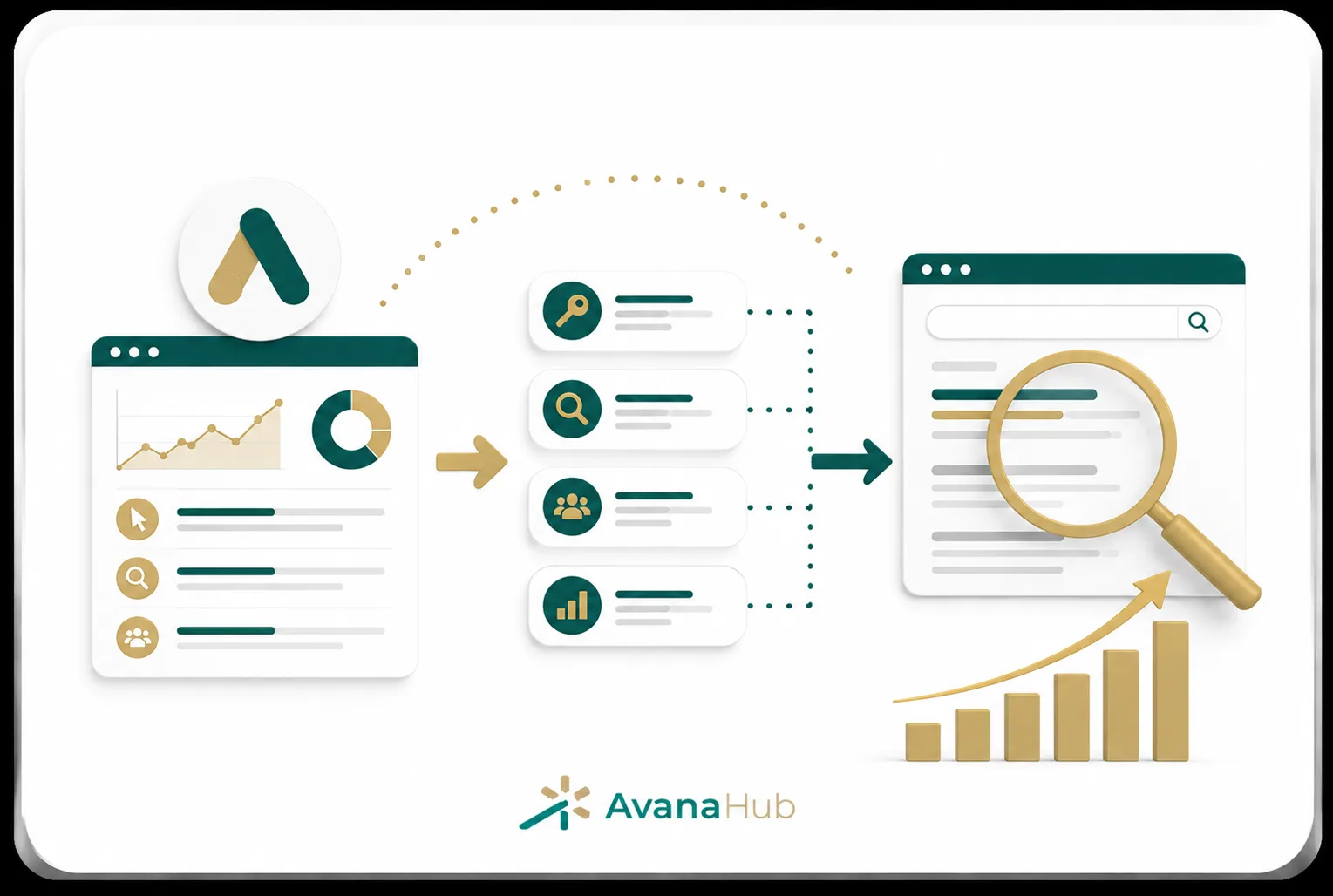
Google Ads can produce useful data before SEO rankings mature. This data helps reduce content and keyword strategy mistakes.
Useful Google Ads insights for SEO include:
- Keywords that generate conversions
- Search terms that are irrelevant and should be avoided
- Headlines with strong click-through rates
- Landing pages with better conversion rates
- Geographic areas with stronger demand
- Device performance differences
- Audience segments with higher value
- Offer messaging that improves leads or sales
- High-CPC keywords that may justify SEO investment
For example, if a paid campaign shows that “technical SEO audit service” converts better than “SEO consultation,” the SEO strategy can prioritize a dedicated service page and supporting content around technical audits.
How SEO Can Improve Google Ads
SEO improvements can also help paid campaigns. A better website can improve landing page experience, conversion rate, and user trust.
SEO can support Google Ads by:
- Improving page speed
- Creating better landing page content
- Clarifying page structure and messaging
- Adding useful FAQs
- Strengthening trust signals
- Improving mobile experience
- Building content for remarketing audiences
- Identifying organic search terms that should be tested in ads
- Reducing dependency on paid traffic for expensive informational queries
A website that performs well organically often has stronger content architecture, clearer relevance, and better user experience. These improvements can support paid traffic performance.
Budget Planning: How Much Should Go to SEO vs Google Ads?
Budget allocation should depend on business maturity, urgency, and conversion economics.
A practical budget approach:
A business should not move large budget into Google Ads without conversion tracking. It should not invest heavily in SEO without a clear keyword map, technical foundation, and content execution plan.
KPIs for SEO and Google Ads
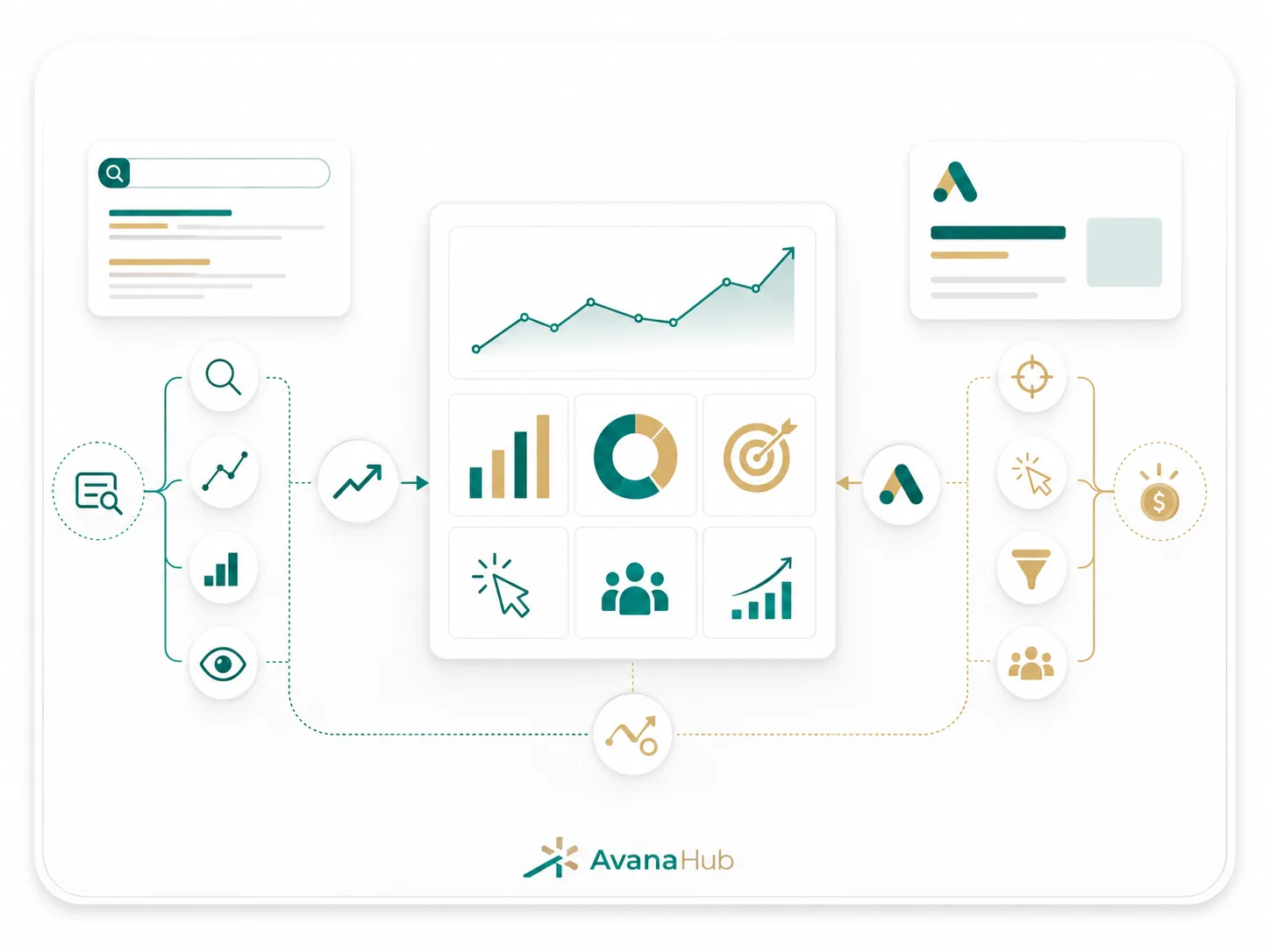
SEO and Google Ads require different performance metrics. Comparing them only by traffic can be misleading.
SEO should be evaluated over months. Google Ads can be evaluated faster, but campaigns still need enough conversion data before major conclusions are made.
Common Mistakes When Choosing Between SEO and Google Ads
Choosing SEO When Leads Are Needed Immediately
SEO is not ideal for urgent lead generation. If a business needs pipeline this month, Google Ads is usually necessary while SEO develops in the background.
Choosing Google Ads Without a Conversion-Ready Website
Paid traffic cannot fix a weak landing page. If the page has unclear messaging, slow loading, poor mobile usability, or no trust signals, ad spend may be wasted.
Stopping SEO Too Early
SEO often takes months to compound. Stopping after a short period can waste the foundation already built.
Treating Google Ads as a Permanent Replacement for SEO
Google Ads can become expensive if it is the only acquisition channel. SEO reduces dependency on paid traffic by building organic assets.
Measuring Both Channels the Same Way
SEO and Google Ads have different timelines and attribution patterns. SEO may create assisted conversions, while Google Ads may produce direct conversions faster.
Targeting the Same Keywords Without Strategy
Running ads and SEO for the same keyword is not always bad. The mistake is doing it without understanding cost, organic position, conversion rate, and SERP competition.
A Practical Decision Framework for SEO vs Google Ads
Use this framework before choosing where to invest.
Step 1: Define the Primary Business Goal
The channel should serve the business goal, not the other way around.
Step 2: Evaluate Keyword Economics
Review:
- Search volume
- Keyword difficulty
- CPC
- Conversion intent
- Current organic competition
- Landing page quality
- Profit margin
- Sales close rate
- Customer lifetime value
If CPC is high but conversion value is also high, Google Ads may still work. If CPC is high and margins are low, SEO may be more sustainable.
Step 3: Check Website Readiness
Before SEO:
- Can search engines crawl and index key pages?
- Are there clear service, product, or category pages?
- Is there a content strategy?
- Are internal links organized?
- Is tracking set up?
Before Google Ads:
- Is there a dedicated landing page?
- Is conversion tracking working?
- Is the offer clear?
- Is the budget enough for testing?
- Are negative keywords and targeting planned?
- Can the sales team handle leads?
Poor website readiness can make both channels underperform.
Step 4: Decide the Channel Mix
Use this simple rule:
- Need speed? Start with Google Ads.
- Need compounding growth? Invest in SEO.
- Need both leads and long-term efficiency? Use both.
- Have limited budget? Start with the channel closest to revenue.
- Have high CPCs? Use SEO to reduce future dependency.
- Have no authority? Use Ads for short-term traffic while SEO builds.
Step 5: Review After 90 Days
After 90 days, review:
- Which keywords generated leads?
- Which pages attracted organic impressions?
- Which landing pages converted best?
- Which campaigns wasted budget?
- Which SEO pages moved closer to page one?
- Which content should be expanded?
- Which paid terms should become SEO targets?
- Which organic pages should be supported by retargeting?
The best channel mix should evolve based on data, not assumptions.
Conclusion
SEO and Google Ads both help businesses capture search demand, but they solve different problems. SEO is better for long-term organic visibility, authority building, and reducing dependency on paid traffic, while Google Ads is better for immediate traffic, controlled targeting, and fast keyword testing. The right decision depends on timeline, budget, competition, website readiness, customer intent, and conversion economics. For most businesses, the strongest approach is to use Google Ads for speed and data while building SEO as a durable growth asset.
Frequently Asked Questions
Is SEO better than Google Ads?
SEO is better for long-term organic growth, while Google Ads is better for immediate visibility and fast testing. The better choice depends on timeline, budget, and business goals.
Should a new business start with SEO or Google Ads?
A new business that needs leads quickly should usually start with Google Ads while building SEO in parallel. SEO takes longer but becomes more valuable over time.
Can SEO replace Google Ads?
SEO can reduce dependency on Google Ads, but it may not fully replace paid campaigns for launches, seasonal promotions, remarketing, or highly competitive commercial keywords.
Do Google Ads improve SEO rankings?
Google Ads do not directly improve organic rankings. However, ad data can help SEO by identifying high-converting keywords, stronger messaging, and better landing page opportunities.
Which channel has better ROI?
SEO often has stronger long-term ROI when it compounds, while Google Ads can produce faster ROI if campaigns are well-targeted and profitable. ROI depends on cost, conversion rate, margins, and execution quality.