
Writing an SEO blog post that ranks requires more than inserting a keyword into the title and headings. The page must satisfy a specific search intent, provide information that competing results lack, demonstrate credible expertise, and remain technically accessible. AVANA prepared this guide as part of its educational resources on SEO and content marketing, using the same principles applied when planning and reviewing content for business websites. The process below covers research, structure, writing, optimization, publishing, and improvement for traditional results, featured snippets, AI Overviews, and other AI-driven search experiences.
How Do You Write an SEO Blog Post That Ranks?
To write an SEO blog post that ranks, choose one clear search intent, analyze the current results, create a focused brief, answer the main question early, and add evidence or practical detail that competing pages lack. Then optimize the title, headings, internal structure, images, metadata, and technical publishing settings without repeating keywords unnaturally.
A practical workflow includes nine stages:
- Define the business purpose. Decide whether the article should attract a relevant audience, support a service page, generate leads, earn mentions, or answer a recurring customer question.
- Choose one primary search intent. An article targeting “how to write an SEO blog post” should teach a process, not also function as a service page.
- Analyze the search results. Review the formats, questions, examples, and level of detail associated with the query.
- Create a content brief. Specify the reader, task, evidence, scope, and conversion path.
- Develop an original angle. Add expert input, first-hand experience, a framework, or a worked example.
- Write the direct answer first. Let readers understand the main recommendation before expanding it.
- Apply on-page SEO. Improve the title, H1, headings, media, metadata, and page structure.
- Validate technical accessibility. Confirm that the page can be crawled, indexed, rendered, and used on mobile.
- Measure and update. Evaluate visibility, engagement, conversions, and changes in search intent.
The objective is not to complete a writing template. It is to create the most useful page for a defined search task.
Define the Business Purpose Before Choosing a Keyword
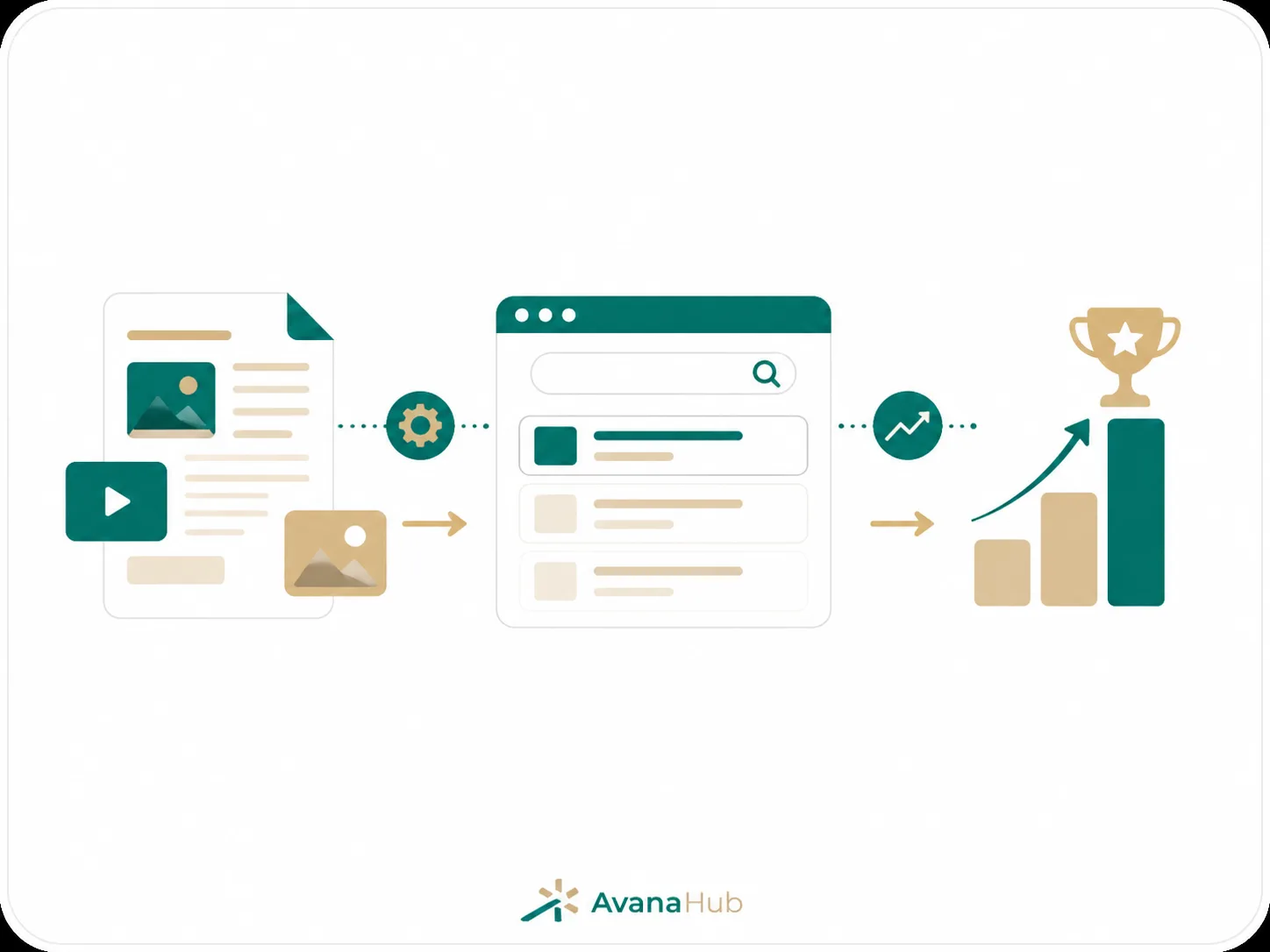
An article can rank and still contribute little to the business. Before researching keywords, define what the page should accomplish.
For example, a technical SEO agency could publish a guide about diagnosing indexation issues. The article answers an informational query, but its business purpose is to reach companies already facing a technical visibility problem and guide relevant readers toward appropriate seo services, such as a technical audit or implementation support.
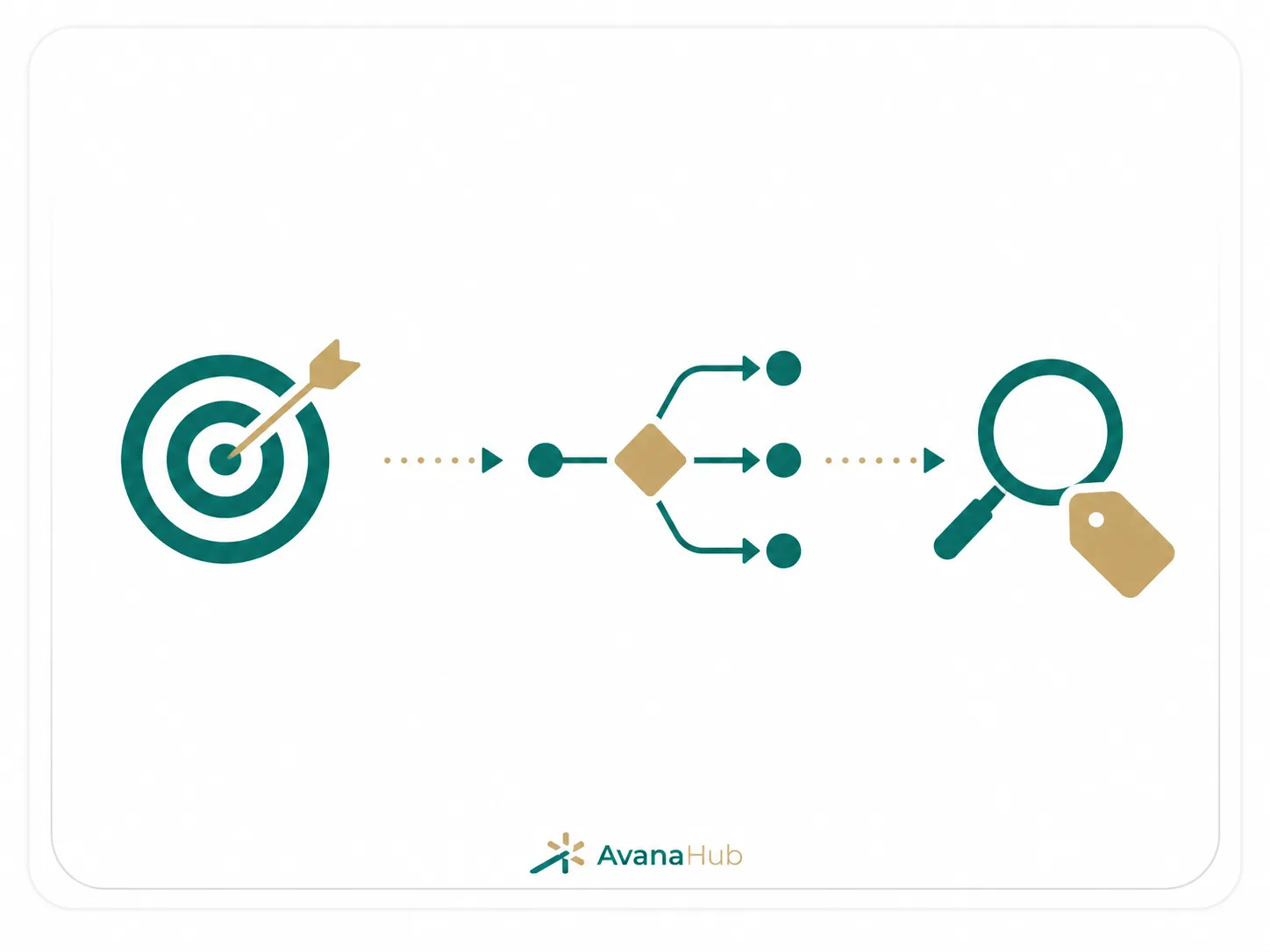
A topic is usually worth prioritizing when it connects:
Relevant search demand + a customer problem + a business objective
A broad keyword searched mainly by students may generate less value than a smaller query that repeatedly appears in sales calls. Search volume should inform prioritization, not control it.
Before approving a topic, answer three questions:
- Who is searching? Define the reader’s role, situation, and knowledge level.
- What must they accomplish? Identify whether they need to understand, compare, implement, or decide.
- What useful next step exists? Determine whether the article should lead readers toward a related guide, template, service, product, or case study.
Choose the Primary Keyword and Search Intent
The primary keyword represents the central need the article will satisfy. It should guide the page without being repeated in every paragraph.
An article targeting “how to write SEO blog posts” may naturally cover “SEO content writing,” “blog post optimization,” and “writing articles that rank.” These phrases can fit one page because they support the same instructional intent.
A phrase such as “SEO blog writing services,” however, signals commercial intent and should usually be addressed by a separate landing page.
Identify the Expected Page Type
Search the target keyword and inspect the dominant results. If most results are tutorials, Google is probably interpreting the query as instructional. A short definition is unlikely to compete even if it uses the keyword correctly.
Mixed results require closer analysis. If a query returns articles, videos, and tools, the user may need both explanation and implementation support. The article can include a template or worked example while maintaining one primary purpose.
Group Keywords by Intent, Not Wording
Two differently worded queries may belong on one page when users expect the same answer. Two similar phrases may require separate pages when one is informational and the other is commercial.
A practical grouping process is:
- Search each important keyword.
- Compare ranking URLs and page formats.
- Group phrases with substantial result overlap and the same user task.
- Separate phrases that represent a different decision stage or page type.
This approach reduces keyword cannibalization and prevents several shallow articles from answering the same question.
At AVANA, keyword planning starts with the audience’s problem and intended action, then uses search data to validate how that need is expressed.
Analyze the Search Results Before Drafting
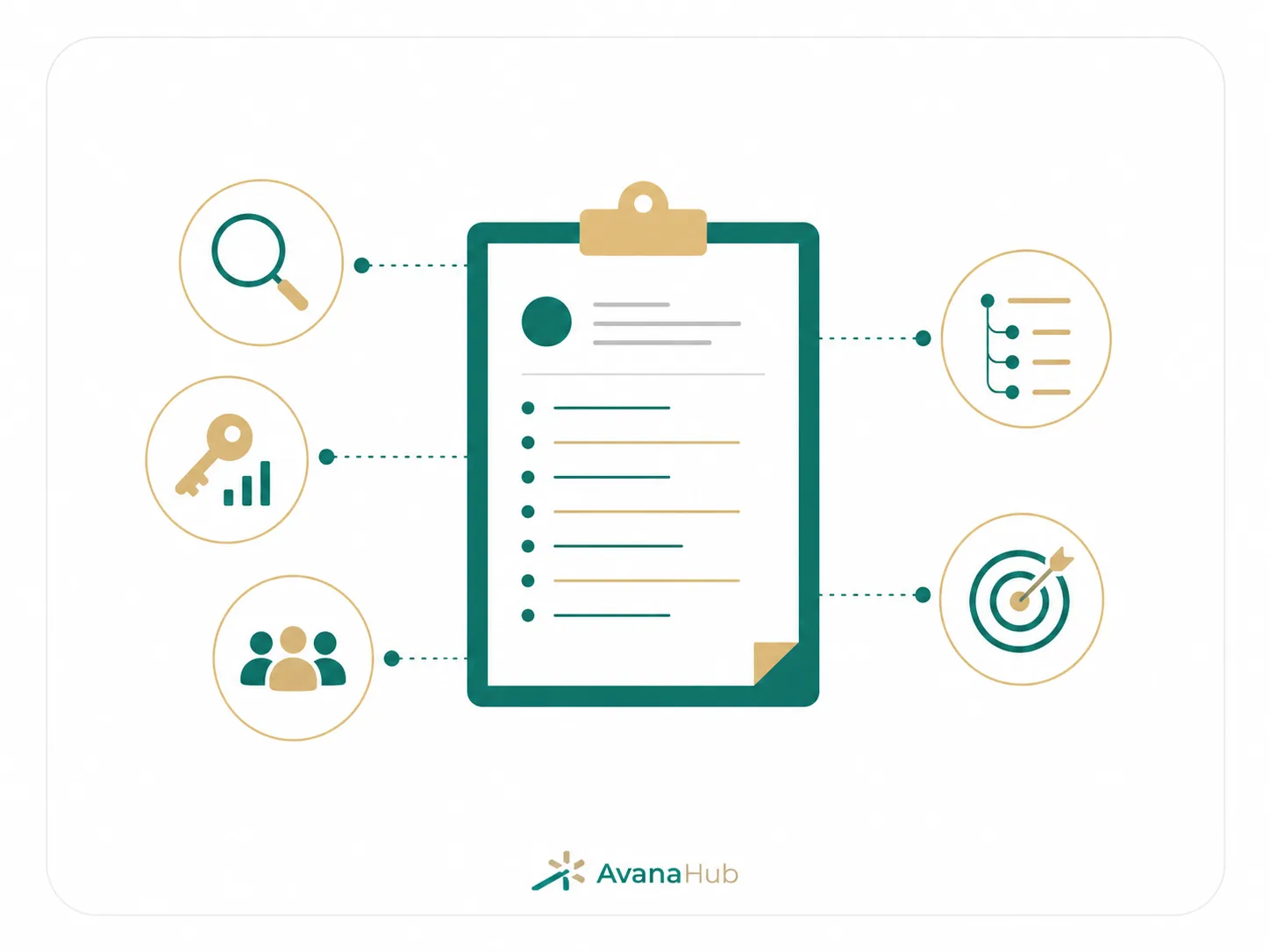
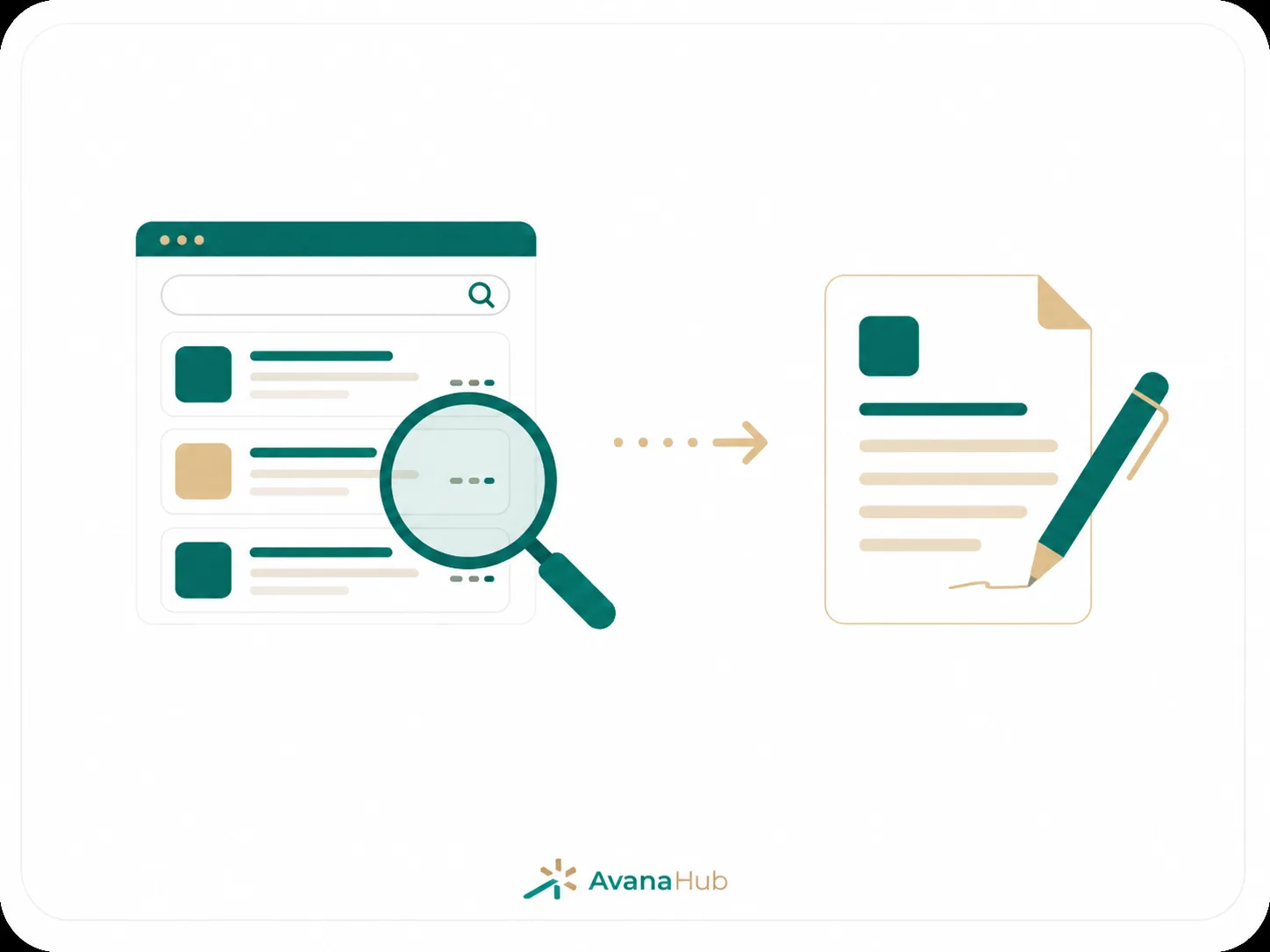
Search results show how Google currently interprets a query. Useful SERP analysis examines the experience being rewarded, not only the keywords used by competing pages.
Review the first-page results for:
- Content format: Tutorials, definitions, checklists, videos, tools, or product pages.
- Reader level: Beginner, intermediate, or specialist.
- Repeated requirements: Questions, stages, and decision factors consistently covered.
- Result features: Featured snippets, People Also Ask, videos, forums, or AI Overviews.
- Content freshness: Whether product, platform, regulatory, or search changes make older pages incomplete.
- Weaknesses: Unsupported claims, vague instructions, outdated examples, or missing limitations.
The objective is not to reproduce the top-ranking outline. It is to understand the minimum expectations and identify where current results fail to help the reader.
Find a Meaningful Content Gap
A useful content gap improves the reader’s ability to understand, decide, or act.
Suppose every ranking page recommends “matching search intent,” but none explains how to handle mixed article and product results. A stronger page could show when to create a blog post, a landing page, or both.
Other meaningful gaps include:
- A recommendation without implementation steps
- A process without validation criteria
- A tool list without use-case guidance
- A strategy that ignores cost or resource constraints
- A technical instruction without common failure points
- A case study that reports growth without explaining what changed
Adding more words does not close a content gap. Adding actionable information does.
Build a Focused SEO Content Brief
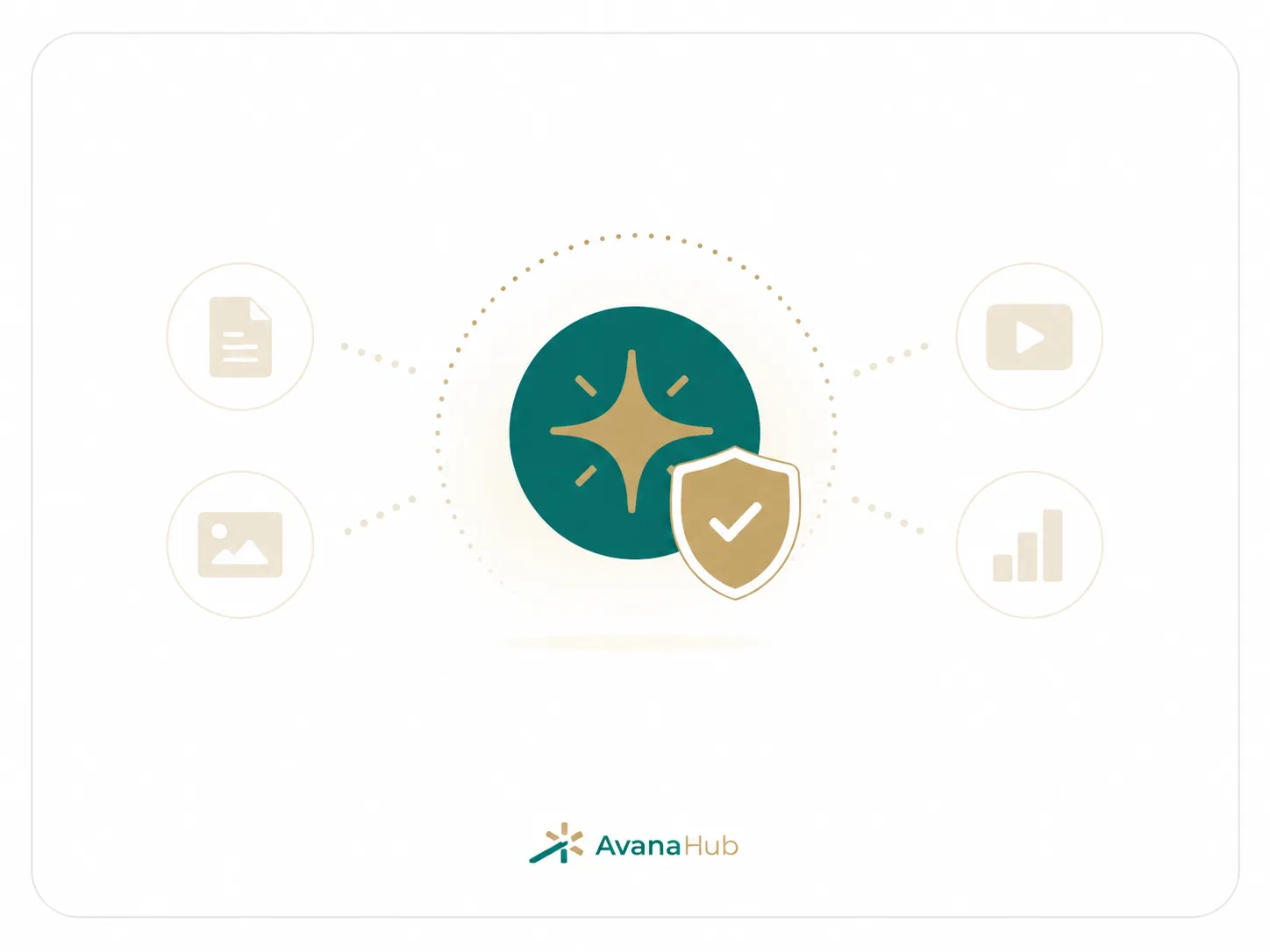
A content brief should define what the article must accomplish before drafting begins. It should not be a list of keywords to insert.
A useful brief includes:
- Audience and situation: Who the reader is and what conditions shape the problem
- Primary task: What the reader should understand or complete
- Search intent and format: Tutorial, definition, comparison, or commercial page
- Required evidence: Examples, screenshots, expert comments, calculations, or sources
- Distinctive contribution: The framework, data, or practical angle that improves the page
- Conversion path: Where the reader should go next
- Scope boundaries: Which related subjects belong on separate pages
Example of a Strong Brief
For “technical SEO audit checklist,” the brief could define:
- Reader: Marketing managers without a dedicated technical SEO specialist
- Task: Identify critical issues before assigning developer resources
- Evidence: Search Console examples, crawl scenarios, and validation instructions
- Differentiation: Separate serious crawl and indexing problems from low-impact tool warnings
- Destination: Technical SEO audit service page
- Primary KPI: Qualified visits from the guide to the service page
This gives the writer a decision framework rather than a generic outline.
Create Original, Defensible Value
Google’s guidance on helpful, reliable, people-first content emphasizes that publishers should make it clear who created the content, how it was produced, and why it exists.
An SEO article should therefore offer more than a rewritten summary of existing results. Original value can come from first-hand experience, expert review, a worked example, a tested process, original data, or a clear explanation of when a recommendation does not apply.
For example, instead of stating that internal links are important, explain how an audit identified valuable pages with few contextual links, how the new links were selected, and which performance signals were monitored afterward.
Credible content should also acknowledge limitations. A long-form article is not always the right response to a query. Users may prefer a calculator, template, comparison table, video, category page, or interactive tool.
This combination of evidence and limitation makes the content more useful than broad claims such as “high-quality content improves rankings.”
Write the Direct Answer Early
Readers should not need to move through several introductory paragraphs before finding the answer.
Immediately after the introduction:
- For a definition, provide a one- or two-sentence explanation.
- For an instructional query, summarize the main stages.
- For a comparison, state the central distinction and the conditions that affect the choice.
This structure improves comprehension and creates a concise passage that may be used in featured snippets or AI-generated summaries.
The direct answer should establish the conclusion, while the rest of the article explains implementation, examples, and exceptions.
Structure the Article for Scanning and Depth
A strong SEO article should be easy to navigate without becoming a collection of shallow lists.
Use one H1 for the main topic, H2 headings for major questions or stages, and H3 headings only when a subsection needs independent explanation. Headings should describe their content directly rather than using vague labels.
Apply Progressive Depth
A useful article normally moves through three levels:
- Direct answer: The shortest useful response
- Implementation: Process, decisions, and required resources
- Advanced context: Limitations, validation, measurement, and exceptions
This structure supports readers who need a quick answer and those who intend to complete the process.
Use Tables Only for Real Comparisons
A table should help users compare multiple variables that would be difficult to process in paragraphs. Good uses include search intents, prioritization criteria, or performance metrics.
If a table repeats the surrounding text, remove it.
Let Complexity Determine Length
There is no universally correct word count. A simple definition may need fewer than 1,000 words, while a technical guide may require more than 2,000.
Review each section by asking whether it adds new information, supports a decision, or helps validate an action. If not, shorten or delete it.
Write Clear and Specific Copy
Clarity helps readers and search systems understand the page.
Weak statement:
High-quality content is important for SEO success.
Stronger statement:
An SEO article needs to answer the target query, cover the decision factors users expect, and provide evidence or practical detail that competing pages lack.
The stronger version defines what quality means.
Replace broad claims with a concrete example, a process, a limitation, a calculation, or a credible source. Instead of saying that updating old content improves performance, explain whether the update corrected outdated information, consolidated overlapping pages, improved the format, or strengthened internal links.
Keep terminology consistent as well. If the article defines “search intent,” avoid switching among several alternative terms unless they describe genuinely different concepts.
Optimize the SEO Title, H1, and Meta Description
The SEO title and H1 should clearly describe the page and match its primary intent.
Google Search Central explains that Google may use the title element, visible headings, and other prominent page text when generating a search-result title. These elements are only part of the optimization process; a complete on-page seo guide should also consider content structure, internal links, image optimization, metadata, and how clearly the page communicates its primary topic.
A strong SEO title should:
- Include the main topic naturally.
- Reflect the page format.
- Communicate a useful scope or outcome.
- Avoid exaggerated promises.
- Remain distinct from other titles on the site.
For this article, How to Write SEO Blog Posts That Rank in 2026 describes both the task and current context.
A meta description should summarize the article accurately and give the searcher a reason to select it. Google may use the meta description or generate a snippet from page content when another passage better matches the query.
Use Keywords Naturally
Use the primary topic in prominent areas where it improves clarity, including the title, H1, introduction, and a relevant heading. Google Search Essentials also recommends using words people search for in prominent locations, descriptive anchor text, and relevant image alt text.
This does not require a fixed keyword density.
An article about SEO blog writing will naturally discuss search intent, keyword research, content briefs, on-page SEO, AI Overviews, technical publishing, and content updates. These concepts should appear because the page covers the subject properly, not because a tool requires a set number of mentions.
Plan Internal Navigation Without Overloading the Article
The article should help readers continue a relevant task, but the page does not need visible promotional links in every section.
Plan relationships between:
- A broader pillar page
- A specialist guide explaining a subtopic
- A case study supporting a claim
- A relevant commercial page for decision-stage readers
Use descriptive anchor text when these links are eventually implemented on the website. Avoid generic phrases such as “click here.”
Two or three purposeful pathways are usually more useful than repeated links to the same destination.
Use External Sources Selectively
External sources should support factual claims or direct editorial teams toward authoritative documentation.
Prefer official documentation, original research, government or academic sources, and first-party reports with a transparent methodology.
A citation should support analysis rather than replace it. After referencing a source, explain what the information means for the reader’s decision or implementation.
Use Images That Add Information
Images should demonstrate, explain, or verify something.
Useful examples include:
- The exact Search Console report used to diagnose an issue
- A before-and-after content structure
- A pillar-and-cluster diagram
- A technical configuration with the relevant field highlighted
A generic laptop image does not help readers complete an SEO task.
For each meaningful image, use an appropriate size, descriptive filename, accurate alt text, and relevant placement. Avoid putting essential information only inside the image.
Optimize for Featured Snippets
Featured snippets often extract concise definitions, ordered steps, or clear comparisons.
A practical format is:
- Use a heading that states the question.
- Answer it directly in the first paragraph.
- Keep the initial response concise.
- Expand with examples and limitations.
- Use numbered steps when the order matters.
For example:
What Is an SEO Blog Post?
An SEO blog post is an article created to satisfy a specific search need while helping search engines understand its topic, relevance, and quality. It combines useful information with clear structure, credible evidence, contextual navigation, and technical accessibility.
This paragraph works as a standalone answer while the wider article provides depth.
Write for AI Overviews and AI-Driven Search
Google’s guidance on AI features explains that generative search experiences remain rooted in core Search ranking and quality systems. Pages still need to meet standard crawling, indexing, quality, and snippet eligibility requirements.
Content teams should therefore strengthen existing SEO fundamentals rather than create a separate version of every article for AI search.
Build Sections That Can Stand on Their Own
AI systems may retrieve a specific passage rather than use the full article. Each major section should contain:
- A descriptive heading
- A direct answer
- Supporting explanation
- A practical example
- Any necessary limitation
For example, a section titled “How Many Keywords Should One Blog Post Target?” should state that one page usually targets one primary intent and a group of closely related terms, then explain when a different intent requires another page.
Add Value Beyond a Summary
If the page only repeats common advice, an AI-generated answer may satisfy the user without creating a reason to visit.
Stronger pages provide value that a short summary cannot fully replace, such as:
- A usable content brief template
- A worked calculation
- A decision framework with exceptions
- Screenshots from an actual process
- Expert interpretation
- A detailed implementation example
Instead of only recommending a content brief, provide a sample and explain how it changes for definitional, instructional, and commercial pages.
Use AI Without Scaling Low-Value Pages
Google’s guidance on generative AI content explains that AI can support production, but generating large numbers of pages without meaningful value may violate spam policies.
AI may help organize research or interview notes. A human editor should still verify claims, remove generic language, add expertise, and confirm that the article serves a clear user need.
AVANA treats AI optimization as an extension of strong SEO and editorial practice rather than a separate shortcut.
Add Article Structured Data Correctly
Google’s Article structured data documentation explains how publishers can provide information such as the headline, author, dates, publisher, and representative images.
Structured data does not guarantee an enhanced result or higher ranking. It should match visible page information, identify the actual author, include accurate dates, reference an appropriate image, and pass validation checks.
Do not change the displayed modification date unless the article has received a meaningful update.
Check Technical Publishing Requirements
Before publishing, confirm that the page:
- Returns a successful status code. Error pages and unintended redirects cannot perform as intended.
- Is indexable. Check for accidental noindex directives, blocked resources, or conflicting canonicals.
- Uses the correct canonical URL.
- Works on mobile devices. Text, tables, media, and forms should remain usable.
- Loads essential content without extra interaction.
- Has crawlable navigation between related pages.
- Uses HTTPS and stable media assets.
- Appears in the appropriate XML sitemap.
Meeting technical requirements makes a page eligible for evaluation. It does not guarantee crawling, indexing, or ranking.
Include a Relevant Conversion Path
An informational article should not read like a sales page, but it should offer a logical next step.
A beginner may need a checklist, an in-house marketer may need a brief template, and a team with declining performance may need a content audit. The CTA should reflect the reader’s stage.
Hypothetical Example
A B2B software company publishes a guide about creating SEO content briefs. In this hypothetical example, broad informational visitors receive a downloadable template, while users who read several advanced articles are introduced to the company’s strategy service.
The template generates 180 downloads in one quarter. Of those users, 28 later visit a commercial page and six request a consultation. The article contributes to a measurable path without forcing every visitor into an immediate sales action.
Edit in Three Separate Passes
One editing pass is rarely sufficient because strategic, factual, and stylistic problems require different attention.
Pass 1: Intent and Substance
Confirm that the article answers the query, reaches the main answer quickly, and contains enough evidence or practical detail. Remove sections that repeat previous recommendations.
Pass 2: Accuracy and Credibility
Verify statistics, dates, product features, quotations, calculations, and technical instructions. In sensitive or specialist fields, involve a qualified subject-matter reviewer.
Pass 3: On-Page SEO and Readability
Review the title, H1, headings, metadata, image alt text, paragraph length, mobile readability, and CTA placement. For teams managing large websites or competitive search categories, professional on-page seo services can also help identify optimization issues across multiple pages and establish consistent standards for future content.
This sequence keeps minor keyword edits from distracting the editor from larger content weaknesses.
Publish, Measure, and Improve
After publishing, inspect the live page rather than assuming the content management system applied every setting correctly.
Check the URL, canonical, indexability, structured data, images, and mobile layout. Make sure the article is connected to relevant existing pages and included in normal discovery systems such as the XML sitemap and Search Console.
Measure the Article According to Its Purpose
A page may gain impressions while losing clicks because the result layout changes. It may also influence conversions without being the final page visited before a purchase.
Update Based on Evidence
Review an article when rankings or clicks decline, search intent changes, competitors add stronger information, tools or regulations change, or the page attracts traffic without supporting a useful next action.
A meaningful update may consolidate overlapping pages, replace outdated instructions, add expert evidence, improve the direct answer, or change the format. Updating the date alone is not a content refresh.
Common SEO Blog Writing Mistakes
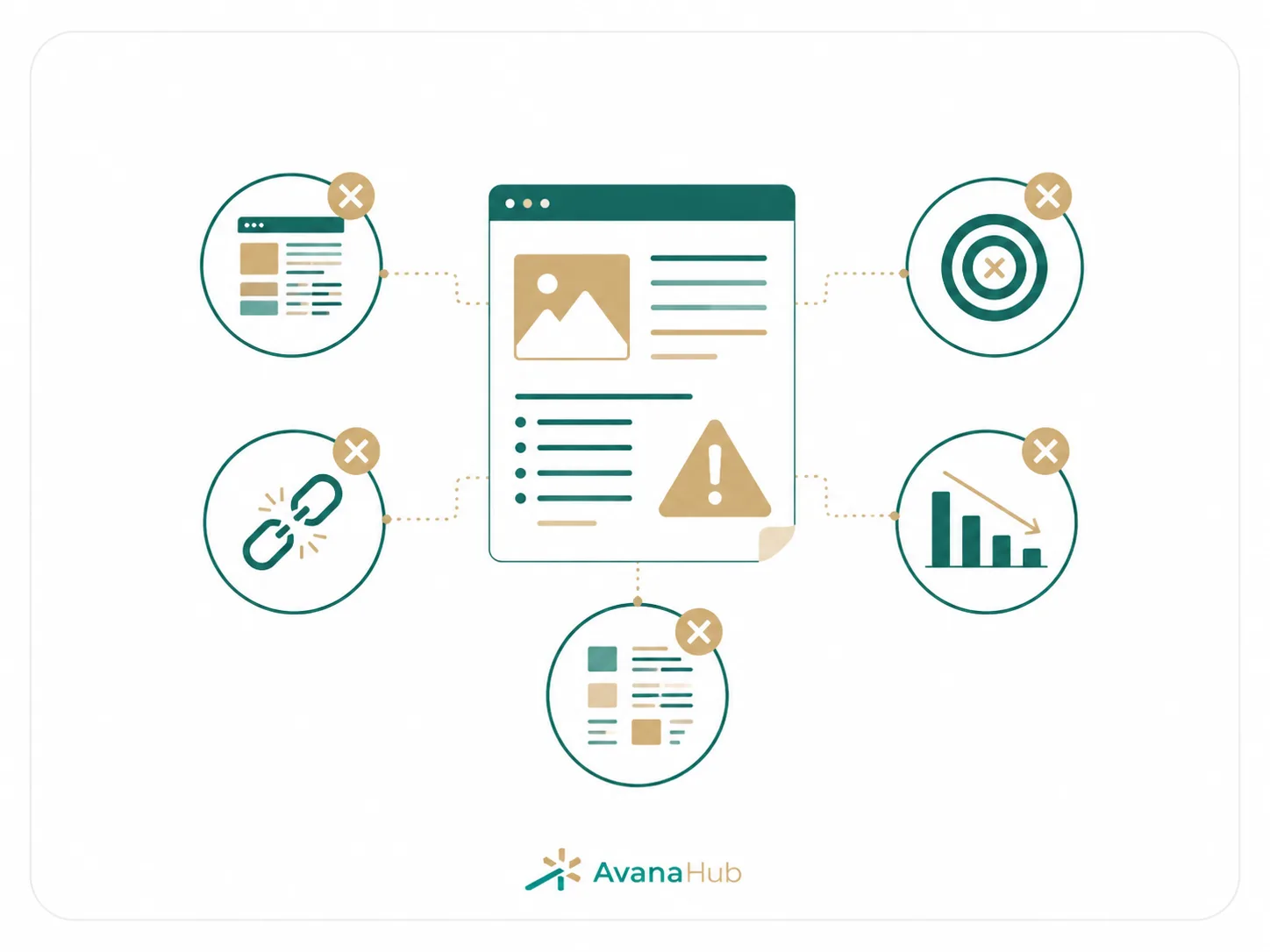
Targeting a Keyword Without Checking the Results
A well-written article can fail when users expect a tool, product category, video, or local page. Inspect the result format before deciding that a blog post is appropriate.
Rewriting the Existing Top Results
Combining the same recommendations from several competitors produces another summary. Add first-hand experience, credible evidence, or a clearer decision process.
Writing a Long Introduction
Readers searching for instructions want the process quickly. Confirm the task, establish the scope, and move to the answer.
Following Keyword Density Targets
There is no useful universal density percentage. Repeat the primary phrase only when it improves clarity.
Publishing Unverified AI Drafts
AI drafts may contain generic language, unsupported claims, or outdated details. Human review remains necessary.
Measuring Traffic Without Relevance
Ten thousand irrelevant visits may create less value than 500 visits from qualified decision-makers. Measure audience actions and commercial contribution, not only pageviews.
SEO Blog Post Checklist
Before publication, confirm:
- Intent: The article answers one primary search need with the correct format.
- Audience: The reader, problem, and knowledge level are clear.
- Original value: The article includes evidence, experience, examples, or a useful framework.
- Structure: The direct answer appears early and every major section adds new information.
- On-page SEO: The title, H1, metadata, headings, and images accurately represent the content.
- Credibility: Claims are verified and expert review is complete where needed.
- Technical access: The page is crawlable, indexable, canonical, secure, and mobile-friendly.
- Conversion: The reader has a relevant next step.
- Measurement: The team knows which metrics define success.
- Maintenance: A named owner is responsible for future reviews.
Conclusion
An SEO blog post earns sustainable visibility when it solves one clearly defined search task with accurate information, practical depth, and credible evidence. Keyword placement supports that process, but it cannot compensate for the wrong intent, a weak format, generic advice, or technical barriers. In 2026, successful articles must also be clear enough for featured snippets and AI-driven search while providing original value that gives users a reason to visit the full page.
The strongest content programs connect research, expert input, on-page optimization, conversion paths, and ongoing measurement. Publishing is only one stage; teams also need to understand how the page is discovered, how readers use it, and whether it supports a meaningful business outcome. AVANA can review an existing content library or help build a more focused SEO editorial process based on audience needs and measurable opportunities.