
For every 1,000 Google searches in the US in 2026, only 360 result in a visit to a website that isn't owned by Google or paid for through ads. The other 640 end on the search results page — answered by AI Overviews, Featured Snippets, Knowledge Panels, or Google's own properties. This isn't a future trend. It's the operating reality. The businesses still measuring SEO success by traffic volume are watching their numbers collapse. The businesses making more money than they did two years ago are measuring something else entirely. This article covers what zero-click search actually is, why some businesses are growing revenue while losing traffic, and the new economic model for SEO when clicks are no longer the product.
The Number Behind the Number
The headline statistic is that 58.5% of US searches and 59.7% of EU searches now end without a click (Datos / SparkToro, 2026). But the more useful statistic is hidden underneath:
AI search visitors who do click convert at 23x the rate of traditional search visitors.
This is the single most important data point in modern SEO and almost no one is talking about it. The math has fundamentally inverted. Traffic volume is down. Conversion quality is up — dramatically. Businesses watching only the traffic line are reporting "SEO is dead." Businesses watching the conversion line are reporting record revenue.
Both can be true at the same time. They usually are.
Why This Is Happening
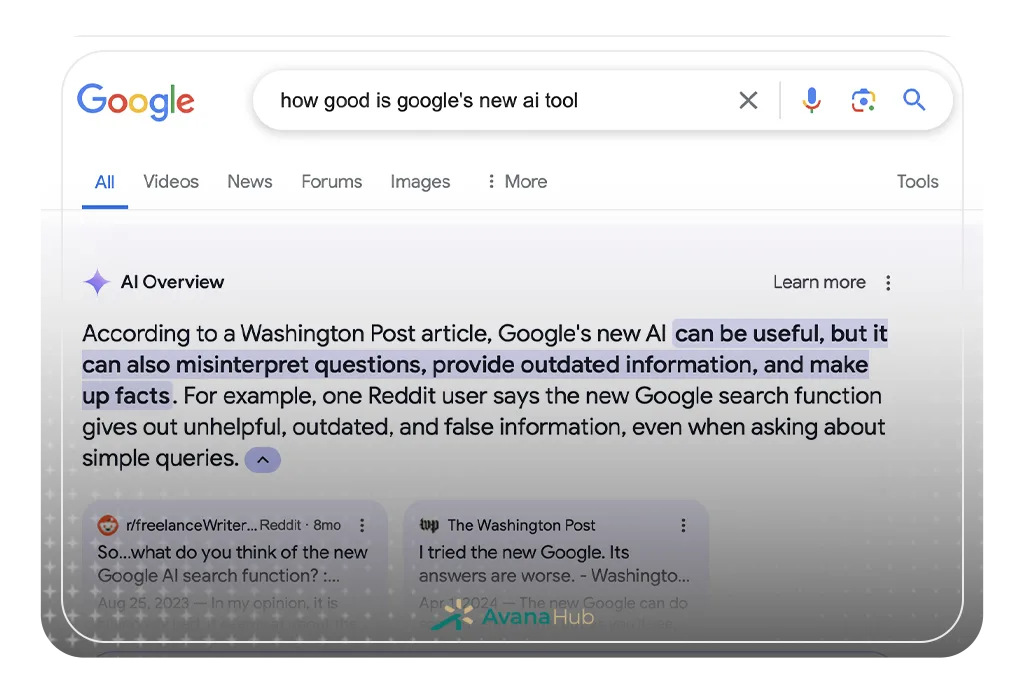
The traffic decline isn't random. It's selective in ways that change how to think about it.
The searches Google now answers directly are mostly low-intent informational queries — "what is X," "how does Y work," "when was Z founded." These were the queries that traditional content marketing optimized for, because they had high search volume. They were also the queries with the lowest conversion potential.
The searches that still send clicks are different. They're commercial queries, high-intent questions, decision-stage research, and queries where users specifically need to verify, compare, or transact. These have always converted better. Now they're a much larger share of remaining traffic.
The result: traffic looks like it's collapsing because the volume has dropped. Revenue looks healthier because the remaining traffic is the part that was actually paying for everything in the first place.
The Three Business Models That Survive Zero-Click
Not every business is equally affected. The pattern across 2026 audits is clear about who's losing and who's winning.
Affected Severely
Publishers monetizing informational content through ad impressions have been hit hardest. HubSpot reportedly saw a 70-80% organic traffic decline. Sites built on "what is" and "how to" content optimized for high-volume informational keywords are watching their entire economic model evaporate.
The pattern: if your revenue depends on someone clicking, reading, and seeing display ads, zero-click is an existential threat.
Affected Moderately
Lead-generation businesses (B2B services, agencies, consultants) and e-commerce stores see traffic decline but conversion lift. The math depends on whether the conversion improvement offsets the volume drop. Most are net-positive after 18 months once the high-intent traffic stabilizes.
Affected Positively (Yes, Really)
Some businesses report growing revenue alongside declining traffic. The pattern is consistent: their content gets cited in AI Overviews and AI search responses, which drives branded searches and direct visits from users who saw the citation and wanted to learn more. The citation acts like a word-of-mouth recommendation at Google's scale — credibility without the click, but often with the conversion.
The New Economics of Search
The shift requires understanding three concepts most marketers haven't internalized yet.
Citation impressions are the new ranking. When your brand appears in an AI Overview answering a question, you've earned an impression that builds awareness even without a click. Brands cited inside AI Overviews earn 35% more organic clicks and 91% more paid clicks than non-cited brands on the same queries (Seer Interactive). The citation is the asset.
Brand searches are the leading indicator. Users who see your brand cited in AI answers don't always click that day. They search for you by name later, when they're ready to buy. Branded search volume increases of 34-67% within six months are typical for brands consistently cited across 20+ publications (SparkToro, 2025). This converts at the highest rates of any search behavior.
Direct traffic absorbs former search traffic. When users learn your brand from AI citations, they bookmark, type your URL, or search you specifically. The traffic doesn't disappear — it migrates from "organic" to "direct" in your analytics. Most teams don't reconcile this and panic at the wrong number.
What Actually Makes Money in a Zero-Click World
The strategies producing revenue in 2026 fall into four categories.
Citation-First Content
Build content that AI systems extract and cite. The structural patterns that win:
- Direct answers in the first 40-60 words of every section
- Statistics and data every 150-200 words
- Tables and structured formats that AI parses cleanly
- Original research and proprietary data nobody else has
- Clear author entities with verifiable expertise
Citations are visibility. Visibility builds branded search. Branded search converts at the highest rates of any traffic source.
Click-Necessary Content
Some content can't be summarized by AI no matter how the model improves. Calculators, configurators, interactive assessments, personalized diagnostics, and real-time data dashboards all require the user to come to your site to get value. These formats resist zero-click displacement structurally.
A finance site that publishes "10 budgeting tips" gets summarized to oblivion. A finance site that publishes "Calculate your retirement number in 60 seconds" gets clicks because the AI can describe it but can't run it.
Owned Audience Channels
Email lists, communities, app users, and SMS subscribers don't depend on Google to deliver traffic. They're directly accessible regardless of algorithm changes. Businesses that converted some search traffic into owned audiences before the zero-click shift are insulated. Businesses that didn't are vulnerable.
The smart move in 2026 is treating every piece of search traffic as an audience-building opportunity, not a one-time visitor.
Transaction-Stage Optimization
Bottom-of-funnel queries still send clicks. "Best [product] for [use case]," "[brand] vs [brand] comparison," "[product] reviews [year]" — these are increasingly the queries where SEO traffic still converts at meaningful rates.
The strategic shift: stop competing for top-of-funnel informational traffic that gets summarized away. Concentrate on the comparison, evaluation, and decision queries where users still need to investigate before buying.
The Counterintuitive Truth Most Businesses Miss
The 60% zero-click figure is alarming if you measure SEO success by session volume. It's manageable, and potentially advantageous, if you measure it by revenue per visit, brand authority, and direct channel growth.
The 40% of searches that still result in clicks are increasingly high-intent, high-converting visitors. Being cited in the 60% that don't click builds brand equity that compounds into direct traffic and branded search.
What used to be a volume game is now a quality game. SEO didn't die. It just changed what success looks like.
How to Measure What's Actually Working
Traditional SEO reports tell an incomplete story in 2026. The metrics that matter now:
If your current dashboard tracks only sessions, rankings, and click-through rates, it's measuring the wrong era of SEO.
What to Stop Doing
A few habits that actively hurt in a zero-click environment:
- Optimizing for high-volume informational keywords that AI Overviews now answer directly
- Publishing thin content designed to capture traffic without serving conversion
- Reporting SEO success by session count without context on conversion quality
- Treating AI citations as "lost traffic" instead of brand impressions
- Building a business model that requires growing traffic to grow revenue
Conclusion
The zero-click era is the biggest economic shift in search since AdWords. The businesses panicking about it are usually the ones who built fragile content models that depended on cheap informational traffic. The businesses thriving are the ones who recognized early that being cited matters more than being clicked, and that the smaller stream of remaining traffic is more valuable than the larger stream that disappeared.
Sixty percent of searches ending without a click isn't the end of SEO. It's the end of a specific, fragile version of SEO that was always going to break eventually. What replaces it rewards brand strength, citation visibility, and content that genuinely deserves to be visited — which is the version of SEO that probably should have existed all along.
If your traffic is down but your revenue is stable or growing, you're winning the new game. If your traffic is up but your revenue is flat, you're optimizing for a metric that no longer connects to outcomes.
The math has changed. The reporting has to change with it.