
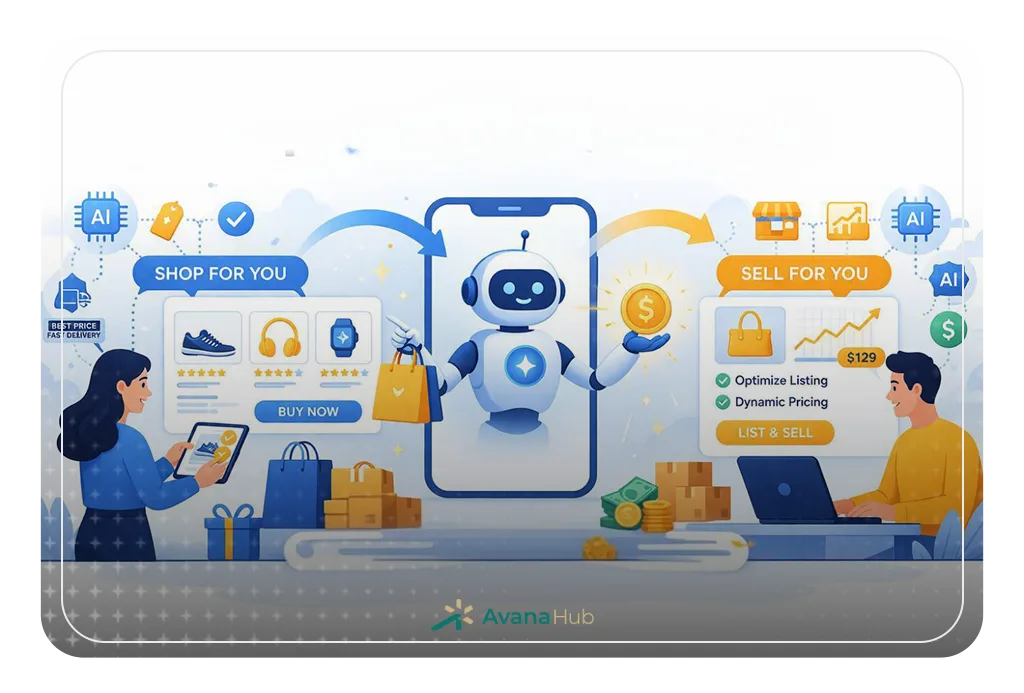
By 2028, Gartner predicts 90% of B2B buying will be intermediated by AI agents — autonomous systems that search, evaluate, and transact on behalf of users without direct human involvement at each step. That's $15 trillion in spend flowing through agents instead of humans clicking on websites. The shift is already underway: over 20% of digital commerce transactions in 2026 are initiated or completed by autonomous agents, and 85% of brands currently lack visibility in AI-driven search environments. Most businesses are still optimizing for human searchers who don't visit their sites anymore. This article covers what agentic SEO actually is, how it differs from traditional SEO and GEO, and the specific technical changes your site needs to be discoverable by the agents that are increasingly making purchase decisions instead of humans.
What Agentic SEO Actually Means
Agentic SEO is the optimization of websites, content, and infrastructure to be discoverable, parsable, and actionable by autonomous AI agents — not just by human searchers or static AI search systems.
The distinction matters because agents do more than read content. They:
- Scan structured product data and machine-readable catalogs
- Compare options across multiple sources simultaneously
- Make decisions based on confidence scores
- Execute transactions (booking, purchasing, signing up) without returning to a human
- Take the path of lowest friction when interacting with websites
A site that ranks well on Google and gets cited in ChatGPT can still be completely invisible to an AI shopping agent if its data isn't structured for machine readability. The optimization layers don't fully overlap.
How It Differs From Traditional SEO and GEO
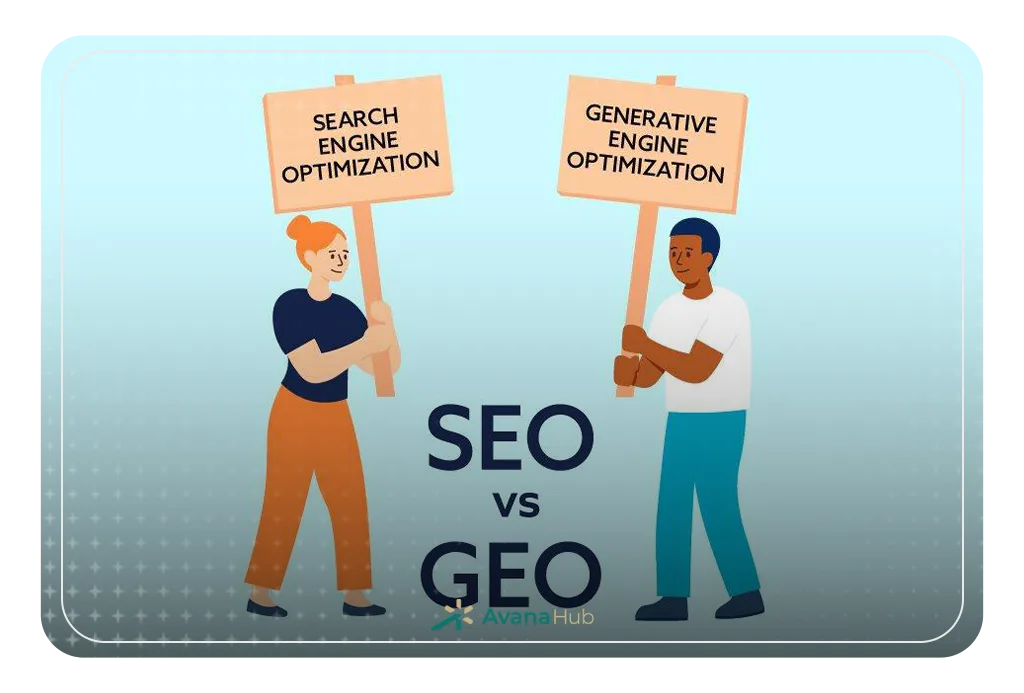
The three layers operate on different assumptions about who's consuming the content.
A useful way to think about it: SEO gets you ranked. GEO gets you cited. Agentic SEO gets you transacted with.
All three matter in 2026. Agentic SEO is the layer most businesses haven't started yet.
Why This Is Happening Now
Three structural shifts converged in late 2025 and early 2026 to make agentic SEO suddenly urgent.
MCP (Model Context Protocol) became the standard. Launched by Anthropic in November 2024 and adopted by OpenAI, Google, and Microsoft, MCP is now governed by the Agentic AI Foundation under the Linux Foundation. Over 10,000 MCP servers exist as of early 2026, making it the de facto standard for agent-to-tool connectivity.
WebMCP arrived. Google and Microsoft proposed WebMCP and the W3C Community Group is incubating it. Chrome's early preview shipped in February 2026. WebMCP lets websites declare their capabilities (checkout, search, account creation) directly to AI agents in a machine-readable format — instead of agents having to scrape and guess.
Agentic crawlers entered production. ChatGPT's Atlas browser, Perplexity's Comet, and similar tools are now sending real agent traffic to websites. BrightEdge data shows a "massive rise in agentic crawlers" already in early 2026.
The infrastructure exists. The behavior is shifting. Most businesses haven't noticed.
The 6 Pillars of Agentic Readiness
Agentic SEO breaks down into six specific technical and content layers. The sites that win are strong across all of them.
1. Structured Data at Granular Level
Schema.org markup at the page and component level is now the floor, not the ceiling. The required schema types depend on your business model:
- Product, Offer, AggregateOffer for e-commerce
- LocalBusiness with full subtypes for service businesses
- FAQPage and HowTo for informational content
- Article with author entity for content sites
- Service with clear pricing and availability for B2B services
The granularity matters. A single LocalBusiness schema on the homepage isn't enough. Each service page needs its own Service schema. Each product needs its own Product schema. Agents look for component-level structured data, not site-level.
2. Real-Time, Machine-Readable Data
Static product pages no longer work for agentic discovery. Agents need:
- Live pricing data accessible via API or structured markup
- Real-time inventory and availability
- Current operating hours, especially for service businesses
- Up-to-date contact methods
If your product page shows "out of stock" but your structured data says "in stock," the agent uses the structured data and your customer gets a bad experience. If your structured data is missing or stale, the agent skips you entirely and recommends a competitor.
3. API Accessibility
Agents prefer APIs over HTML scraping. APIs are predictable, fast, and machine-friendly. The hierarchy of agent preference:
- Direct API access (highest priority)
- MCP server (rapidly becoming standard)
- Structured data on HTML pages (middle priority)
- Plain HTML requiring scraping (lowest priority)
Businesses without any API layer on their core data — products, services, pricing, availability — are at the bottom of the agent preference list, regardless of how good their content is.
4. WebMCP Capability Declaration
This is the newest pillar and the one with the longest competitive runway. WebMCP lets you declare what an agent can do on your site:
- Search your inventory
- Add items to cart
- Complete a purchase
- Book an appointment
- Submit a lead form
Instead of an agent guessing how your checkout works, WebMCP gives it an explicit map. Sites that adopt WebMCP early get a meaningful advantage during the transition because agents take the path of least friction — and explicit capability declarations are the lowest-friction path possible.
5. Topical and Entity Authority
Agents don't just need machine-readable data. They need to trust your data over your competitors'. Trust signals that matter:
- Consistent NAP and entity data across the web
- Verified author and business entities (sameAs property linking to Wikidata, GBP, LinkedIn)
- Topical depth on your core subject area
- External corroboration through citations, mentions, and reviews
A site with perfect schema but no external entity verification is treated as unverified by agents. Authority signals from off-site sources are now part of agentic SEO, not separate from it.
6. Clean Site Architecture
Agents struggle with messy site architecture the same way humans do — but they're less forgiving. The architecture issues that hurt agentic discoverability:
- Critical information buried 4+ clicks deep
- Pricing or availability information split across multiple pages
- Inconsistent URL patterns
- JavaScript-heavy rendering that requires execution to parse
- Important content behind login walls or modal popups
A clean, server-rendered site with consolidated information on canonical pages is significantly more agent-friendly than a JavaScript-heavy SPA, even if the SPA looks better to humans.
What's at Stake
The penalty for being agent-invisible isn't subtle. Early data from agent-driven traffic shows:
- Sites without proper structured data see 85% lower visibility in AI-driven search results
- Products without machine-readable catalogs get skipped entirely by AI shopping agents
- Service businesses without real-time availability data get filtered out of agent recommendations
- Sites with WebMCP declarations are prioritized over functionally identical competitors without them
This isn't a marginal effect. As agent traffic grows from its current 20%+ of digital commerce toward Gartner's 90% B2B prediction, the businesses without agentic SEO will become structurally invisible to a majority of buyers.
A 90-Day Implementation Plan
Most businesses can reach baseline agentic readiness in 90 days. The sequence:
Days 1-15: Audit and Baseline
Audit your existing structured data using Schema.org Validator and Google's Rich Results Test. Identify which schema types are missing for your business model. Check whether your product, pricing, and availability data is machine-readable or buried in HTML.
Days 16-45: Foundation
Implement granular schema across all key page types. Set up API endpoints for your core data (products, pricing, availability, hours). Verify that your structured data matches your visible content exactly — mismatch is treated as deceptive.
Days 46-75: Authority and Architecture
Strengthen entity signals: verify author entities, build cross-source corroboration, add sameAs properties linking to verified profiles. Clean up site architecture issues that prevent clean parsing — consolidate fragmented information, fix orphaned pages, ensure server-side rendering for critical content.
Days 76-90: WebMCP Pilot
Identify the top 1-3 capabilities you want agents to access (search, booking, purchase). Implement WebMCP declarations for those capabilities. This is early-mover territory — most competitors won't have this for another 12-18 months.
Ongoing: Monitor
Track how AI systems describe and reference your business. Run weekly checks on ChatGPT, Perplexity, and Google AI Mode for your key queries. Monitor agent-specific traffic in your analytics (separate user agents are starting to show up in standard tools).
What Stops Agents From Recommending You
Beyond technical gaps, several factors actively reduce agent confidence in your site:
- Inconsistent data between your structured markup and visible content
- Outdated information (especially pricing, availability, hours)
- Heavy reliance on images for critical information that should be text
- Aggressive popups or interstitials that block clean parsing
- Missing or weak entity verification across the web
- Authority gaps where your business has no external mentions or citations
Agents don't penalize maliciously — they just default to the path of highest confidence. A competitor with weaker products but cleaner data wins the recommendation.
Conclusion
Agentic SEO isn't a future trend. It's a 2026 reality with $15 trillion of B2B buying expected to flow through agents within 24 months. The technical work is straightforward. The competitive window is open because most businesses haven't started.
The businesses preparing now — granular schema, real-time data, API access, WebMCP declarations, strong entity signals — will be the default recommendations when agent traffic becomes dominant. The businesses still optimizing only for human searchers will be invisible to a majority of buyers within 18-24 months, and most of them won't notice the loss until the gap is too wide to close.
The math here is unusually clean: build agentic readiness now while the bar is low, or rebuild it under pressure later when every competitor is doing the same thing.