

If your business relies on local customers walking through the door, calling your phone, or booking online from a nearby area, you already know local search visibility is not optional. What most business owners don't know is that a large chunk of that visibility comes down to one unglamorous activity: local citation building.
Citations are what tell Google, Apple Maps, Bing, and the AI systems now answering local queries that your business is real, that it's located where you say it is, and that the details match across the web. When those details are inconsistent, search engines hedge — and hedging costs you rankings, clicks, and revenue.
At Avanahub, the most common request we get from local business owners is help recovering ranking positions they used to have. In most of those cases, the problem isn't their website or their Google Business Profile. It's the mess of old phone numbers, outdated addresses, and unclaimed listings scattered across directories they've never heard of. This guide walks through what local citation building actually is, why it still matters in 2026, and how to do it properly without wasting months on directories that don't move the needle.
What Is a Local Citation?
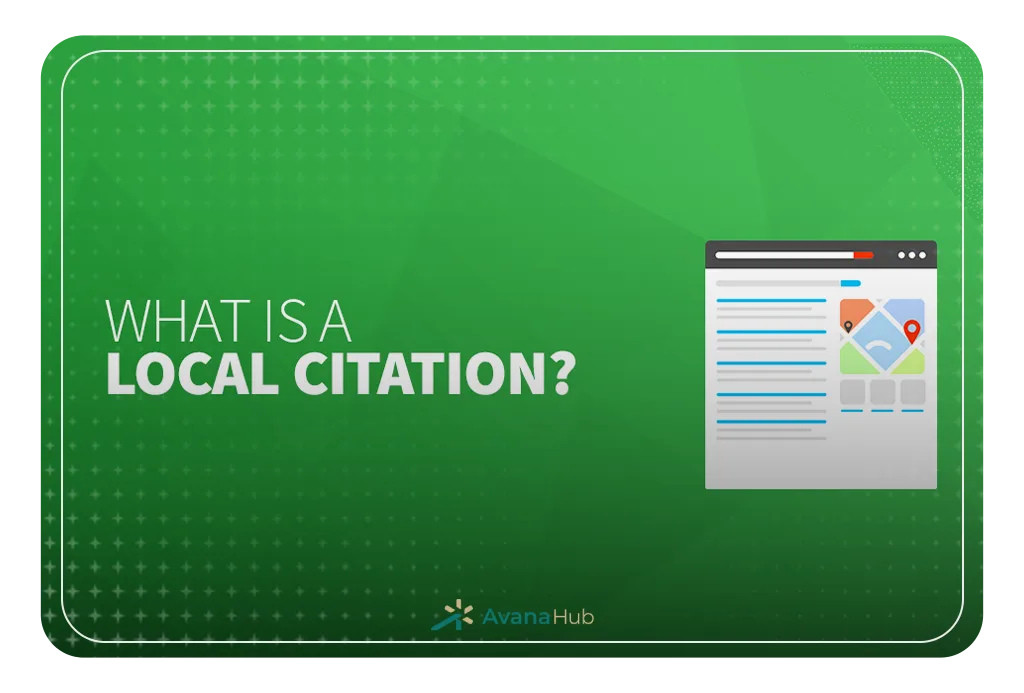
A local citation is any online mention of your business's Name, Address, and Phone number — what the industry calls NAP. These mentions live on business directories, review platforms, social media profiles, industry-specific sites, local news websites, and sometimes on blog posts or community forums.
The important thing to understand is that a citation doesn't require a link back to your site. A simple text mention of your business name and contact details counts. Google reads these mentions across the web and uses them to build what its AI systems now treat as an entity confidence score — essentially, how sure the search engine is that your business exists, operates at a specific address, and is trustworthy.
Why Citations Still Matter in 2026

Some marketers have been declaring citations dead for years. The data says otherwise. The 2026 Whitespark Local Search Ranking Factors report found that citation signals still account for around 7% of total local ranking influence across both Local Pack and Local Organic results. That's smaller than it was in 2018, but 7% is enough to decide whether you appear in the top three Google Maps results or not.
The bigger shift is what citations do in the AI era. Google's AI Overviews, ChatGPT's local recommendations, and Gemini's answers all lean heavily on cross-referenced business data. When multiple independent sources confirm your NAP, AI systems surface your business with confidence. When sources conflict, AI systems default to competitors with cleaner data profiles.
NAP Consistency: The Foundation of Everything
NAP consistency means your business Name, Address, and Phone number appear identically on every platform. Not similar. Identical.
Google's systems have become better at reconciling minor differences — it can usually figure out that "Street" and "St." refer to the same road — but major inconsistencies still send conflicting signals. More importantly, inconsistencies confuse customers, and confused customers pick a competitor instead of investigating which listing is correct.
What Counts as an Inconsistency
These are the discrepancies I see most often when auditing client listings:
- Different versions of the business name, like "Smith & Sons Plumbing" on Google and "Smith and Sons Plumbing" on Yelp.
- Address variations where one listing uses "Suite 200" and another uses "Ste. 200" or "#200."
- Old phone numbers that were never updated after a line change or office move.
- Different website URLs, where one directory points to the old domain and another points to the redirect destination.
- Mixed formatting on the address, such as one listing using "Road" and another using "Rd."
The Business Impact of Inconsistent Data
The consequences go beyond rankings. A 2025 study found that businesses with 95% or higher NAP consistency across their top 50 citations ranked an average of 3.2 positions higher in local pack results compared to businesses with 85% consistency. That small gap often decides whether you appear in the coveted local three-pack or get pushed below the fold.
The customer side is even more direct. If someone Googles your business and sees two different phone numbers, they usually call the competitor whose information looks cleaner. That's a lost lead you never even knew about.
The Two Types of Local Citations
Citations fall into two categories, and a strong strategy needs both. Understanding the difference helps you prioritize where to spend time.
Structured Citations
Structured citations are formal directory listings where your business data appears in a standardized, fielded format. These are the backbone of local citation building and what most people picture when they hear the term.
The major structured citation sources include:
- Google Business Profile, which is the single most important listing for any local business and the foundation of everything else.
- Apple Business Connect, increasingly important as Apple Maps drives iPhone-based local searches.
- Bing Places, which still powers results across Microsoft products and some AI tools.
- Yelp, especially for restaurants, salons, and service businesses.
- Facebook Business Pages, which function as citations and review platforms simultaneously.
- Better Business Bureau, valuable for trust signals even when rankings don't move directly.
- Industry-specific directories like Healthgrades for medical practices, Avvo for law firms, and TripAdvisor for hospitality.
Unstructured Citations
Unstructured citations are mentions of your business on websites that aren't formal directories. These appear organically and often carry strong weight because they represent actual community recognition.
Examples include:
- Local news articles that mention your business address when covering a community event.
- Blog posts by local bloggers reviewing or recommending your business.
- Sponsorship pages for local sports teams, charities, or community events.
- Community forum threads where customers recommend your services.
- Press releases picked up by local publications.
Unstructured citations are harder to build because you can't just submit a form. They come from PR work, community involvement, and content marketing. But they're increasingly valuable because they signal to Google that real people in your area actually know your business exists.
The 5 Core Citation Sources Every Business Needs First
Before chasing niche directories, get the high-value platforms right. These are the ones that actually move rankings and feed data to everything else.
Beyond these five, the next tier typically includes Foursquare, Better Business Bureau, Yellow Pages, and your local Chamber of Commerce. Start with the core five. Master them. Then expand.
Data Aggregators: The Hidden Layer of Citation Distribution
Most business owners don't know that major US directories pull their data from a small number of central aggregators. Fixing your listing at the aggregator level cascades correct data across hundreds of downstream directories automatically.
The main US data aggregators in 2026 are:
- Data Axle (formerly Infogroup), which feeds data to dozens of directories and mapping services.
- Neustar Localeze, owned by TransUnion, and one of the most influential data sources for US business listings.
- Foursquare, which syndicates data to Apple Maps, Samsung, Microsoft Bing, and many others.
- Yellow Pages Network, which powers Yellow Pages listings and affiliated directories.
Submitting clean data to these aggregators is often more efficient than manually claiming 50 individual directory listings, because a single aggregator submission can push correct NAP data to dozens of downstream sites.
How to Build Local Citations Properly — A 6-Step Framework

Here's the process I recommend to every client, in order. Skipping steps creates the inconsistency problems you're trying to solve.
Step 1 — Lock Down Your Master NAP Record
Before you submit anything anywhere, create a single master reference document with your business details in the exact format you want used everywhere. Include:
- Business name, exactly as it appears on your signage and legal documents.
- Full street address with consistent abbreviations (pick either "Street" or "St." and stick with it).
- Primary phone number, including country code if relevant.
- Website URL, including whether you use www or not.
- Business hours, with holiday exceptions noted.
- Primary category and 1-3 secondary categories.
- Short description (under 750 characters for most platforms).
- Logo file and at least 10 high-quality photos.
This document becomes the single source of truth. Every submission, every update, every audit references back to it.
Step 2 — Claim and Fully Complete Your Google Business Profile
Google Business Profile is the single highest-impact listing you'll ever touch. Claiming it is free, verification is straightforward through postcard or phone, and the ranking lift from a fully optimized profile is substantial.
Don't leave fields blank. Upload photos. Select every relevant service. Write a complete description. Add holiday hours. Respond to reviews. The platforms that reward full profiles do so because full profiles signal active, real businesses.
Step 3 — Claim the Core Structured Citations
Work through the top 5-10 directories in order of authority: Apple Business Connect, Bing Places, Yelp, Facebook, Foursquare, BBB, and your local Chamber of Commerce. Claim each listing, verify ownership, and enter data exactly as it appears in your master record.
Step 4 — Submit to Data Aggregators
Submit to Data Axle, Neustar Localeze, and Foursquare to propagate your clean data across the downstream directory network. This is where you get leverage without manual work on hundreds of smaller sites.
Step 5 — Build Niche and Geographic Citations
Once the core is solid, layer on industry-specific and location-specific citations. A dental practice should be on Healthgrades and ADA directories. A restaurant should be on OpenTable, Zomato, and local food blogs. A lawyer should be on Avvo and state bar directories.
Geographic citations include chamber of commerce memberships, local business associations, regional news site business directories, and neighborhood community sites. These signal to Google that you're genuinely embedded in a specific location.
Step 6 — Audit Quarterly and Clean Up Duplicates
Citation work is never done. Phone numbers change. Offices relocate. Businesses rebrand. Every quarter, run an audit to find:
- Duplicate listings that split your review authority.
- Outdated phone numbers or addresses on directories you forgot about.
- Unclaimed listings created by user-generated content platforms.
- Old listings from previous office locations that need merging or removal.
Tools like BrightLocal, Whitespark's Local Citation Finder, and Moz Local all run this kind of audit. Pick one and run it consistently.
Common Mistakes That Sabotage Citation Work
I've seen these mistakes destroy otherwise solid local SEO strategies. Avoid them.
Submitting to Low-Quality Directory Farms
In the 2010s, some SEO services pushed hundreds of cheap directory submissions as a ranking tactic. It never worked well, and in 2026 it actively hurts you. Google's algorithms now devalue citations from low-authority spam directories and can flag your profile as suspicious if it appears on too many of them.
Focus on quality directories with real traffic and editorial standards, not bulk submission services promising "500 citations for $49."
Ignoring the Phone Number Detail
Phone number inconsistencies are the most common issue I find during audits. Businesses change phone systems, add new lines, move to VoIP — and the old numbers stay in directories nobody thought to update. Every old phone number out there is a chance Google sees conflicting data.
Letting Duplicate Listings Stay Live
Duplicates usually start innocently. Someone at the business creates a Google Business Profile without realizing one already exists. A directory auto-generates a listing from public data. An old location isn't properly closed out after a move.
Each duplicate splits your review authority, confuses search engines, and competes with your main listing. Find them through audit tools and merge or remove them.
Not Updating After a Business Change
When you relocate, change phone numbers, update your hours, or rename the business, update every citation within days. Delayed updates cause the kind of inconsistency that directly damages rankings.
Treating Citations as a One-Time Project
The businesses that win at local search treat citation management as an ongoing operational task, not a launch activity. Quarterly audits, monthly updates, and immediate fixes after any business change keep your data tight over time.
How Citations Connect to AI-Driven Local Search
One of the biggest shifts in 2026 is how citation data feeds AI-generated local answers. When someone asks ChatGPT for "the best dentist near me" or uses Google's AI Overviews for a local query, these systems rely heavily on cross-source verification to decide which businesses to recommend.
The Whitespark 2026 report found that citations rank third in AI Search Visibility factors at 13% overall influence, with three of the top five AI visibility factors being citation-related. Businesses with clean, comprehensive citation profiles show up in AI answers. Businesses with inconsistent data get skipped.
This is one reason why citation work that felt optional three years ago is now a competitive requirement. AI search surfaces are growing faster than traditional organic search for local queries, and the businesses that invest in data accuracy today are building visibility in channels most competitors aren't tracking yet.
When to Do It Yourself vs. When to Hire Help
Small single-location businesses can absolutely handle citation building in-house. It takes time — realistically 20 to 40 hours of initial setup, plus a few hours per quarter for maintenance — but it's not technically difficult.
Multi-location businesses, agencies, and businesses with complex histories (multiple relocations, rebrands, phone number changes) usually benefit from working with a specialist. The efficiency of bulk submissions, professional audit tools, and clean-up expertise compresses months of work into weeks.
Whether you do it yourself or hire help, the underlying strategy doesn't change: consistent NAP, quality directories, regular audits, and prompt updates.
Conclusion
Local citation building isn't glamorous work. It's not the kind of activity that generates immediate traffic spikes or shows up well in marketing case studies. But it's one of the most reliable foundations for local search visibility, and its importance has expanded as AI-driven local answers become more common.
The practical takeaway: lock down your NAP, claim the core five to ten structured citations, submit to the major US data aggregators, layer in niche and geographic sources, and audit quarterly. Businesses that commit to this process see measurable ranking improvements within 60 to 120 days, and those improvements compound as AI systems increasingly rely on citation data to verify local entities.
If you haven't audited your citation profile in the last six months, that's the place to start this week.