
If you've checked Google Search Console recently, you've probably seen the "Discovered – currently not indexed" or "Crawled – currently not indexed" message next to a substantial chunk of your pages. For many sites, that chunk is now 40-60% of total pages. Google found them, decided they weren't worth indexing, and moved on. The pages still exist on your site. They just don't exist on Google. This is the single most common SEO problem reported in 2026 and one of the most misunderstood. It's almost never a technical bug. It's a quality and crawl-priority signal — and the fix isn't what most articles tell you to do. This article covers what's actually happening, why it accelerated in 2026, and the specific process to recover the pages that should be indexed.
What's Really Happening
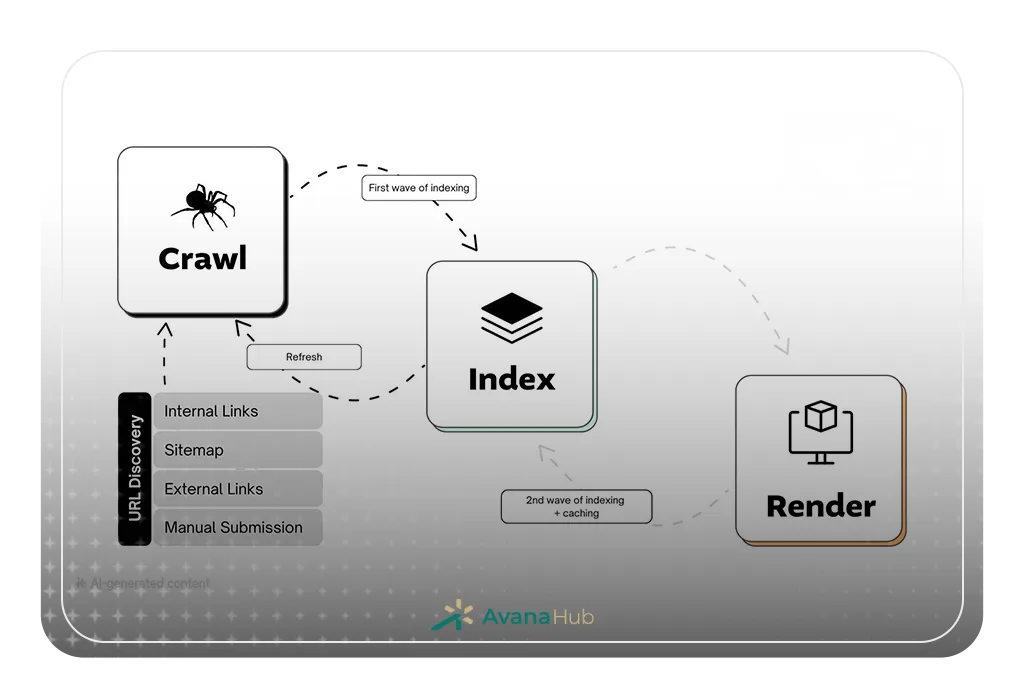
Google's crawl budget has always been finite, but the way it's allocated has changed substantially. In the past, Google would crawl most pages on most sites and index the majority of what it found. In 2026, that default has flipped: Google crawls aggressively but indexes selectively.
Two specific Search Console statuses tell the story:
The second one is the more painful diagnosis. It means Google saw the page, evaluated it, and concluded it wasn't worth keeping in the index. The page still exists, still has a URL, still loads — but it generates zero organic traffic and never will until something changes.
Why This Accelerated in 2026
Three specific shifts compressed Google's indexing budget for most sites.
The scaled content abuse policy. Google's March 2024 policy update and the March 2026 enforcement refinement made the system far more aggressive about filtering low-value pages out of the index. Pages that would have been indexed by default in 2022 are now reviewed and rejected.
Index efficiency pressure from AI search infrastructure. Google now needs index space for the content that feeds AI Overviews and AI Mode. The bar for what's worth keeping has risen specifically because the cost-per-impression of low-quality content is now visible.
Competitive density at scale. With AI tools enabling content production at unprecedented volumes, Google sees more pages than ever and indexes a smaller percentage of them. The relative quality bar moves up regardless of any policy change.
The combined effect: pages that used to coast into the index now have to earn it.
The Pages Most Likely to Be Forgotten
Across audits, the same patterns of un-indexed pages keep appearing.
Thin or templated pages with little unique content. Category pages, tag archives, author pages, and similar auto-generated URLs that exist for site structure but don't provide reader value.
Old blog posts with weak engagement signals. Posts from 2018-2021 that ranked briefly, lost relevance, and now sit unread in archives. Google sees no reason to keep evaluating them.
Duplicate or near-duplicate pages. Multiple URLs covering the same topic with slightly different angles. Google picks one, drops the others.
Pages with weak internal linking. URLs that exist on your site but aren't linked from anywhere prominent. Google interprets the lack of internal links as a signal that even the site doesn't consider the page important.
Pages targeting queries already answered by AI Overviews. Informational content about basic concepts that AI now answers directly. These pages still exist but Google has less reason to keep them in the index.
Programmatic SEO pages without proportional editorial investment. "[Service] in [City]" pages generated at scale, often with near-identical content across hundreds of URLs.
How to Diagnose This on Your Own Site
Most sites can run the diagnosis in 15-20 minutes.
Open Google Search Console, go to Indexing → Pages, and review the "Why pages aren't indexed" section. The two statuses to focus on are:
- "Discovered – currently not indexed"
- "Crawled – currently not indexed"
Click each status to see the affected URLs. Most sites are surprised by what they find. Common discoveries:
- Important service pages that the site owner didn't realize weren't indexed
- Recent blog posts published weeks ago that Google has ignored
- Old high-quality content that quietly fell out of the index
- Hundreds of category or tag pages bloating the un-indexed count
The "Sitemaps" report tells you what you submitted. The Pages report tells you what Google actually decided to do with it. The gap between the two is the size of your problem.
Why the Common Advice Doesn't Work
Most articles about this problem tell you to:
- Submit URLs manually through Search Console
- Re-submit your sitemap
- Use IndexNow or similar protocols
- Add more internal links
- Improve page speed
These aren't wrong. They're insufficient. They address symptoms, not the underlying issue. Google didn't fail to index your pages because it couldn't find them. It found them and chose not to. Manual submission of pages that Google explicitly decided not to index rarely changes the outcome.
The actual fix requires answering the question Google was asking: why should I keep this page in my index?
The Process That Actually Works
The framework breaks pages into three categories. Each requires different action.
Category 1: Pages That Should Be Indexed but Aren't
These are pages providing real value that Google has under-valued. The fix is making the value more visible to Google's evaluation systems.
The work for these pages:
- Strengthen internal linking from your highest-authority pages
- Update the content with fresh data, examples, and structural improvements
- Add original elements (statistics, case studies, expert quotes) that weren't there before
- Ensure structured data accurately reflects the content
- Improve the H1 and meta description to better match search intent
After substantive updates, request re-indexing through Search Console. The combination of meaningful changes + re-submission usually triggers re-evaluation within days.
Category 2: Pages That Genuinely Shouldn't Be Indexed
Many "un-indexed" pages shouldn't be in Google's index in the first place. These are dragging your overall site quality signals down even though they don't generate traffic.
The work for these pages is removal:
- Add noindex to category, tag, and archive pages that don't serve search visitors
- Add noindex to thin utility pages (filter results, faceted navigation, paginated comments)
- Add noindex to outdated promotional pages, expired offers, and seasonal content past its relevance
- Consolidate duplicate content into single canonical pages
- Delete or 410 pages that have no remaining purpose
The instinct to keep pages "just in case" hurts you. A site with 2,000 thin un-indexed pages signals lower overall quality than the same site with 500 strong indexed pages. Cleaning up actively helps the pages that should rank.
Category 3: Pages That Need Genuine Quality Improvement
This is the largest category for most sites. Pages that have potential but currently fail Google's quality bar.
The diagnostic questions for these pages:
- Does this page provide information unavailable elsewhere on the web?
- Does it demonstrate first-hand experience or original research?
- Does it answer the user's actual question or just describe the topic?
- Is the author entity verifiable and qualified to write about this?
- Could a competitor's existing page replace this one without the user noticing a difference?
If the honest answer is "no," "yes" to the last question, the page needs substantive improvement before Google will reconsider it. Surface-level changes don't move the needle.
What "Substantive Improvement" Actually Means
Cosmetic edits don't trigger re-evaluation. The kind of changes that do:
- Adding original data, statistics, or research not available on competing pages
- Replacing generic content with specific examples, case studies, or screenshots
- Adding subject-matter-expert quotes or perspectives
- Restructuring the content to lead with practical answers
- Updating outdated statistics, references, and examples
- Verifying author credentials and adding visible expertise signals
- Building internal links from genuinely relevant high-authority pages on your site
A good rule of thumb: if your changes wouldn't be noticeable to a careful reader comparing the old and new versions, they probably won't change Google's evaluation either.
The Pruning Approach

For sites with hundreds of un-indexed pages, the systematic approach is content pruning.
Pull the un-indexed list from Search Console and categorize each URL:
Most sites end up with 30-50% of un-indexed pages going to noindex or deletion, 30-40% getting consolidated or improved, and the rest staying as they are. The goal isn't to index everything. It's to index the right things.
How Long Recovery Takes
The recovery timeline is longer than most people expect. Realistic expectations:
For pages improved meaningfully and re-submitted, Google typically re-crawls within days but may take 2-6 weeks to re-evaluate and decide whether to index. For pages that get noindexed or deleted, the cleanup signal compounds gradually — the site quality improvements show up in rankings for indexed pages over 2-4 months, not instantly.
The most common mistake is impatience. Sites that make changes, see no immediate ranking response, and revert their changes lose the cumulative improvement signal entirely.
What to Stop Doing
A few habits that prolong the indexing problem:
- Publishing more pages while the existing ones aren't indexed (the site quality signal gets worse, not better)
- Manually requesting indexing of pages without changing them substantively (Google's decision rarely changes)
- Treating sitemap submission as the solution (sitemaps tell Google what exists, not why it's worth indexing)
- Optimizing only for keyword targeting on pages that fail the quality threshold
- Ignoring the un-indexed report because "the pages are still on the site"
Conclusion
The "Discovered – currently not indexed" and "Crawled – currently not indexed" warnings aren't technical glitches. They're Google telling you exactly which pages it considers low value. Most sites have hundreds of these pages and don't realize the cumulative effect on their site-wide quality signals.
The recovery work isn't dramatic. It's a systematic audit that ends with three actions: improve the pages that deserve it, remove the pages that don't, and consolidate the duplicates. Sites that complete this process typically see ranking improvements on their remaining pages within 2-4 months, even without publishing new content — because the overall site quality signal Google measures has materially strengthened.
If you haven't reviewed your indexing report in the last 90 days, that's where the highest-leverage SEO work on your site is sitting right now.