

Entity linking is the process of connecting the content on your website to specific, well-defined concepts that search engines already recognize — your business name, the city you operate in, the services you offer, and how all of those relate to each other. Instead of Google treating these as separate words on a page, entity linking helps the search engine see them as connected real-world things with a verified relationship.
For local businesses, this matters because Google and AI systems like ChatGPT, Gemini, and Perplexity no longer rank results purely by keywords. They rank by how confidently they can identify your business as a distinct entity tied to a specific location and service. When those connections are clear, you show up in local map packs, AI Overviews, and voice search answers. When they're fuzzy, you don't — even if your keyword optimization is technically fine.
At Avanahub, this is one of the most common gaps we find when auditing local businesses that have plateaued in rankings despite good on-page SEO. Their content mentions the right keywords, but their entity signals are inconsistent, unverified, or missing entirely. This article explains what entity linking actually is, how it works inside Google's system, and the practical steps to build stronger entity signals for your local business.
What Is a Linking Entity?
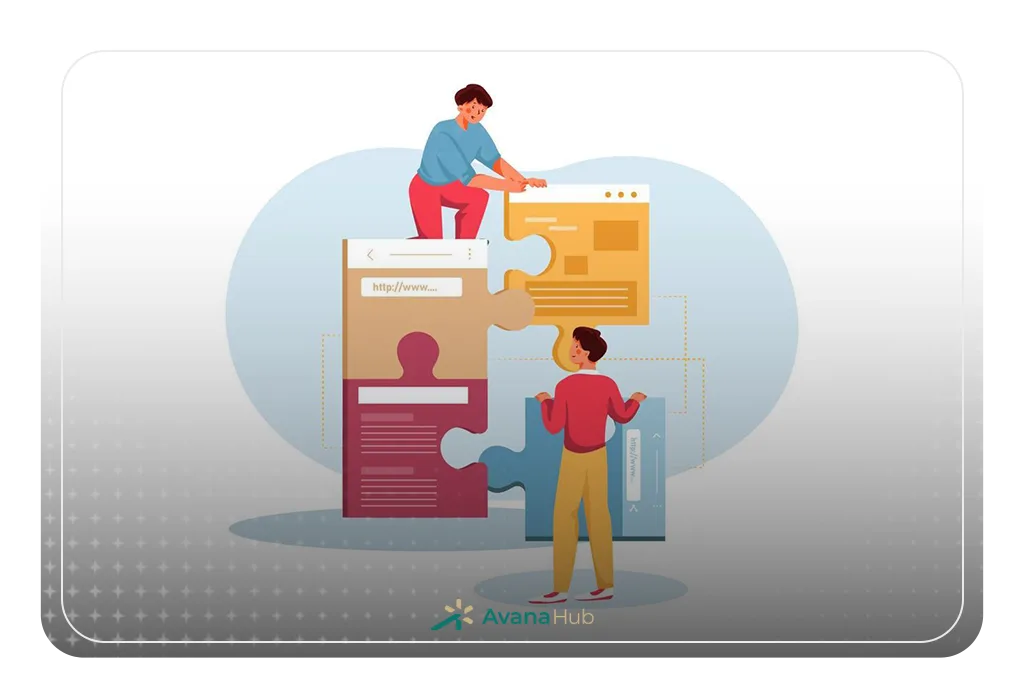
A linking entity is a recognized concept that ties pieces of information together in a way search engines understand. When your website mentions your business name, your city, and the service you provide, a properly structured page tells the search engine that these aren't three separate facts — they're connected attributes of one verified business.
The word "Apple" is the classic example. As a keyword, it's ambiguous. As an entity, Google knows whether a page is about the fruit or the tech company based on surrounding context: nearby words, linked pages, structured data, and how the page connects to other recognized entities. That disambiguation is entity linking in action.
Entities vs. Keywords — The Distinction That Matters
Keywords are what users type. Entities are what those words actually refer to. The two work together, but they solve different problems.
A search for "best dentist near me," "dental clinic in Arlington," and "teeth cleaning Arlington TX" uses three different keyword phrases. But all three point to the same entity: a dental service in Arlington, Texas. When your website is clearly linked to that entity, it has a chance to rank for all three queries — even if you've only optimized for one of them.
Why Entity-Driven SEO Matters More in 2026
Search has moved from matching strings of text to identifying things. Google's systems, along with the large language models now answering local queries, treat the web as a graph of connected entities rather than a pile of pages with keywords on them.
Three things happened that forced this shift. AI Overviews now answer many local queries directly on the results page without sending traffic to a site. Voice assistants like Siri and Google Assistant rely on structured entity data to return a single spoken answer. And chatbots like ChatGPT and Perplexity recommend businesses based on entity confidence — how sure they are that your business is real, operating, and relevant.
If Google can't cleanly identify your business as an entity in its knowledge framework, you don't show up in any of these surfaces. Keyword optimization alone doesn't get you there. Entity clarity does.
How Entity Linking Works in Local SEO
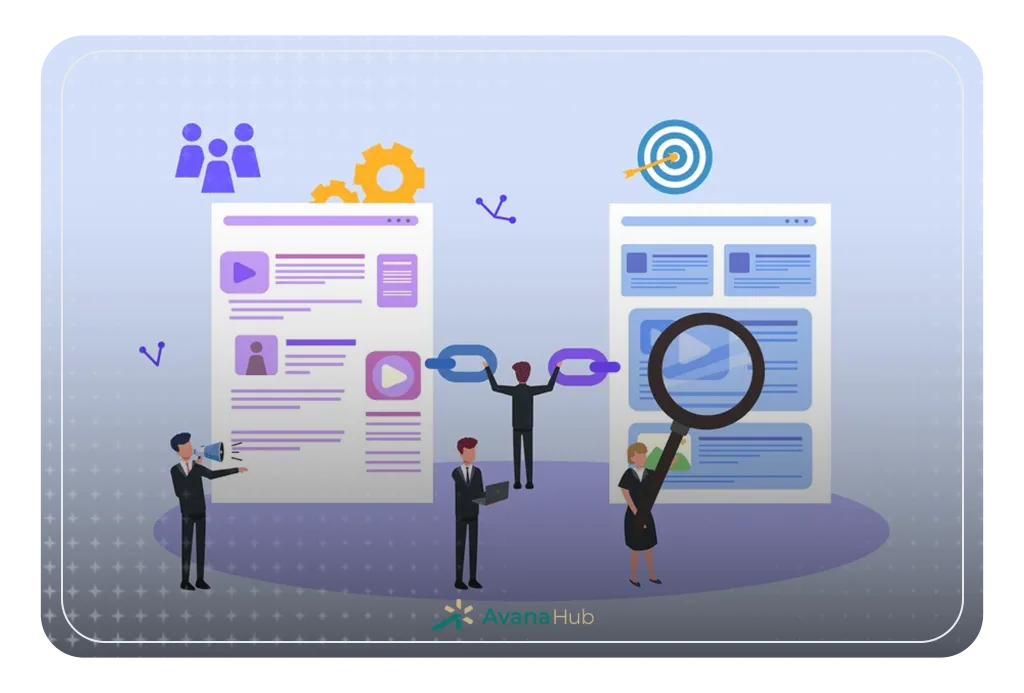
Local search depends on Google correctly matching a real-world business to a location-based query. Entity linking is the mechanism that makes this match reliable.
Consider a search for "plumber in Arlington." Google's map pack needs to decide which plumbing businesses to show. The keyword "Arlington" isn't enough, because multiple plumbers within and near Arlington use that word on their websites. What Google actually evaluates is entity signals:
- Which businesses have verified entities tied to Arlington, Texas specifically
- Which ones have a clear service category entity linked to plumbing
- Which ones have consistent cross-source confirmation through Google Business Profile, structured data, and third-party directories
The winner of that map pack isn't the business with the most keyword repetitions. It's the business with the cleanest entity profile.
This is also why businesses sometimes rank for a city they don't physically operate in. If a plumber in Fort Worth has strong entity signals tied to Arlington — service area markup, verified client projects, consistent directory mentions — Google may show them for Arlington queries even though their office is 20 miles away.
How to Do Entity Linking Strategically
Entity linking isn't a single action. It's a set of coordinated signals across your website, structured data, and external profiles that all reinforce the same entity identity.
1. Identify Your Core Entities
Before you touch any code or content, map the entities your business actually represents. For most local businesses, this includes the business name, the primary service category, the city and state, and any secondary services or sub-locations you serve.
A coffee shop called Oak Street Coffee in Arlington, Texas would map to three core entities: Oak Street Coffee (the business itself), coffee shop (the service category), and Arlington, Texas (the location). Everything downstream — your content, your schema markup, your directory listings — needs to reinforce these three entities and the relationships between them.
2. Connect Your Content to Recognized Places and Services
Vague language kills entity signals. Saying your business is "local" or "serves the area" tells Google nothing. Saying your business is located in Arlington, Texas and serves specialty coffee links your page to two entities Google already recognizes.
A few practical writing rules that make a measurable difference:
- Name your city and state explicitly in page titles, headers, and body content rather than relying on phrases like "our area."
- Use service descriptions that match how Google categorizes businesses — "dental cleaning" and "orthodontics" instead of invented marketing terms.
- Reference recognized landmarks, neighborhoods, or nearby cities when it's accurate. "Two blocks from the Arlington Museum of Art" links your page to a known local entity.
3. Use Structured Data to Make Entities Machine-Readable
Schema markup is where entity linking becomes technically explicit. The Schema.org vocabulary gives you fielded ways to declare your business entity to search engines directly, without relying on them to infer it from your text.
For a local business, the highest-value schema types are LocalBusiness (or a more specific subtype like Dentist, Restaurant, Plumber), along with properties for name, address, telephone, url, openingHours, and sameAs. The sameAs property is particularly important for entity linking — it lets you declare that your website is the same entity as your Google Business Profile, your Wikipedia entry if you have one, your LinkedIn company page, and your verified social profiles. That's direct confirmation for Google's knowledge graph.
4. Build Clear Internal Links Between Related Pages
Internal linking is often treated as a navigation tool. For entity linking, it's a declaration of relationships. A strong internal structure tells search engines which page represents the primary business entity and how supporting pages connect back to it.
For most local businesses, the homepage is the primary entity page. Service pages, location pages, and the about page all link back to it, and those pages link to each other where the relationships are genuine. A menu page on a coffee shop site should link to the location page (where you can order), and the location page should link back to the menu. Each connection strengthens the entity graph around your business.
Avoid linking every page to every other page — that's the old "link equity flow" thinking and it creates noise instead of signal. Link pages together only where the relationship makes real sense.
5. Keep Entity Signals Consistent Across Every Platform
External entity linking works the same way internal linking does, except across the entire web. Your business name, address, and phone on Google Business Profile need to match your website, your Yelp listing, your Apple Business Connect entry, and your Facebook page exactly. Any variation — different punctuation, different phone format, different suite number — weakens the entity connection.
This is where citation work overlaps directly with entity linking. A clean citation profile isn't just about local rankings; it's about feeding consistent entity signals to Google's knowledge graph and to the AI systems that now pull from it.
How Entity Linking Connects to AI Search Visibility
One of the biggest changes since 2024 is how entity signals drive visibility in AI-generated answers. When someone asks ChatGPT or Gemini for a local recommendation, the system doesn't crawl the web in real time — it draws from structured knowledge it already holds about local entities.
Businesses with strong entity signals — verified profiles, consistent cross-source data, clear schema markup, authoritative mentions — show up in these AI recommendations. Businesses without them don't, regardless of how well they rank in traditional Google results. This is why entity linking is becoming a survival skill rather than an optimization tactic: the channels where people now find businesses depend on it.
Conclusion
Entity linking is how you make your business legible to modern search systems. It's the difference between Google thinking your site is a page with some keywords on it and Google knowing your business is a specific, verified entity operating in a specific place and offering specific services.
The practical work is straightforward: define your core entities, describe them clearly in your content, reinforce them with structured data, and keep every signal consistent across your website and external profiles. None of it is glamorous, but it's what separates the businesses that show up in map packs and AI answers from the ones that don't.
If you haven't looked at your entity signals in the past year, start with a simple check — search your business name on Google and see whether the knowledge panel shows up correctly, whether your profile is verified, and whether the details match your website. If anything looks off, that's where the work begins.