
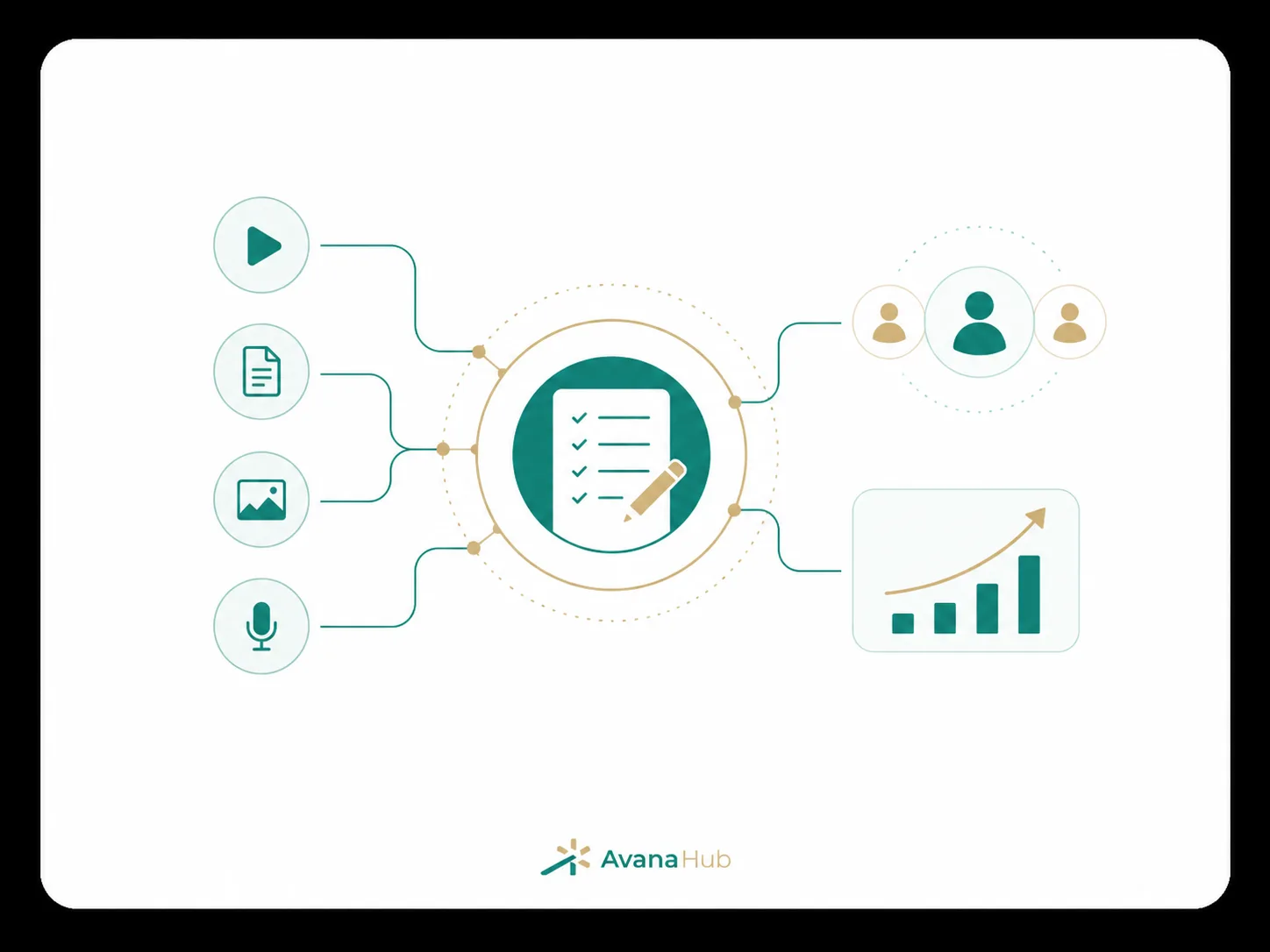
A content marketing strategy defines who a business wants to reach, which customer problems its content should address, how that content will be produced and distributed, and how its business impact will be measured. Without this foundation, teams often publish disconnected articles, videos, and social posts that generate activity without supporting a clear customer journey. AVANA created this guide as part of its educational resources on content marketing and SEO, based on a practical approach that connects audience evidence, search demand, editorial positioning, distribution, and commercial goals.
What Is a Content Marketing Strategy?
A content marketing strategy is a documented plan for using content to attract, educate, convert, and retain a defined audience while supporting measurable business objectives.
It should clearly answer six questions:
- Who should the content serve? A B2B software company might prioritize operations managers evaluating automation rather than targeting every person interested in productivity.
- Which problems should the brand address? These may include recurring sales objections, implementation concerns, search queries, or customer-support issues.
- Why should the audience trust the content? Credibility may come from specialist experience, original data, documented methods, or qualified expert review.
- Which assets should be created? A definition may require a concise article, while a complex purchasing decision may require a comparison page, case study, and calculator.
- How will the content reach its audience? Search, email, social platforms, sales teams, partners, and paid distribution serve different purposes.
- How will success be evaluated? An educational guide may be measured through qualified organic visits, while a comparison page may be evaluated through trials or enquiries.
A strategy is not the same as a content calendar. The strategy explains why content should exist and what role it performs. The calendar organizes production dates, owners, and publishing tasks.
Why a Content Marketing Strategy Matters
Content becomes inefficient when writers, sales teams, social teams, and managers work toward different outcomes. One team may optimize for traffic, another may request one-off sales materials, and another may publish around temporary platform trends.
The Content Marketing Institute’s 2026 B2B research included more than 1,000 marketers and found that most respondents had a content strategy. Among those reporting improved effectiveness, strategy refinement was cited more frequently than implementing new technology. The same research identified creating content that drives action, limited resources, and performance measurement as persistent challenges.
A clear strategy helps a business:
- Set priorities: If qualified pipeline matters more than general awareness, the team may prioritize comparison pages and implementation guides over broad industry news.
- Use resources efficiently: Instead of publishing 15 generic articles, the business may invest in three expert-led guides, one research asset, and a stronger distribution plan.
- Maintain a consistent position: Multiple writers can express the same central perspective without producing identical content.
- Measure meaningful outcomes: Traffic can be separated from qualified visits, sales influence, product adoption, and retention.
Define the Business Goals

Content goals should begin with a business need rather than a production target. “Publish four articles each month” measures output, not value.
Common business goals include generating qualified demand, reducing dependence on paid acquisition, improving sales conversations, increasing product adoption, or strengthening authority in a competitive category.
The content role changes according to the goal:
A goal such as “increase brand awareness” is difficult to apply. A more useful objective would be “increase branded search and direct visits among finance leaders at medium-sized logistics companies.”
Define the Audience by Situation
Demographic descriptions alone rarely reveal what content people need. Two marketing managers of the same age may require completely different information if one is launching a new website and the other is investigating a traffic decline.
A useful audience definition includes:
- Role and responsibility: A founder may need budget and risk guidance, while an SEO specialist may need technical implementation detail.
- Current situation: A company selecting its first CRM has different questions from one planning a migration.
- Knowledge level: Beginners need clear definitions; experienced readers need exceptions, benchmarks, and decision criteria.
- Constraints: Budget, deadlines, compliance, internal approval, and limited staff influence the recommendation.
- Desired outcome: The reader may need to understand a problem, compare solutions, justify an investment, or complete a task.
For example, “small businesses interested in SEO” is too broad. A more actionable audience would be:
Owners of service businesses with fewer than 30 employees who depend heavily on paid advertising and need to evaluate whether organic search can become a predictable lead channel.
That definition suggests content about SEO timelines, local search priorities, budget allocation, lead quality, and agency selection.
Collect Evidence From Customers and Internal Teams
Audience assumptions should be validated with real evidence. Keyword tools are useful, but they cannot show every concern influencing a purchase.
Sales Conversations
Sales calls reveal the questions that delay or prevent decisions. If prospects repeatedly ask about implementation time, expected internal resources, or contract flexibility, those subjects should appear in service pages, comparison content, and case studies.
Interview sales representatives or review call notes to identify:
- Questions that appear across several opportunities
- Objections associated with lost deals
- Outcomes buyers value most
- Terms customers use instead of industry language
For example, customers may search for “phone system for remote teams” even though the company describes the product as a “cloud communications platform.”
Customer Support
Support data reveals where customers struggle after purchase. Repeated questions about setup, reporting, billing, or integrations may justify tutorials, onboarding emails, or product changes.
If 200 users ask how to configure the same feature, another article may help. However, the recurring problem may also indicate that the interface or onboarding process needs improvement.
Search and Website Data
Search Console, website analytics, site-search queries, and keyword research can identify existing demand.
Useful findings might include:
- A page receiving impressions for a relevant query but few clicks
- Several articles competing for the same search intent
- A high-traffic guide that sends almost no users to a related service page
- Internal site searches for a topic the website does not currently cover
Customer Interviews
Interviews explain why users behave as they do. A buyer may reveal that a comparison article initiated the research, but implementation support and reporting flexibility determined the final decision.
Five detailed interviews with relevant customers can provide more useful strategic direction than thousands of anonymous pageviews.
Map Content to the Customer Journey
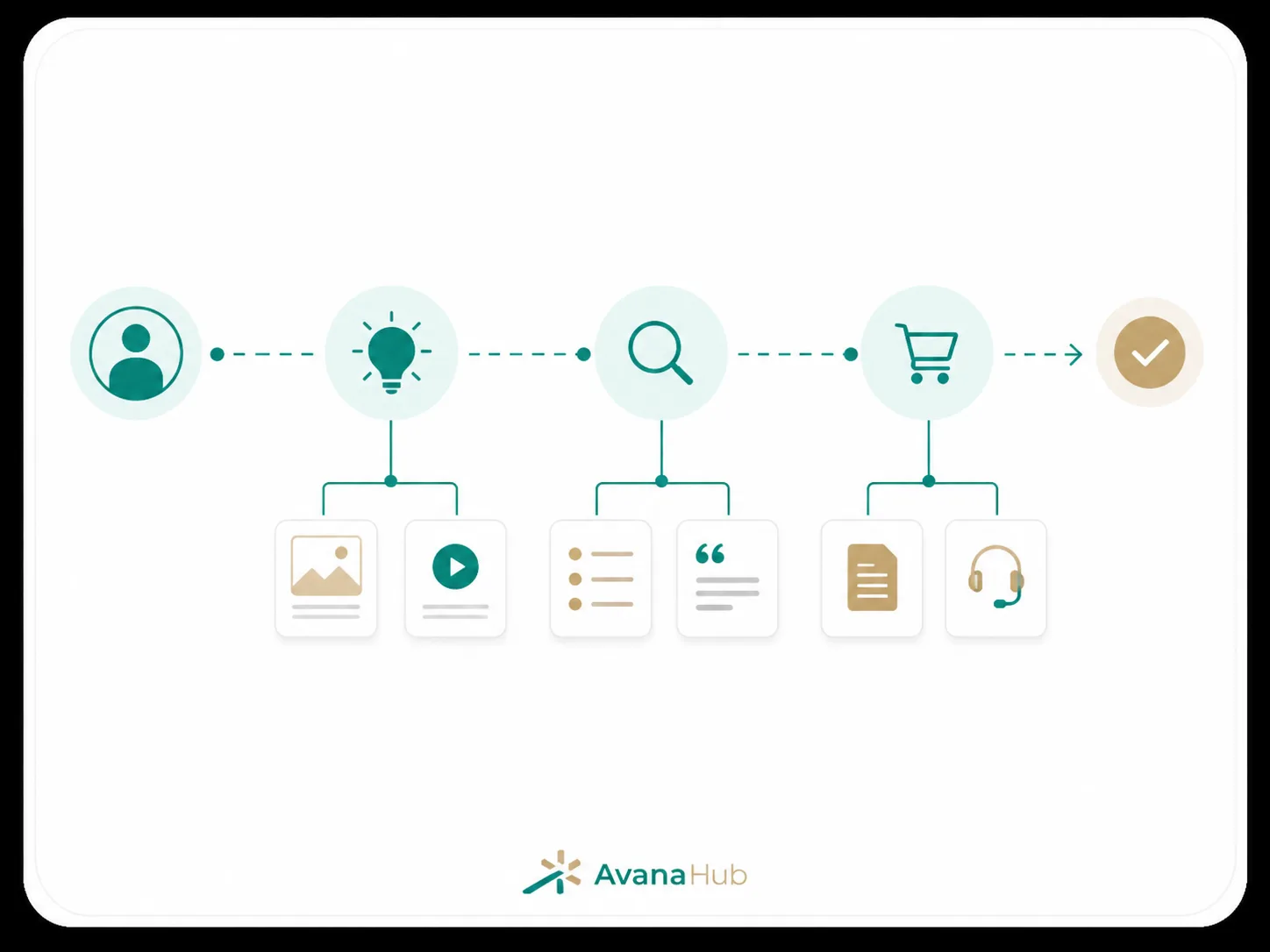
A content strategy should help users progress from identifying a problem to implementing and continuing with a solution.
Problem Recognition
The audience is trying to understand what is happening. A company experiencing declining leads may investigate organic visibility, conversion rate, market demand, or advertising costs.
Content should help diagnose the problem without assuming the reader already understands the solution. Examples include diagnostic guides, definitions, benchmark reports, and problem-focused checklists.
Solution Exploration
The user understands the problem and is comparing approaches.
Useful assets include:
- A comparison of SEO and paid advertising for a company deciding how to allocate acquisition budget
- An agency-versus-in-house framework for a team evaluating staffing options
- An implementation guide explaining the resources required before adopting new software
These pages should address costs, limitations, suitability, and practical requirements rather than listing generic benefits.
Provider or Product Evaluation
At this stage, the reader needs evidence and risk reduction. Someone evaluating seo services, for example, may need detailed case studies, implementation processes, pricing factors, service comparisons, and clear suitability criteria before choosing a provider.
A case study should explain the initial situation, actions, timeframe, limitations, and measurable result. “Traffic increased significantly” is less useful than showing which pages changed and how qualified enquiries were affected.
Implementation and Retention
After purchase, onboarding guides, training videos, templates, and advanced-use resources help customers reach value sooner.
For example, a five-part onboarding sequence may help new customers complete setup, invite teammates, configure integrations, and create their first report. Advanced content can later support feature adoption, retention, and account expansion.
Perform a Content Audit
A content audit determines which existing assets should be kept, improved, combined, repositioned, or removed.
Do not judge pages by traffic alone. A low-traffic case study may support high-value sales opportunities, while a high-traffic article may attract an audience with no connection to the business.
Evaluate each page across four areas:
- Strategic relevance: Does it address a customer problem the business still wants to own?
- Search performance: Does it earn relevant impressions, rankings, and clicks?
- Business contribution: Does it generate leads, product visits, sales usage, subscriptions, or customer engagement?
- Content quality: Is it accurate, differentiated, current, clearly structured, and supported by expertise?
Assign one action to each asset:
- Keep: The page remains useful and performs its intended role.
- Update: The topic is valuable, but the information, examples, structure, or search alignment needs improvement.
- Consolidate: Two or more pages address the same intent and should become one stronger resource.
- Reposition: The material is useful but targets the wrong audience, keyword, or customer stage.
- Remove or redirect: The page is outdated, irrelevant, duplicated, or unable to create meaningful value.
A practical strategy should begin with existing assets before adding a large number of new topics.
[LINK: Content Audit Guide and Evaluation Framework]
Build a Clear Topic Architecture
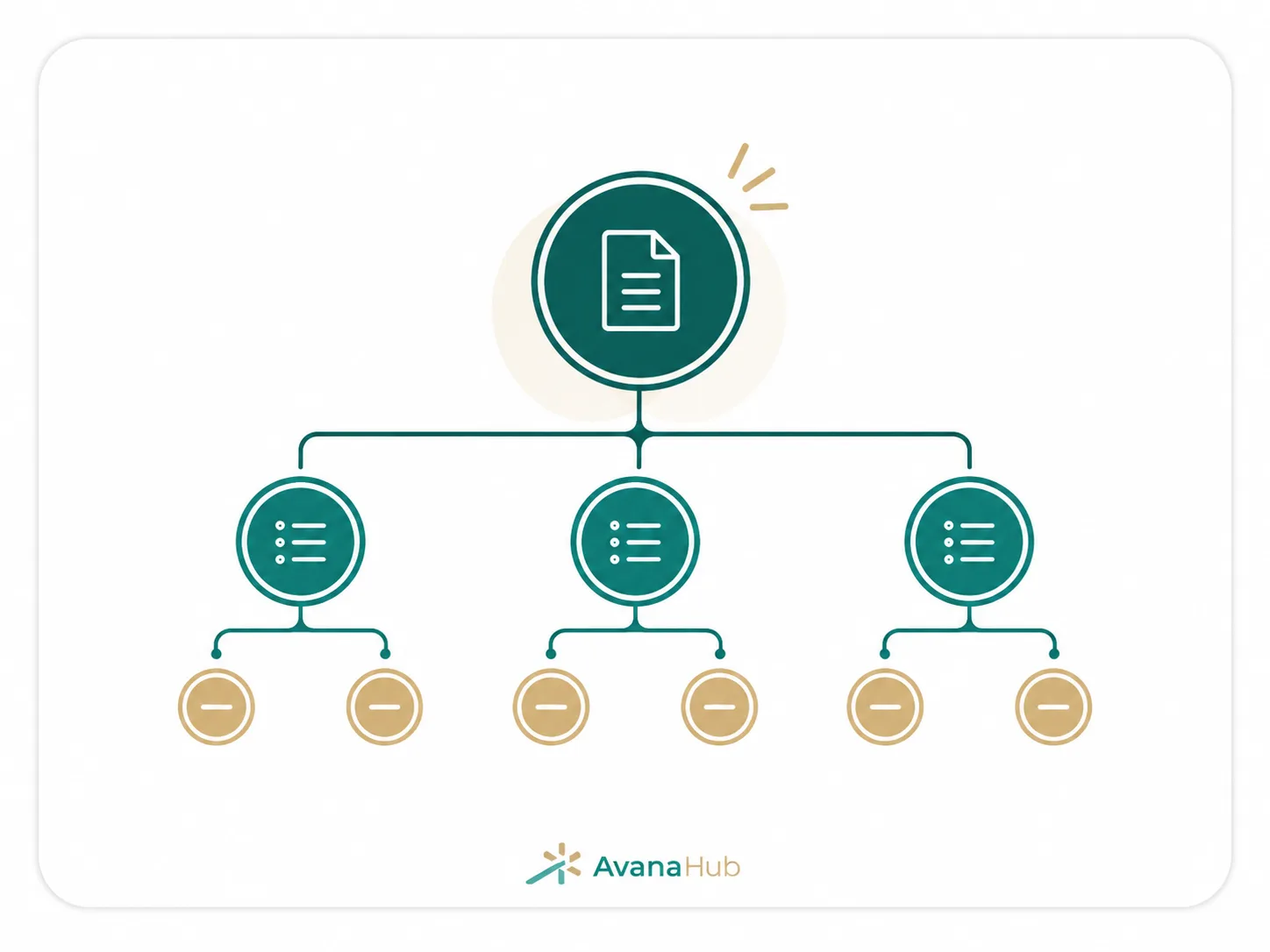
Topic architecture organizes content around subjects where the brand has relevant expertise and commercial credibility.
Pillar Topics
A pillar represents a broad subject central to the business, such as content marketing, technical SEO, customer relationship management, or property investment. For an SEO-focused business, a comprehensive seo guide can serve as a pillar resource that introduces the broader subject and connects readers to more specific topics.
The pillar page should explain the overall topic and direct readers toward narrower resources. It should not attempt to rank for every related intent through one excessively long page.
Supporting Topics
Supporting content addresses distinct questions within the broader subject. For example, an SEO pillar may connect to an on-page seo guide covering page optimization, internal linking, content structure, and other specific implementation topics.
Each supporting page needs a unique purpose. Publishing several articles that define the same concept with slightly different wording creates duplication rather than authority.
Decision-Stage Content
A complete architecture also includes pages that help users choose a method, product, or provider. For an SEO agency, this may include pricing guides, service-selection criteria, case studies, technical audits, or pages explaining on-page seo services and who they are suitable for.
These pages may generate less traffic than broad definitions, but they often influence more valuable actions.
Evidence Assets
Original research, templates, calculators, and documented frameworks create information that other sources may reference.
A brand that publishes only definitions competes on widely available information. A brand that analyzes its own project data or documents a tested method creates stronger differentiation.
Prioritize Content Opportunities
A list of topics is not a strategy. The team must decide which opportunities deserve resources first.
Evaluate each opportunity using:
- Audience relevance: Does the topic address a problem that target customers actually experience?
- Business relevance: Can the company credibly help with that problem?
- Demand: Is there evidence from search, sales, support, communities, or social channels?
- Conversion potential: Can the asset lead to a meaningful next step?
- Competitive opportunity: Can the brand produce something more useful than current alternatives?
- Resource requirements: Does the team have the expertise, data, design, or development capacity required?
- Longevity: Will the asset remain useful, or does it depend on a short-lived trend?
Consider a project-management software company choosing among three topics:
- “What is project management?” has broad demand but strong competition and limited differentiation.
- “Project management software implementation plan” has lower volume but supports evaluation and onboarding.
- “Productivity quotes” may attract traffic but has little connection to the product.
The implementation topic is likely the stronger priority because it combines audience need, product relevance, and a measurable next action.
Define the Editorial Position
An editorial position explains what the brand believes and how its content should differ from competing information.
It should define:
- The subjects the brand wants to own
- The perspective it brings to those subjects
- The evidence required before making claims
- The intended tone and level of complexity
- Topics the brand will not cover
- Standards for expert review, fact-checking, and disclosure
For example, an SEO agency may take the position that traffic alone is not a valid measure of content success. Its articles should therefore connect visibility with qualified demand, customer progression, or commercial impact.
Without a clear position, articles often become interchangeable with pages published by competitors.
Choose Formats Based on the User’s Task
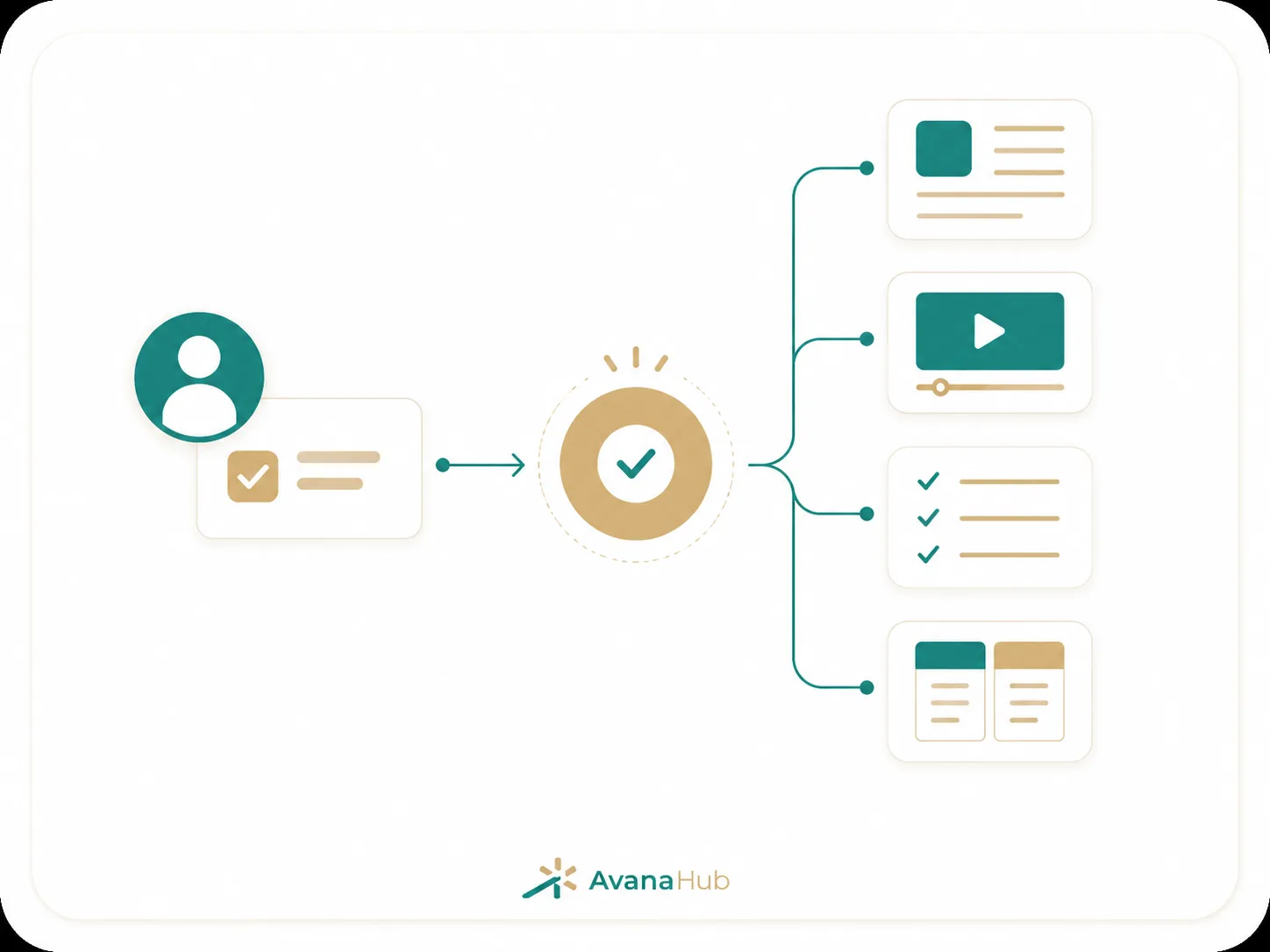
The format should make the reader’s task easier.
Use an article when the user needs an explanation, process, or analysis. Use a case study when proof is the primary barrier. Use video when demonstration improves understanding, such as configuring software or comparing physical products.
Templates work when readers need to repeat a process. A content brief template, for example, can turn strategic recommendations into a usable workflow. Calculators are more appropriate when a decision depends on variables such as budget, volume, pricing, or expected return.
Original research is useful when the brand has access to a relevant dataset or expert group. A benchmark based on 300 audited ecommerce websites can support media outreach, sales conversations, search visibility, and several derivative formats.
The same subject may use multiple formats, but each asset should perform a distinct role.
Build a Distribution Strategy
Publishing an asset does not guarantee that the intended audience will discover it.
Organic Search
Search is effective when users already express relevant demand. The content must match the query intent, remain technically accessible, and be connected to related pages.
A definition may answer a broad informational query, while a comparison page can attract users closer to a purchasing decision.
Email works best when messages reflect the recipient’s situation.
A trial user may need setup guidance, an existing customer may need advanced-use content, and an executive subscriber may prefer strategic reports. Sending every asset to the entire list usually reduces relevance.
Social and Community Channels
Social distribution should extract a useful idea instead of announcing that an article exists.
A research report can become:
- A data-led LinkedIn post explaining one surprising finding
- A short video interpreting a practical implication
- A discussion question for a specialist community
Each derivative asset should provide value on its own while creating a reason to explore the wider subject.
Sales, Partnerships, and Media
Sales teams can use case studies, objection-handling pages, and implementation guides in active opportunities. Partners and industry publications may distribute original research, useful tools, or expert commentary that their audiences cannot obtain elsewhere.
Every priority asset should have a distribution plan before production begins.
[LINK: Content Distribution Strategy]
Build a Sustainable Workflow
A strategy must explain how an idea becomes a published and maintained asset.
A practical workflow includes:
- Intake: Record the audience problem, business purpose, and proposed outcome. For example, a request for a pricing guide should identify which sales objection it addresses.
- Validation: Review search demand, customer evidence, existing pages, and competitive alternatives before approving production.
- Prioritization: Score the opportunity against audience relevance, business value, differentiation, and resource requirements.
- Briefing: Define the intent, audience, angle, evidence, format, distribution, and primary KPI.
- Expert contribution: Collect real examples, limitations, data, or technical review before the draft is finalized.
- Production and editing: Create the asset, verify claims, remove duplication, and ensure the content reflects the editorial position.
- Publishing and distribution: Apply metadata and technical checks, then activate the planned channels.
- Measurement and maintenance: Monitor performance and revise, consolidate, or remove the asset when evidence requires it.
Assign ownership at every stage. Unclear responsibility often leads to delayed reviews, inconsistent quality, and outdated pages.
Establish Content Governance
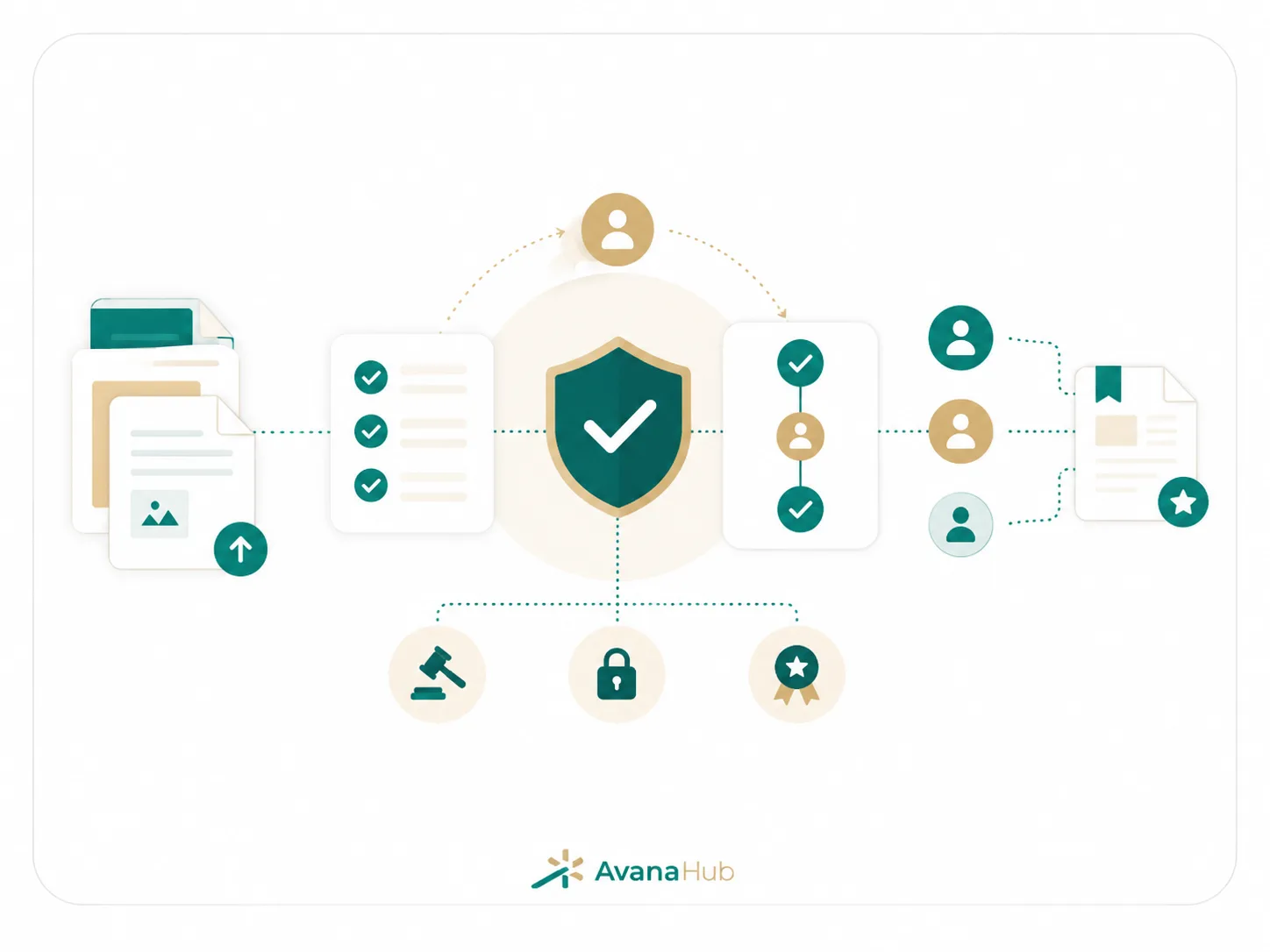
Content governance defines the rules and responsibilities that protect quality as production grows.
At minimum, it should clarify:
- Who can request and approve new content
- Who provides subject-matter expertise
- Who verifies factual or compliance-sensitive claims
- Who owns publication and distribution
- Who monitors performance and future updates
Governance should also establish standards for source quality, AI use, author attribution, accessibility, brand terminology, customer privacy, and hypothetical examples.
A small team may assign several responsibilities to one person. The critical requirement is that every responsibility has a clear owner.
Use AI Without Letting It Set the Strategy
AI can accelerate content operations, but it should not decide which audiences matter, what the brand believes, or which outcomes deserve investment.
Google’s current guidance states that generative search features remain connected to core Search ranking and quality systems. It emphasizes distinctive, useful content and explains that websites do not need special AI files or separate versions of their content to appear in generative search experiences.
AI can assist with:
- Organizing interview transcripts into recurring customer themes
- Clustering large keyword datasets for human review
- Identifying missing questions in a draft
- Converting an approved report into initial social or email drafts
Human judgment remains necessary for audience prioritization, editorial positioning, factual verification, expert interpretation, and final approval.
AVANA treats AI as an operational support tool rather than a replacement for strategy or expertise. A faster production process only creates value when the resulting assets remain accurate, differentiated, and connected to real customer needs.
Measure Content Performance
Measurement should match the role assigned to each asset.
Visibility
Impressions, rankings, branded search, citations, mentions, and audience growth show whether content is being discovered. They do not prove that it influences a business outcome.
Engagement
Next-page visits, downloads, video completion, tool usage, email responses, and return visits indicate whether users find the asset useful.
Time on page should not be interpreted alone. A short session may mean the user found the answer quickly, while a long session may indicate either strong engagement or confusion.
Conversion and Commercial Impact
Leads, subscriptions, trials, purchases, and booked consultations measure direct actions. Assisted pipeline, influenced revenue, retention, adoption, and customer acquisition cost provide a wider view of commercial value.
A broad educational guide should not be expected to convert at the same rate as a pricing page. Evaluate each asset according to its audience and stage.
A simple scorecard should record the asset’s audience, journey stage, objective, primary KPI, supporting indicators, owner, review date, and next action.
[LINK: Content Marketing Measurement and ROI Guide]
Plan the Budget and Resources

Content costs extend beyond writing. A realistic budget may include research, expert time, editing, design, video, development, distribution, software, localization, analytics, and maintenance.
Resource limitations should reduce production volume rather than lower the quality of every asset.
For example, four expert-led guides with supporting videos and planned distribution may create more value than 20 generic articles that receive no promotion or updates.
Budget planning should also identify operational bottlenecks. If subject-matter experts repeatedly delay reviews, the team may need scheduled interviews or shorter approval cycles rather than more writers.
Content Strategy Examples
Hypothetical Example: B2B Software Company
A B2B analytics company publishes six articles per month but produces only 40 content-assisted demo requests per quarter. Most articles target broad informational searches and have little connection to product use cases.
The company audits its library, consolidates 28 overlapping posts, and creates three topic groups around reporting automation, data quality, and executive dashboards. Over nine months, it publishes three pillar guides, 12 specialist articles, six comparison pages, four implementation templates, and three customer case studies.
In this hypothetical example, monthly organic traffic rises from 31,000 to 43,000, an increase of approximately 39%. More importantly, quarterly content-assisted demo requests rise from 40 to 118 because the new structure includes decision-stage assets and clearer progression toward the product.
Hypothetical Example: Professional Services Firm
A consulting firm receives 8,500 monthly website visits, but fewer than 20 visitors move from its articles to a service page.
The firm defines two audiences: operational leaders preparing for expansion and finance leaders evaluating implementation risk. It replaces broad opinion posts with industry-specific planning guides, risk frameworks, and detailed case studies.
In this hypothetical example, the firm publishes 14 major assets over 12 months. Overall traffic increases by 22%, but monthly service-page visits from content rise from 18 to 74, while qualified enquiries attributed to content increase from three to eleven.
The example shows why relevant customer progression may matter more than maximum traffic growth.
Common Content Marketing Strategy Mistakes
Starting With the Calendar
A calendar organizes deadlines but does not define the audience, goals, position, or measurement model. Strategy should come first.
Targeting Too Many Audiences
Content becomes generic when it tries to serve beginners, specialists, small businesses, enterprises, and several industries simultaneously. Prioritize the groups most relevant to the business.
Treating Keywords as the Entire Strategy
Keyword data identifies expressed demand but does not determine expertise, differentiation, business value, or conversion potential.
Publishing Without Distribution
Even a valuable asset may fail if the team relies on algorithms to distribute it automatically. Assign channels and owners before production.
Measuring Every Asset by Traffic
A case study, onboarding guide, and broad educational article perform different jobs. Their KPIs should reflect those roles.
Producing More Than the Team Can Maintain
An oversized library becomes a liability when pages are inaccurate, duplicated, or disconnected from current offerings.
Using AI Only to Increase Volume
Faster production does not solve weak positioning or limited customer understanding. AI should improve research and operations, not multiply commodity content.
A 90-Day Content Strategy Plan
Days 1–30: Research and Direction
Define the business goals and priority audiences. Interview sales, customer-success, product, and leadership teams, then review search, analytics, CRM, and support data.
Audit the existing library and identify subjects where the brand has credible expertise. The main output should be a concise strategy document explaining the audience, objectives, editorial position, and measurement model.
Days 31–60: Architecture and Prioritization
Build topic groups and map them to customer-journey stages. Identify content gaps, duplicated pages, and missing decision-stage assets.
Score opportunities by relevance, demand, differentiation, conversion potential, and resource requirements. Create detailed briefs only for the highest-priority assets and assign owners for expert input, production, review, and distribution.
Days 61–90: Production and Validation
Produce a limited group of priority assets rather than attempting to scale immediately. Collect expert input before drafting and activate the planned distribution channels after publication.
Confirm that analytics and CRM tracking can measure the intended outcome. Use early search data, audience behavior, and internal feedback to improve the workflow before increasing volume.
Conclusion
A content marketing strategy turns isolated publishing into a coordinated system for attracting, educating, converting, and retaining a defined audience. It begins with business objectives and customer evidence, then establishes priorities, editorial positioning, topic architecture, distribution, governance, and measurement. The strongest strategies produce fewer disconnected assets and invest more deliberately in expertise, differentiation, and maintenance.
In 2026, this discipline is increasingly important as AI accelerates production and changes how information is discovered. Businesses do not need content for every possible query. They need credible resources that remain useful across search results, AI-generated answers, email, communities, sales conversations, and customer onboarding.
AVANA can help evaluate an existing content library, clarify strategic priorities, and develop a more focused editorial system based on audience needs and measurable business opportunities.