

We now publish a high-quality SEO article in 6 to 12 minutes at Avanahub. The same article used to take 2 to 3 days.
The shift didn't come from a magic AI prompt. It came from rebuilding our entire content workflow into a chain of structured stages, each handled by an LLM grounded in real data.
This is content engineering — and it's quietly reshaping what a competitive content operation looks like in 2026.
What Content Engineering Actually Means
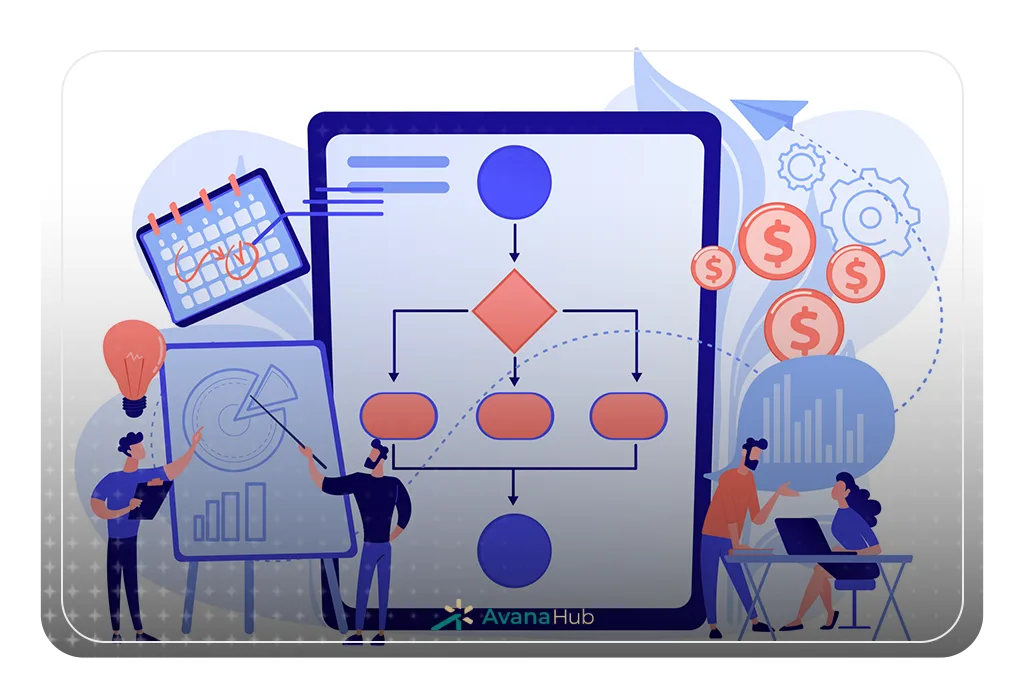
Content engineering is the practice of breaking a content workflow into discrete, repeatable, AI-executable stages. Each stage has its own input, output, validation, and improvement loop.
Instead of one person writing one article from scratch, an engineered system runs the same article through 8–15 specialized stages. Each stage uses a "skill file" — a structured instruction set that tells the LLM exactly how to handle that part of the work.
How It Differs From "AI Content"
This is a different category of work from generic AI content. The differences are sharp:
Generic AI content is what tanked SEO for thousands of sites in 2024–2025. Content engineering is what serious operations now use to replace parts of human editorial work without losing quality.
Why This Matters Now
Three things shifted in the past 12 months that made content engineering viable.
Frontier Models Got Good Enough
Claude Opus 4.7 and equivalent models can now produce drafts that, when grounded in real data and structured by a skilled editor, are genuinely indistinguishable from quality human writing. The 2024 problem of "AI content reads like AI" is largely solved at the frontier model level.
Skill Files Matured Into Real Infrastructure
Tools like Claude Code let you chain dozens of skill files together — each one a Markdown document specifying how to handle a specific stage. Before this, you couldn't reliably reproduce quality output across long pipelines.
MCP Servers Gave AI Access to Real Data
Ahrefs, Semrush, GitHub, Google Drive, Slack, and dozens of other platforms now have MCP servers. AI systems can pull real data instead of hallucinating it.
The combined effect: small teams can now run content operations that would have required 5–10 specialists 18 months ago.
How Our Content Engineering Workflow Works

Our pipeline at Avanahub runs through 11 stages, in order:
- Keyword research — pulls metrics, parent topics, and long-tail variations from SEO tool MCPs
- SERP analysis — analyzes top-ranking competitors for content gaps and dominant search intent
- Topic gap analysis — identifies what competitors covered that the new article should match or exceed
- Question harvesting — surfaces commonly asked questions from People Also Ask data
- Structural outlining — generates a hierarchical outline matching search intent
- Research primer — gathers trusted sources, statistics, and recent data
- Section-by-section drafting — writes the article one section at a time
- Voice and style application — applies brand tone, sentence patterns, editorial preferences
- Internal linking — identifies relevant existing articles and inserts contextual links
- Formatting and shortcodes — applies CMS-specific markup, table styles, callouts
- HTML preview — generates a styled preview for editor review
Time Investment
Every stage produces its own output file. If stage 7 produces something off-track, we fix the skill file for that stage and re-run from there. We don't restart the whole pipeline.
The Five Principles That Make It Work
After running engineered pipelines for the past 6 months, the same principles consistently separate working pipelines from generic AI content.
1. Mirror an Existing Human Workflow
The best AI content pipelines are direct adaptations of an existing editorial process — not reinventions. Editorial expertise is already encoded in those processes. The AI inherits it instead of figuring things out from scratch.
The corollary: teams without strong editorial processes can't expect content engineering to fix their content problems. The pipeline only inherits the quality of what you put into it.
2. Output Every Step for Diagnosis
In a 10-step pipeline, when the final article comes out wrong, you need to know exactly which step broke.
- Save the output of every stage to its own file
- When something fails, pinpoint the failure
- Fix the skill file for that specific stage
- Re-run from there
This is operations thinking applied to content. Without it, AI pipelines become impossible to debug.
3. Front-Load Direction, Don't Edit at the End
Small amounts of expert direction provided at the start of the workflow are vastly more effective than heavy human editing at the end.
Successful pipelines include a "context" or "brief" parameter where a human specifies:
- The strategic angle for the article
- Key topics or features to emphasize
- Sentiment or tone preferences
- Specific data sources or examples to use
This is the opposite of how most teams use AI today. Teams getting real results invert the time investment.
4. Ground the LLM in Real Data Sources
LLMs without data are eloquent bloviators. They produce coherent-sounding content with no concrete substance.
The fix is mandating specific data sources at every stage:
- SEO data from Ahrefs, Semrush, or similar via MCP
- Competitor content extracted from top-ranking pages
- Internal product documentation or brand voice docs
- Trusted research and news sources for fresh data
Grounded content has the fact density that AI search engines now reward — and that human readers actually find useful.
5. Build Recursive Self-Improvement
The smartest production workflows include a stage where the AI evaluates its own output, identifies weak spots in the skill files, and suggests improvements.
This matters because skill files have a tendency to grow long and bloated. Bloated skill files actually reduce LLM accuracy — the model loses focus across thousands of tokens of instructions. Recursive self-improvement trims them back to their effective essence.
What Content Engineering Is Not
A few important boundaries, because the term is starting to get misused.
Not "AI content scaling."
The point isn't to publish thousands of articles. Most teams running engineered workflows actually publish less, not more. They use the saved time to go deeper.
Not a replacement for editorial judgment.
Topic selection, strategic angle, brand voice direction, and final approval still require human expertise. The pipeline handles execution. Strategy stays human.
Not appropriate for every content type.
Original research, opinion pieces, and customer interviews aren't great fits. Informational SEO content, technical documentation, and evergreen updates are excellent fits.
Not a magic bullet for teams without content expertise.
Skill files are only as good as the editorial knowledge poured into them. Teams without senior editorial experience tend to build pipelines that produce structurally clean, factually shallow content — which is worse than no AI at all.
What This Means for Business Owners
A small team running a well-engineered workflow can now produce as much high-quality content as a team of 5–8 traditional writers. The cost difference is substantial.
The New Build-vs-Buy Math
Most businesses won't build their own pipelines. The editorial expertise required to do it well is the limiting factor — not the technical capability.
Common Mistakes Teams Make
Patterns we've seen go wrong, both in our own work and across the industry:
- Trying to automate everything from day one. Start with the most repetitive, least judgment-heavy stages first.
- Skipping the human review checkpoint. Every production-grade workflow has at least one mandatory human review before publication.
- Building skill files that are too long. Bloat reduces accuracy. Edit ruthlessly.
- Not investing in good data sources. A pipeline grounded only in the LLM's training data produces generic output.
- Treating the output as final. Even the best workflows produce drafts, not finished articles.
What's Coming Next
A few trends to watch over the next 12 months based on where the cutting edge is now:
- Interactive content review interfaces that let editors leave inline comments for AI to action
- Headless browser integration for AI to take screenshots and pull product imagery directly into articles
- Citation tracking and decay recovery built into pipelines to flag content losing AI search visibility
- Personalized content copilots where each writer has their own forked pipeline tuned to their voice
- Multi-platform publishing that adapts content for blog, LinkedIn, newsletter, and X from one source
The teams investing in these capabilities now will have a 12–18 month operational lead on competitors still running traditional content calendars.
Conclusion
Content engineering isn't about replacing writers with AI. It's about building reproducible systems where the formulaic parts of content production happen reliably and fast, so human attention can go to the parts that actually require it — strategy, original thinking, validation, judgment.
The teams adopting this approach in 2026 are pulling away from competitors still asking whether AI content is "good enough." It is. The question now is whether you have the editorial expertise and operational discipline to use it well.
If you don't have that expertise in-house and don't want to build it, working with a content partner who already runs engineered pipelines is the practical path. At Avanahub, this is the model our content services are built around — chained skill workflows, grounded in real SEO and competitor data, with human direction upfront and editorial review before every publication.