
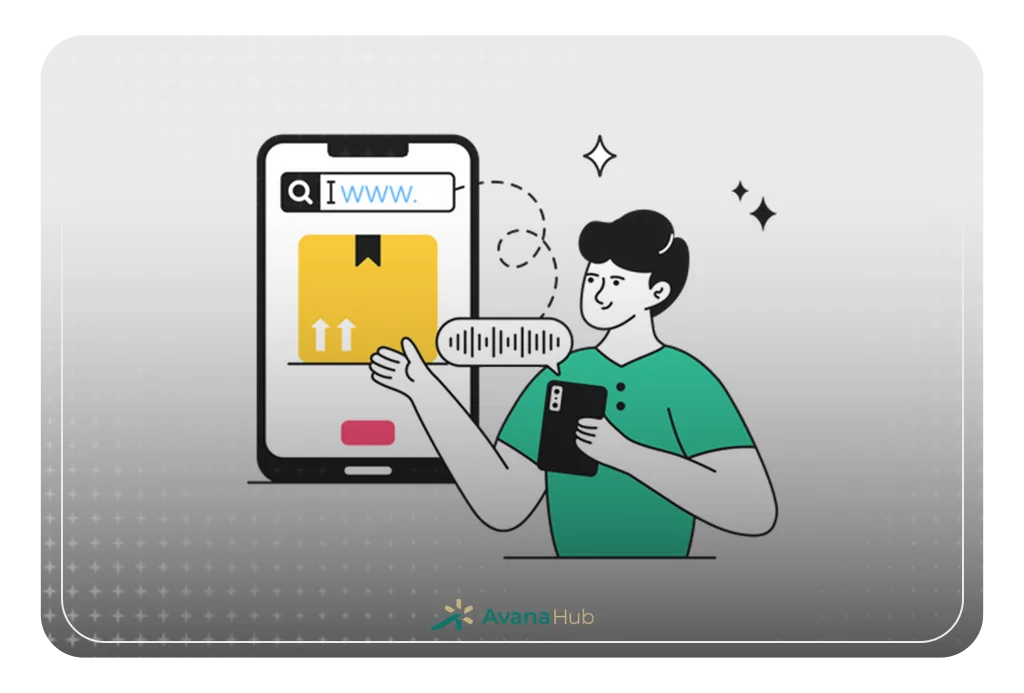
Voice search peaked as a buzzword around 2019, then fell out of fashion. Most SEO content stopped covering it. The hype died — but the actual usage didn't. By 2026, voice queries account for roughly 27% of all local "near me" type searches, and that share is growing. Smart speakers, in-car assistants, and AirPods-class earbuds with always-listening features have made voice the default search method for entire categories of queries: directions, business hours, quick comparisons, and immediate decisions while users have their hands occupied. Almost no small or mid-sized business has optimized for it. The opportunity gap is wide and the work is genuinely simple. This article covers what voice search optimization actually requires in 2026, why most existing advice is outdated, and the specific changes that make a business voice-discoverable.
The Numbers People Aren't Tracking
The voice search hype cycle of 2017-2019 generated wildly inflated predictions. By 2022, when the predictions hadn't fully materialized, the topic was declared dead. Most SEO blogs stopped covering it.
The actual data tells a different story:
- Voice queries account for ~27% of local "near me" searches in 2026 (Statista)
- 50%+ of all searches will be voice-initiated by 2027 according to current trajectories
- 72% of smart speaker owners use voice search at least once daily for local information
- In-car voice search has grown 6x since 2020 with Apple CarPlay and Android Auto integration
- Smart-watch voice queries (Apple Watch, Galaxy Watch) account for a small but rapidly growing share
The buzz died. The behavior didn't. The shift was that voice became infrastructure — invisible because it's everywhere, not because it disappeared.
Why Voice Search Optimization Got Forgotten
Three things conspired to bury the topic:
The early advice was bad. Most "voice search SEO" articles from 2018-2019 said things like "use natural language" and "answer questions" — vague advice that didn't change anyone's optimization in measurable ways.
Tracking was (and remains) poor. Google doesn't separately label voice queries in Search Console. There's no dashboard that shows "you got 1,200 voice searches this month." The lack of visibility made the channel feel optional.
The hype cycle exhausted the topic. When Alexa-driven SEO didn't transform e-commerce overnight, the industry decided voice was "not happening." It was happening — just in different categories than predicted.
The combined effect: voice became a quiet competitive advantage that almost nobody is fighting for. The businesses that optimize for it now usually face zero meaningful competition.
What Voice Searches Actually Look Like
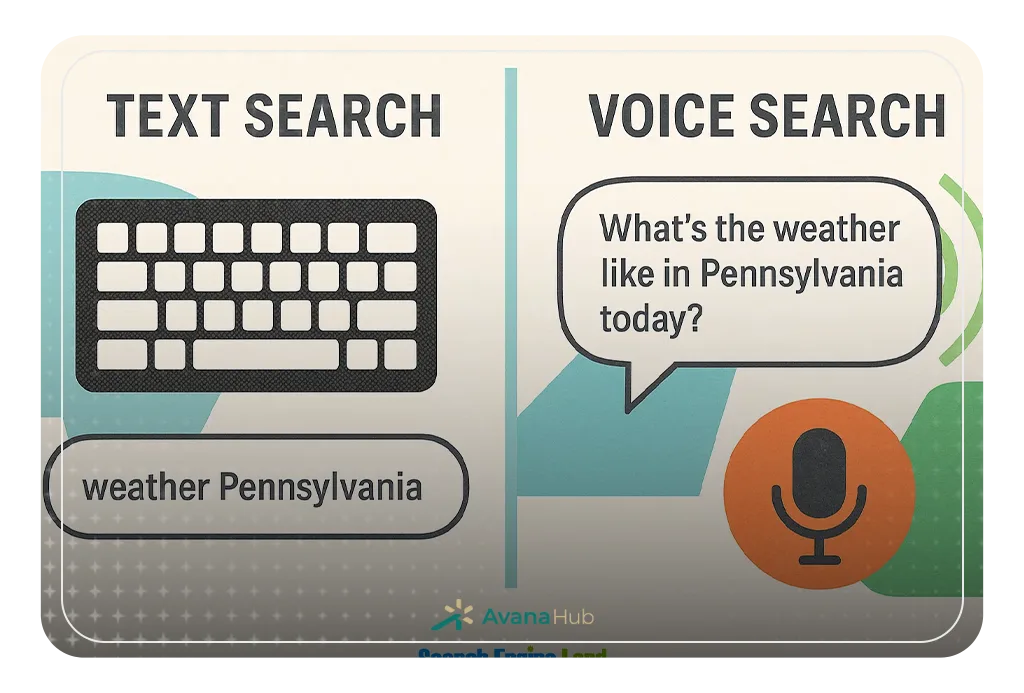
The most important shift since 2019: voice search behavior has matured into specific, predictable patterns. Knowing those patterns is most of the optimization work.
Voice queries differ from typed queries in three consistent ways:
They're conversational. "Where's the closest pharmacy that's open right now" instead of "pharmacy near me open."
They're question-format. "What time does the bank close on Sundays" instead of "bank Sunday hours."
They're local-default. Even when the query doesn't include "near me," voice assistants assume local intent for any query that could plausibly be local.
The categories where voice now dominates:
For service businesses (plumbers, electricians, repair, salons, restaurants), voice is now the default for the most valuable bottom-funnel queries — the moment when someone needs to act immediately.
The Optimization Layers Most Sites Skip

Voice search optimization is unglamorous and mostly already aligns with general SEO best practices — but a few specific layers matter disproportionately.
1. Google Business Profile Completeness
Voice assistants pull location-based answers almost exclusively from Google Business Profile (for Google Assistant), Apple Business Connect (for Siri), and Bing Places (for Alexa, increasingly).
The fields that matter most for voice:
- Hours, including special hours for holidays and exceptions. Voice queries about "open now" rely on this directly.
- Phone number with the correct format. Voice assistants read this aloud.
- Address with consistent formatting matching your website.
- Categories — particularly the primary category. Voice assistants use this to determine relevance.
- Service area for service-based businesses without a customer-facing location.
- Attributes like "wheelchair accessible," "outdoor seating," "free Wi-Fi" — voice queries increasingly include these as filters.
Profiles missing any of these fields lose voice-driven traffic for queries they should win. The fix is mechanical: complete every field, verify accuracy, and update whenever anything changes.
2. Structured Data for Quick-Answer Extraction
Voice assistants extract answers from structured data far more readily than from prose. The schema types that matter most:
- LocalBusiness with full address, hours, phone, and geo coordinates
- Service for each service offered
- FAQPage for question-answer content
- OpeningHoursSpecification for detailed hours including holiday exceptions
- AggregateRating if the business has reviews
A page with proper FAQ schema answering "What time does X close on Sundays?" is dramatically more likely to be the source of a voice answer than the same content as paragraph text.
3. Conversational Question-Answer Content
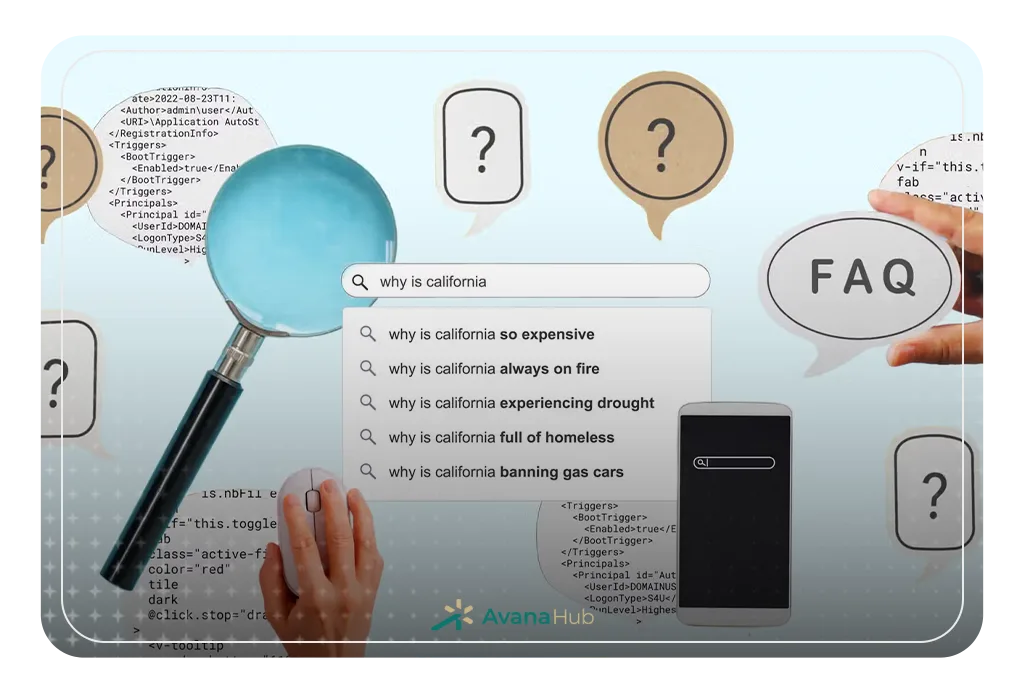
The content patterns that voice assistants prefer to extract:
- A clear question as a heading (preferably H2 or H3)
- A direct answer in the first 1-2 sentences after the heading
- The full answer rounded out within 40-60 words
Pages that bury the answer in long paragraphs lose voice extraction to competitors that lead with it. The structural pattern is the same one that wins for AI search citation generally — voice optimization is essentially a subset of AI extraction optimization.
The questions to anticipate are the ones a customer would actually ask out loud:
- "What does X cost?"
- "Do you offer Y?"
- "How long does Z take?"
- "Is X open on Sundays?"
- "What's the difference between A and B?"
A small business with 20 well-structured FAQ-format answers usually outperforms a competitor with a polished but prose-heavy site for voice-driven queries.
4. Mobile and Speed Performance
Voice queries are overwhelmingly mobile. Voice assistants prefer to surface results from sites that load fast and render cleanly on mobile devices. The thresholds that matter:
- Largest Contentful Paint under 2.5 seconds on mobile
- Mobile usability with no errors in Search Console
- Tap targets sized for actual mobile use (no buried information)
- No intrusive popups or interstitials that block content
Sites failing Core Web Vitals on mobile are systematically deprioritized for voice queries even when their content is strong. This is one of the larger-than-expected gaps in voice optimization.
5. Featured Snippet and Position Zero Targeting
Voice assistants frequently read the featured snippet aloud as the answer to a query. Capturing the featured snippet for relevant questions captures the voice answer simultaneously.
The patterns that win featured snippets:
- 40-60 word direct answers immediately after a question heading
- Structured lists or tables for "how many" or "what are" queries
- Specific data points and statistics for "how much" or "when" queries
- Step-by-step formats for "how to" queries
A business that systematically targets featured snippets for the questions its customers ask captures voice traffic by default — usually without specifically targeting voice as a separate channel.
6. NAP Consistency Across Voice Indexes
Voice assistants pull from different data sources than traditional Google Search. NAP consistency matters across:
- Google Business Profile (for Google Assistant)
- Apple Business Connect (for Siri — often overlooked)
- Bing Places (for Alexa)
- Major data aggregators that feed downstream voice services
Apple Business Connect specifically is where most businesses have the largest gap. It's free, it directly affects iPhone/Apple Watch/CarPlay voice search, and almost no small business has claimed and optimized their listing.
The Voice-Specific Content That Pays Off
Beyond general SEO and GBP work, certain content investments pay off disproportionately for voice.
Hours-detail pages. A short page or section explicitly answering "What time does [business] close on [day]" captures voice queries that the homepage often misses. For multi-location businesses, location-specific hours pages compound this.
FAQ content matching voice phrasing. Replace SEO-style questions like "X cost" with voice-style questions like "How much does X cost?" The structural difference matters for voice extraction.
Direct-answer content for common decisions. "Should I do X or Y?" type questions are increasingly common in voice queries. Pages that directly answer these decision questions tend to be cited frequently.
Review-rich pages. Voice assistants often pull rating information when answering recommendation queries. Pages with proper review schema and visible aggregate ratings perform better in voice for "best [category] near me" queries.
What's Different About Voice in 2026
A few specific shifts since the last era of voice search articles:
Smart watches changed the game. Apple Watch and Galaxy Watch users issue voice queries from contexts where typing isn't an option — driving, exercising, hands-busy moments. This biases voice queries toward time-sensitive, location-based intents.
Earbud assistants are mainstream. AirPods Pro and equivalent products with always-on assistant features have made voice search a default action when phones are pocketed. The "press a button to search" friction is largely gone.
In-car voice is the new local search. Apple CarPlay and Android Auto have made voice the dominant search method for any query happening while someone is driving — directions, gas stations, restaurants, immediate services. Businesses that depend on drive-by traffic are heavily exposed to voice optimization decisions.
AI assistants entered the mix. ChatGPT's voice mode, Claude's voice features, and Google Gemini Live are creating new voice-driven discovery surfaces beyond traditional voice assistants. The optimization patterns overlap heavily with general AI search optimization.
What to Stop Doing
Some common voice search advice that's now actively unhelpful:
- "Optimize for long-tail conversational keywords." Generic advice that doesn't change behavior. The actual fix is question-format headings and direct-answer content.
- "Focus on natural language." Doesn't mean anything actionable. The structural patterns matter more than tone.
- "Voice search is the future." It's not the future. It's already 27% of local search. Treating it as future-tense delays the optimization that should happen now.
- "Build for Alexa." Most voice search happens through Google Assistant on Android phones and Siri on iPhones, not through Alexa skills. Stop building Alexa-specific assets.
Conclusion
Voice search isn't an emerging trend in 2026. It's an established channel that most businesses ignore because the topic feels dated. The opportunity gap is wide because the SEO industry collectively decided to stop talking about it five years ago.
The optimization work isn't separate from general SEO — it's a specific application of best practices that compound across other channels. A site that wins voice search usually wins AI Overviews, Featured Snippets, and Local Pack visibility simultaneously. The voice channel is just the one with the lowest competition for businesses willing to do the work.
If you're a service business or local business that hasn't checked your voice search readiness, that's where measurable competitive advantage is sitting right now — quiet, unmonitored, and available.